Hindu Marriage Biodata Format in PDF
A clean and respectful format designed around traditional Hindu expectations. Present your horoscope details, family background, and personal information in a clear, well-structured marriage biodata pdf that’s easy for families to understand at a glance.
How the Hindu Marriage Process Works Through a Biodata
In Hindu arranged marriages, the biodata acts as the crucial first step. Here is the traditional step-by-step journey from sharing the biodata to finalizing the match.
Exchanging Biodata
Families exchange the marriage biodata. A well-formatted PDF creates a strong first impression, highlighting personal, professional, and astrological details like Gotra and Rashi.
Kundli Matching
Once the biodata is shortlisted, families consult an astrologer for Kundli (horoscope) matching to check Guna Milan, Nadi, and Manglik Dosha compatibility for a prosperous married life.
Family & Background Check
If the stars align, both families typically conduct informal background checks to ensure shared values, social standing, and cultural compatibility before proceeding further.
The First Meeting
The families arrange a formal meeting where the prospective bride and groom get to interact. If everything goes well, this leads to the finalization of the alliance (Roka/Sagai).
Sample Hindu Marriage Biodata & Best Practices
Wondering what exactly to write? Here is a reference table for a traditional Hindu biodata, along with essential dos and don'ts.
| Section | What to Include (Examples) |
|---|---|
| Personal Details | Full Name, Age & Date of Birth, Height, Diet (Vegetarian/Non-Veg), Blood Group. |
| Horoscope (Kundli) | Gotra, Rashi, Nakshatra, Manglik Status, Exact Time & Place of Birth. |
| Education & Career | Highest Qualification (e.g., MBA, B.Tech), Current Job Title, Company Name, Annual Income (Optional). |
| Family Details | Father's & Mother's Names and Occupations, Number of Siblings, Native Place/Hometown. |
| Contact Information | Parent's Mobile Number, Current Residential Address, Email Address. |
What to Write (The Dos)
- •Include precise birth details: For Kundli matching (Guna Milan), provide the exact Date, Time, and Place of birth. Even a slight error in time can alter the astrological charts.
- •Clearly state Gotra and Rashi: These are essential for traditional matchmaking. Mentioning maternal Gotra (Nanihal) is also appreciated by many traditional families.
- •Be upfront about Manglik Dosha: If you are Manglik, Anshik Manglik, or Non-Manglik, state it clearly. Hiding this only delays the inevitable and breaks trust during the Kundli match.
- •Detail your family background: Highlight your parents' occupations, hometown, and siblings. In Hindu marriages, families marry families.
What NOT to Do (The Don'ts)
- •Don't skip dietary preferences: Food habits (Vegetarian, Non-Vegetarian, Eggetarian, Vegan) are a major compatibility factor in Hindu households. Do not leave this ambiguous.
- •Don't provide approximate birth times: "Around 2 PM" is not helpful for an astrologer. Seek the exact time from birth certificates or elders.
- •Don't Delete Blank Fields: If there is no answer (e.g. you don't know your Nakshatra), fill in the field with "Don't know" rather than deleting it.
- •Don't hide previous marital status: Whether unmarried, divorced, or awaiting divorce, it is crucial to state this fact to ensure mutual respect and honesty.
Explore Other Biodata Formats
Explore Hindu Biodata Templates
Choose from our curated collection of elegant traditional designs.
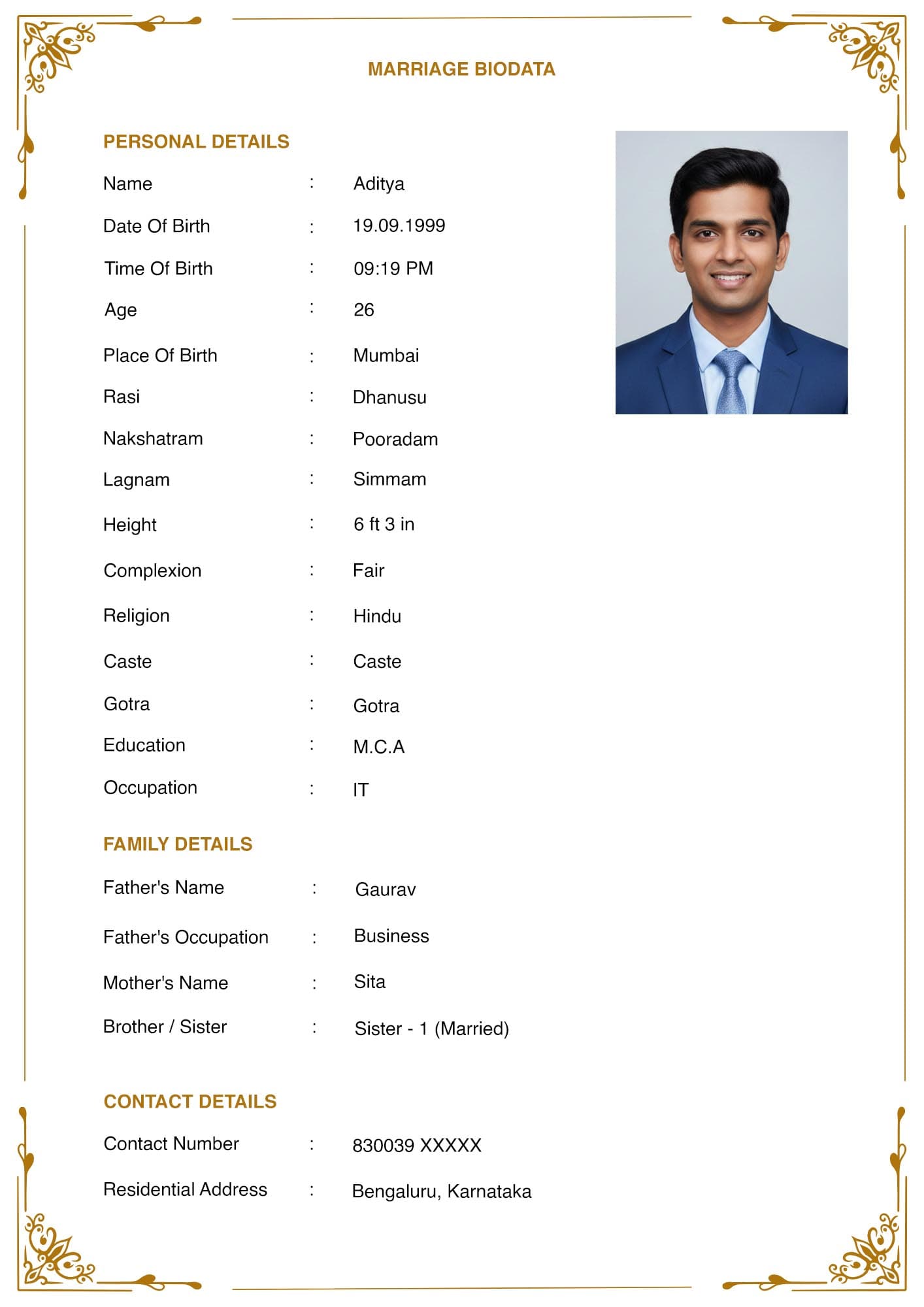
Traditional Elegance
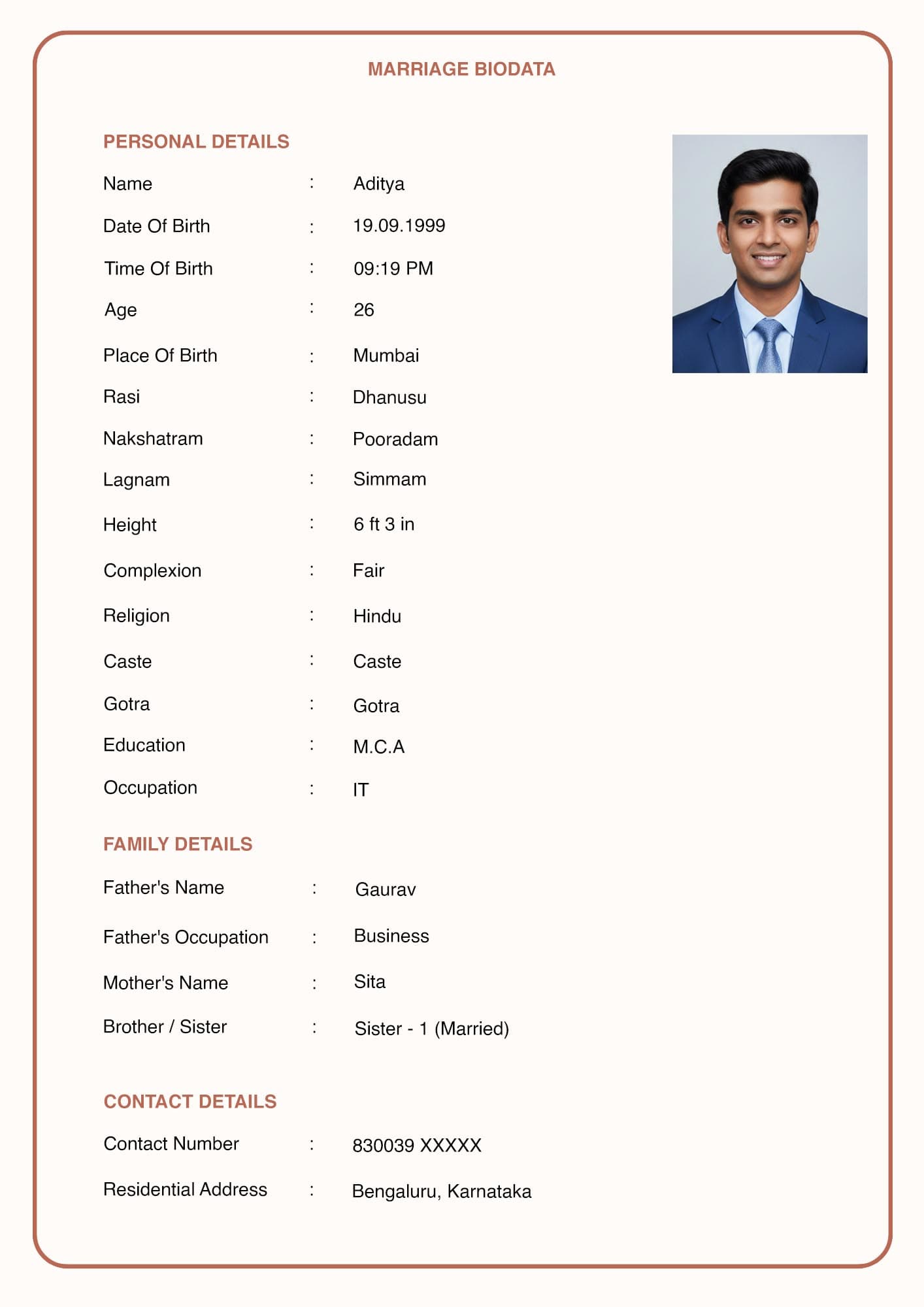
Modern Minimalist
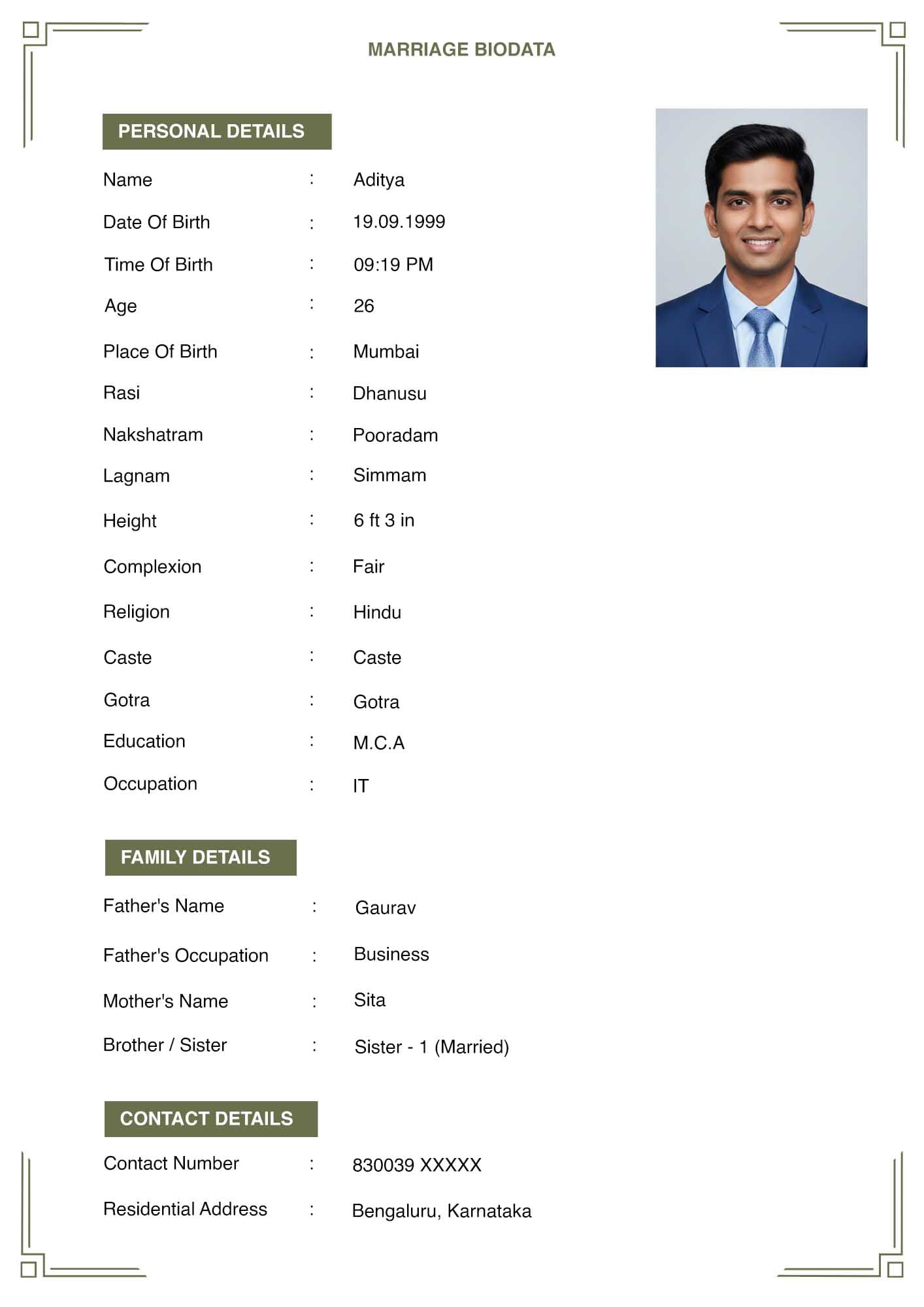
Floral Classic
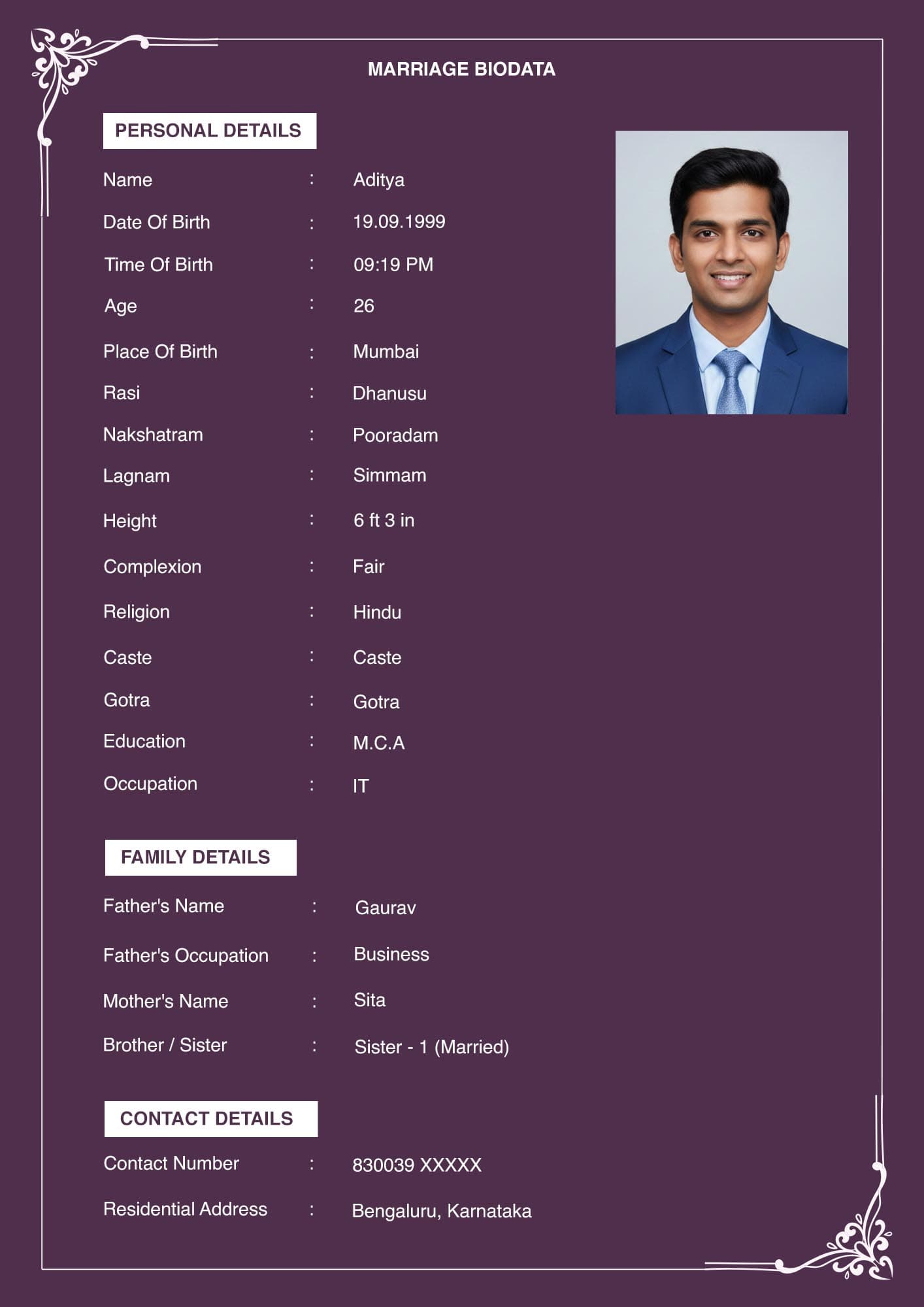
Royal Heritage
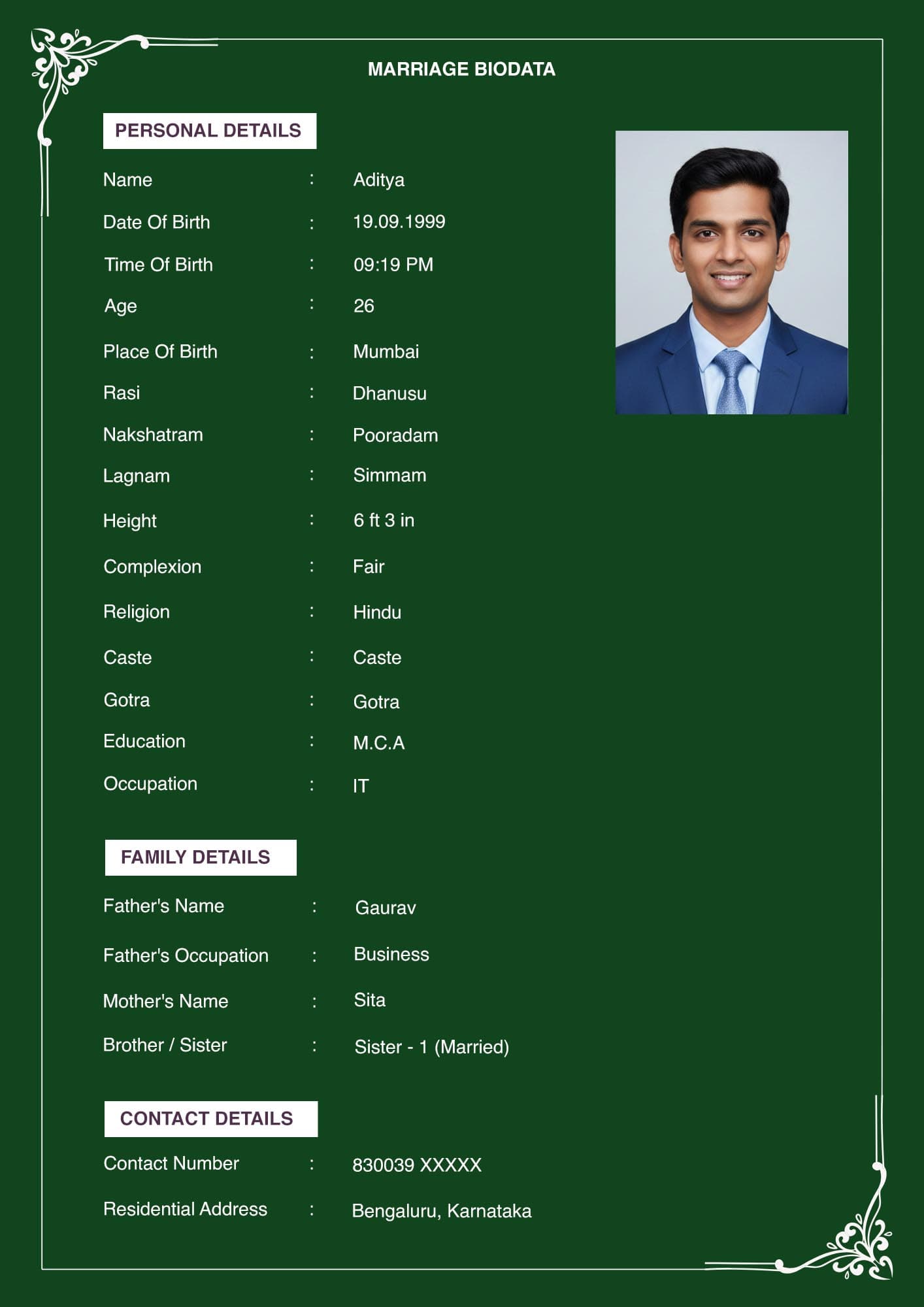
Elegant Simple
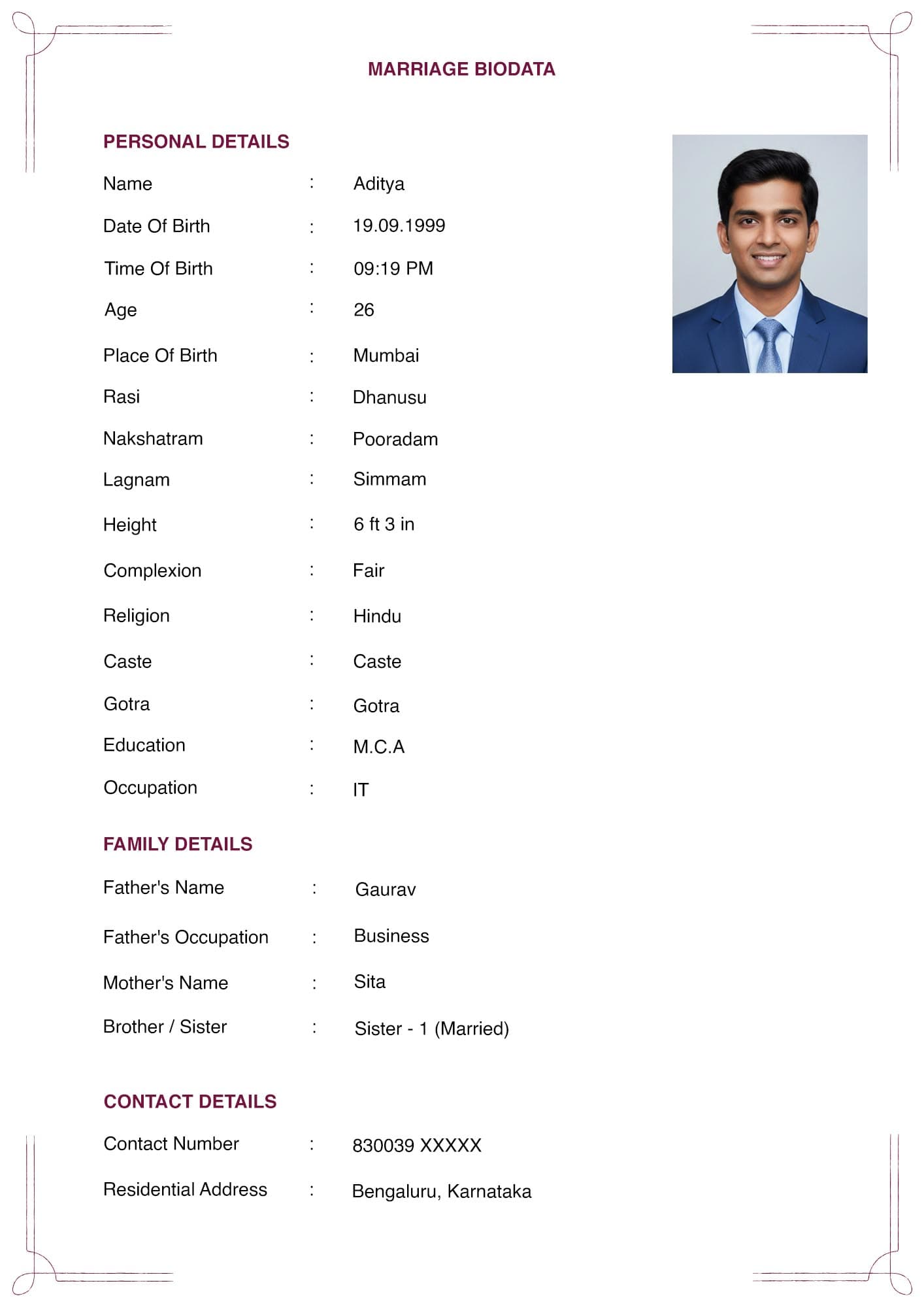
Contemporary Style
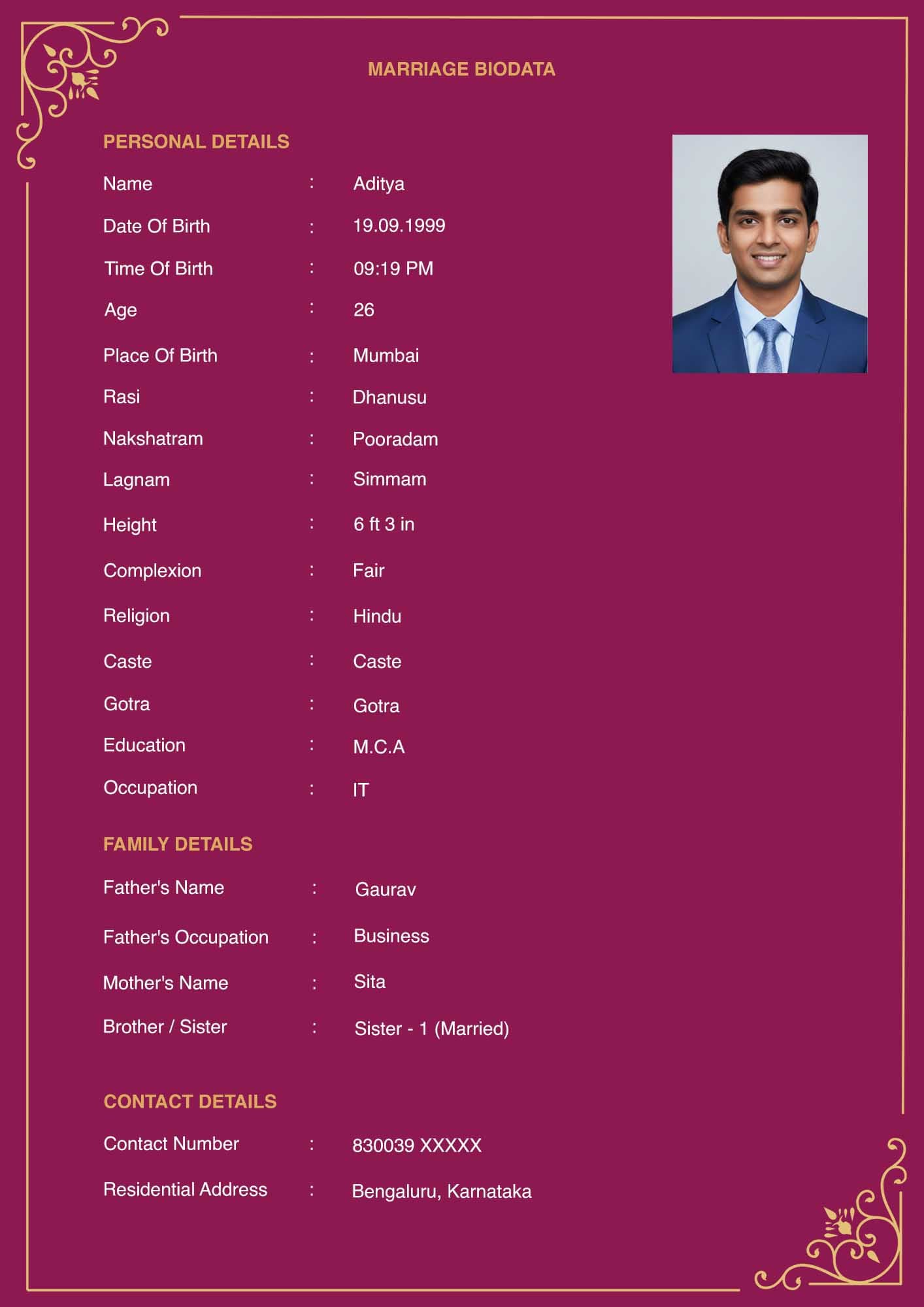
Royal Purple
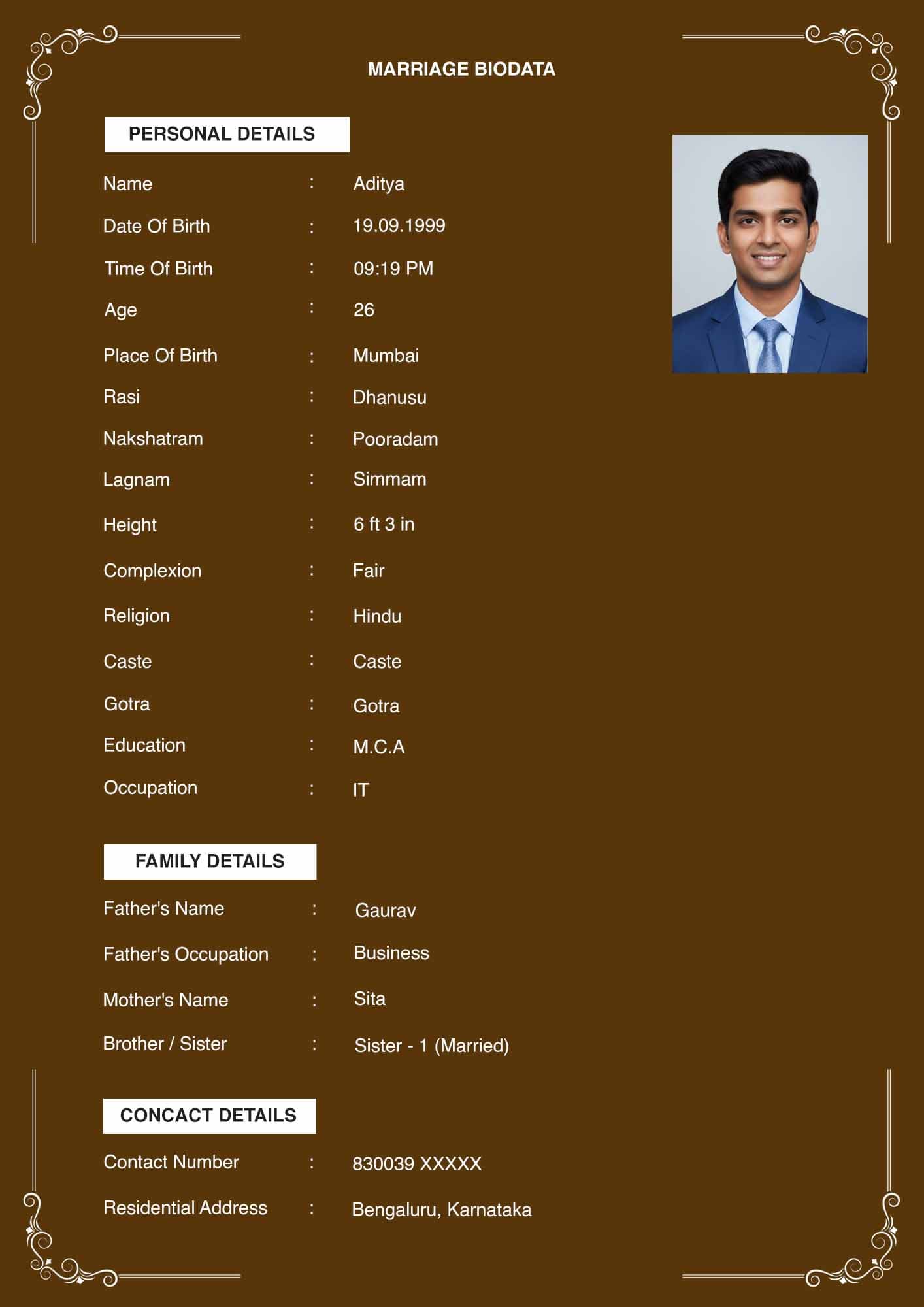
Classic Brown
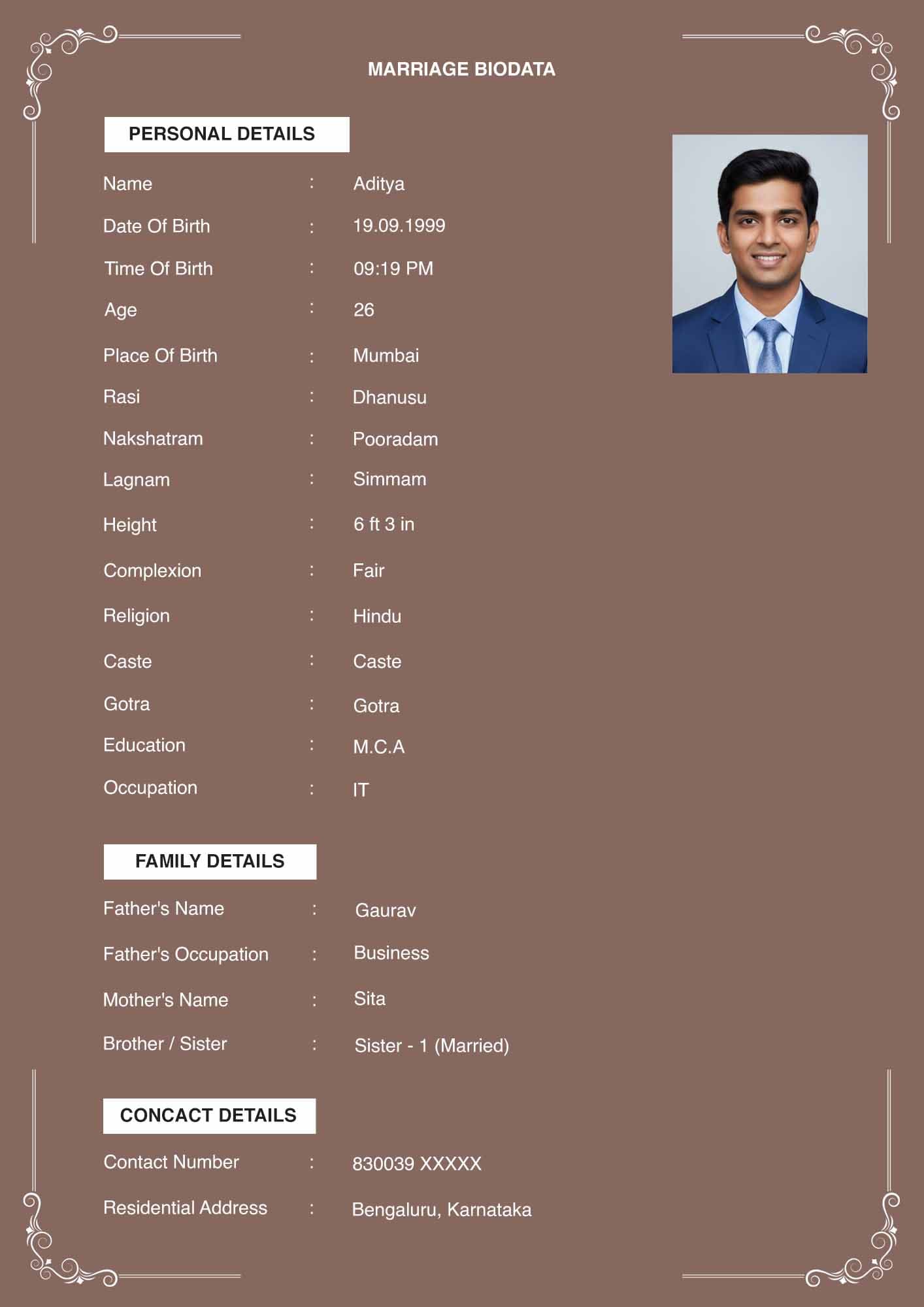
Warm Earth
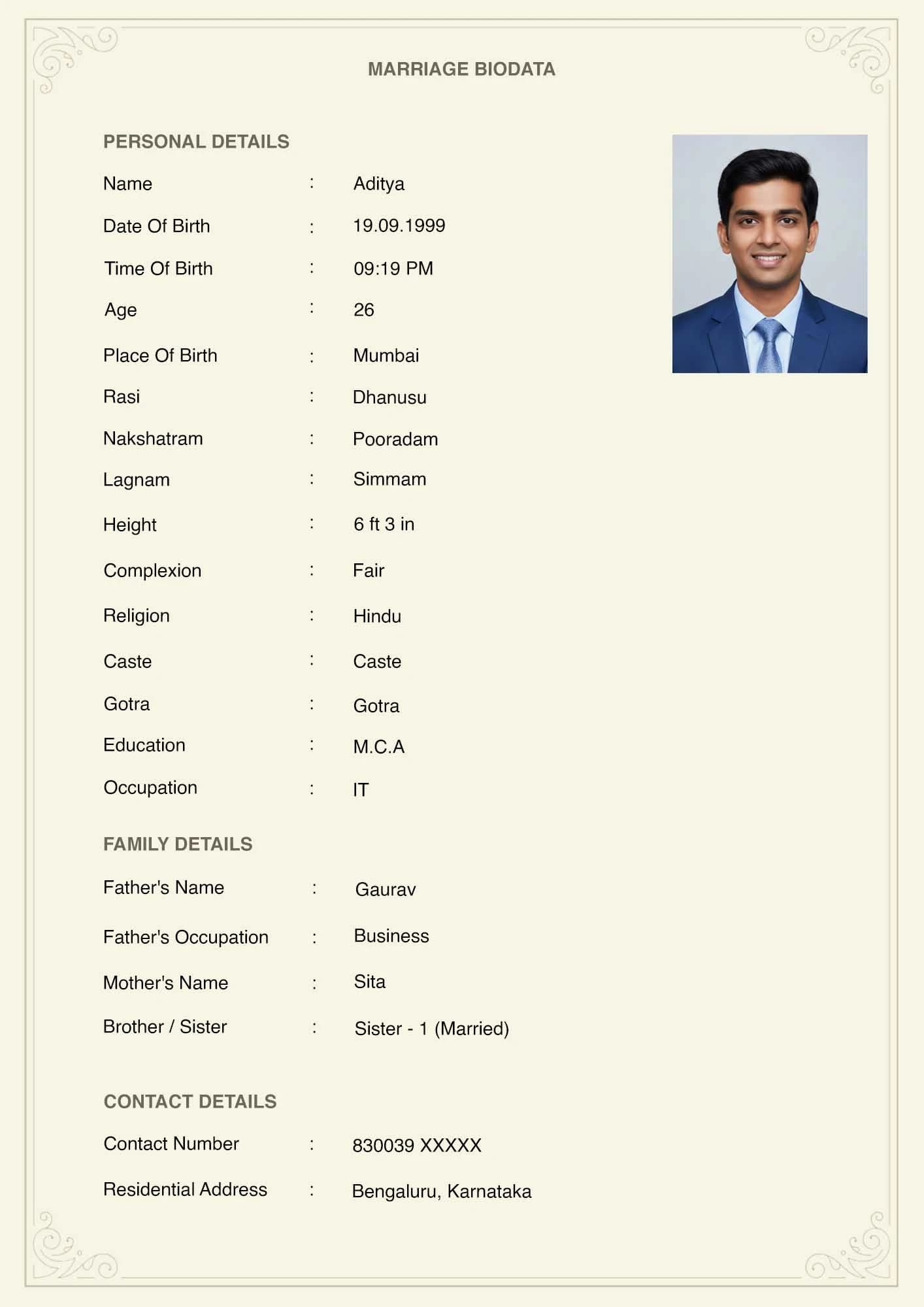
Aesthetic Maroon
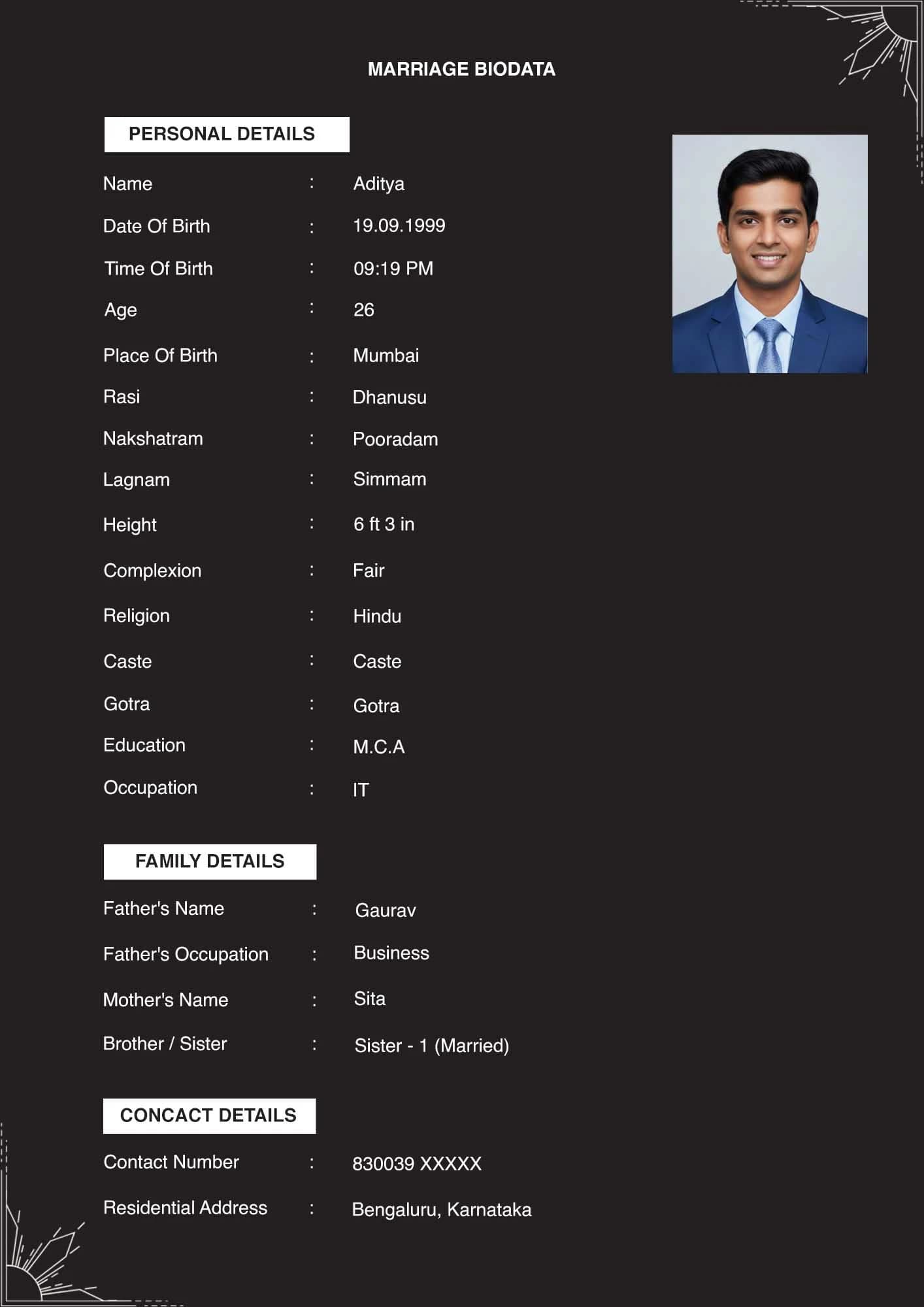
Classic Golden
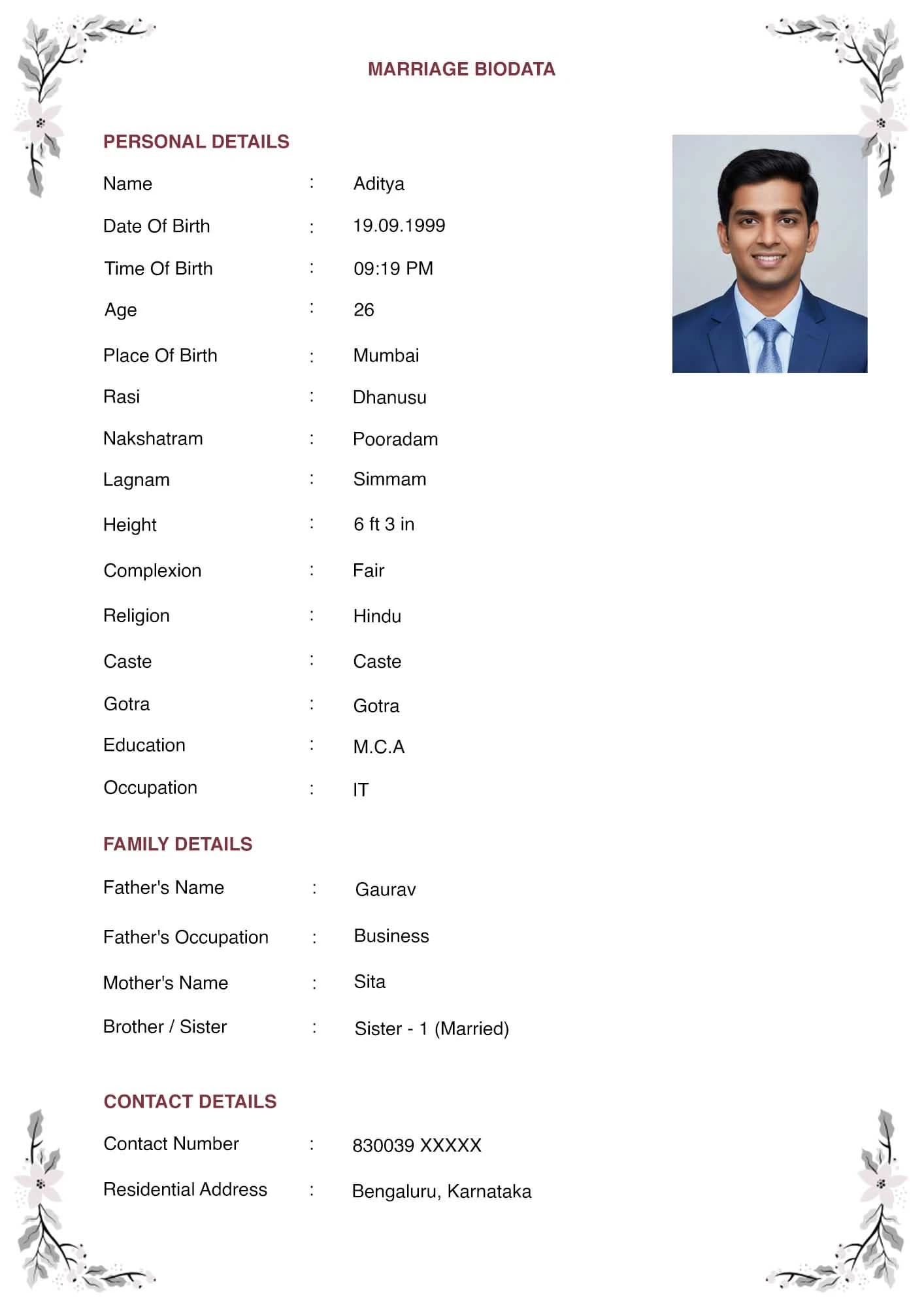
Contemporary Teal
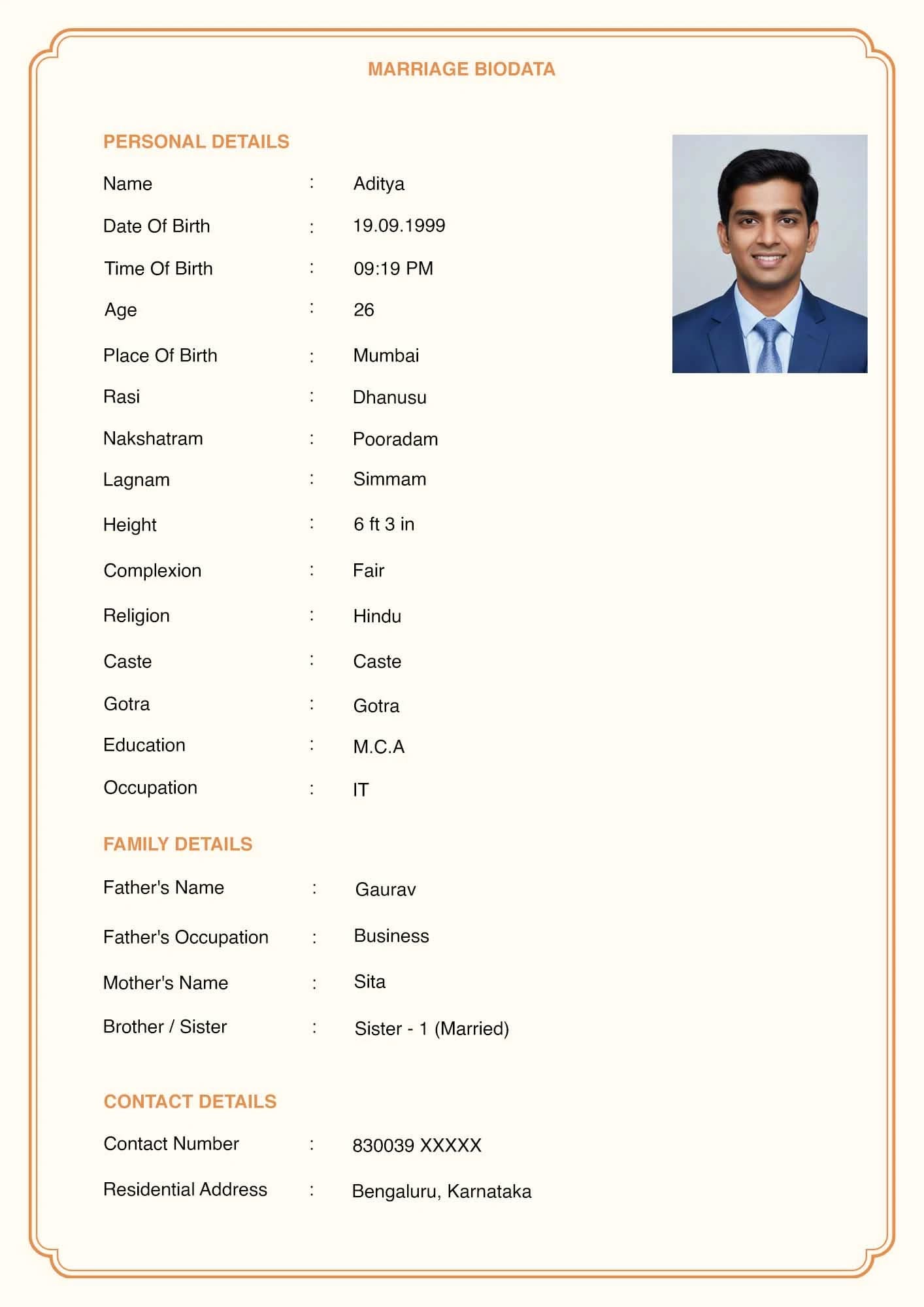
Bridal Rose
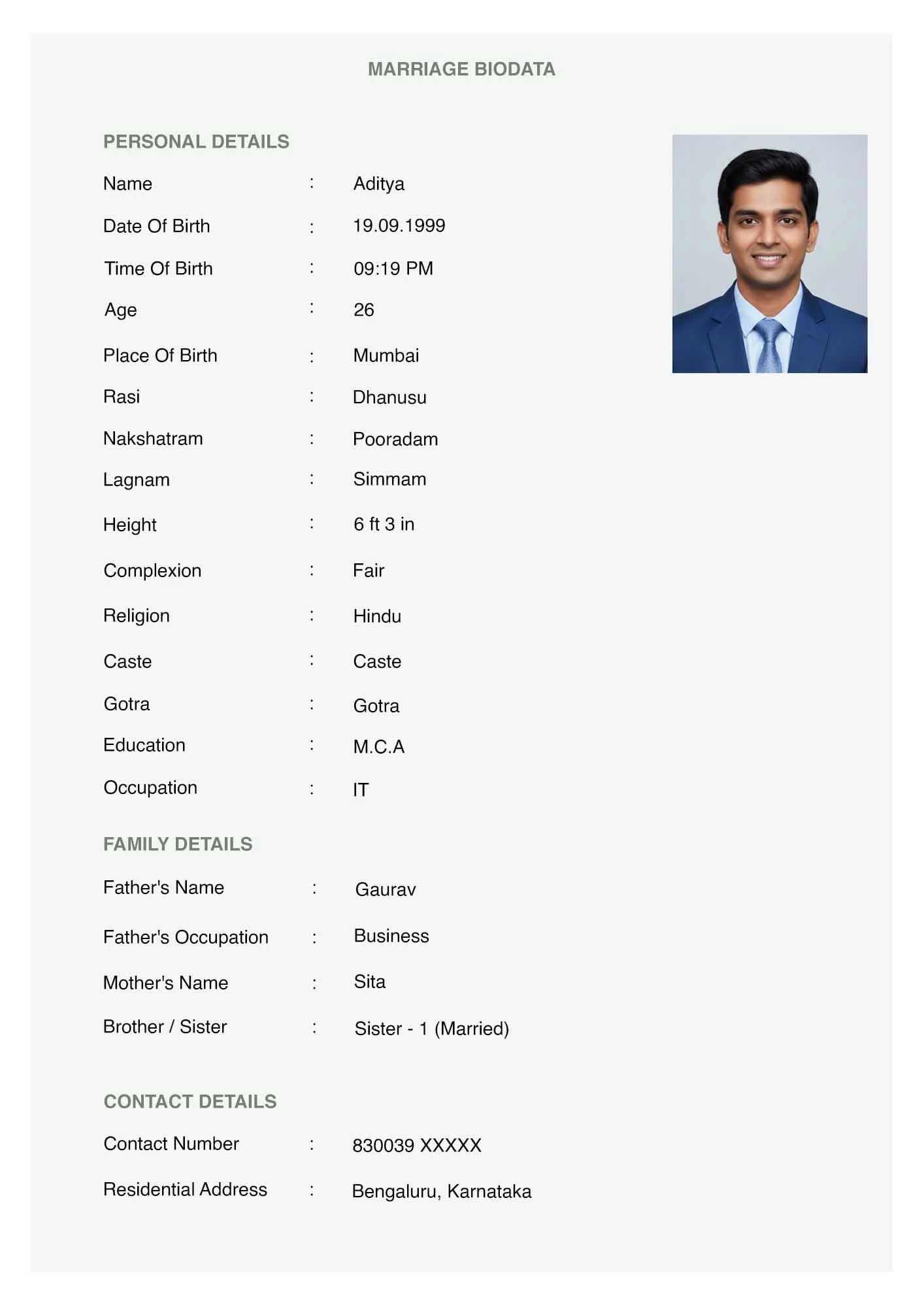
Sophisticated Navy
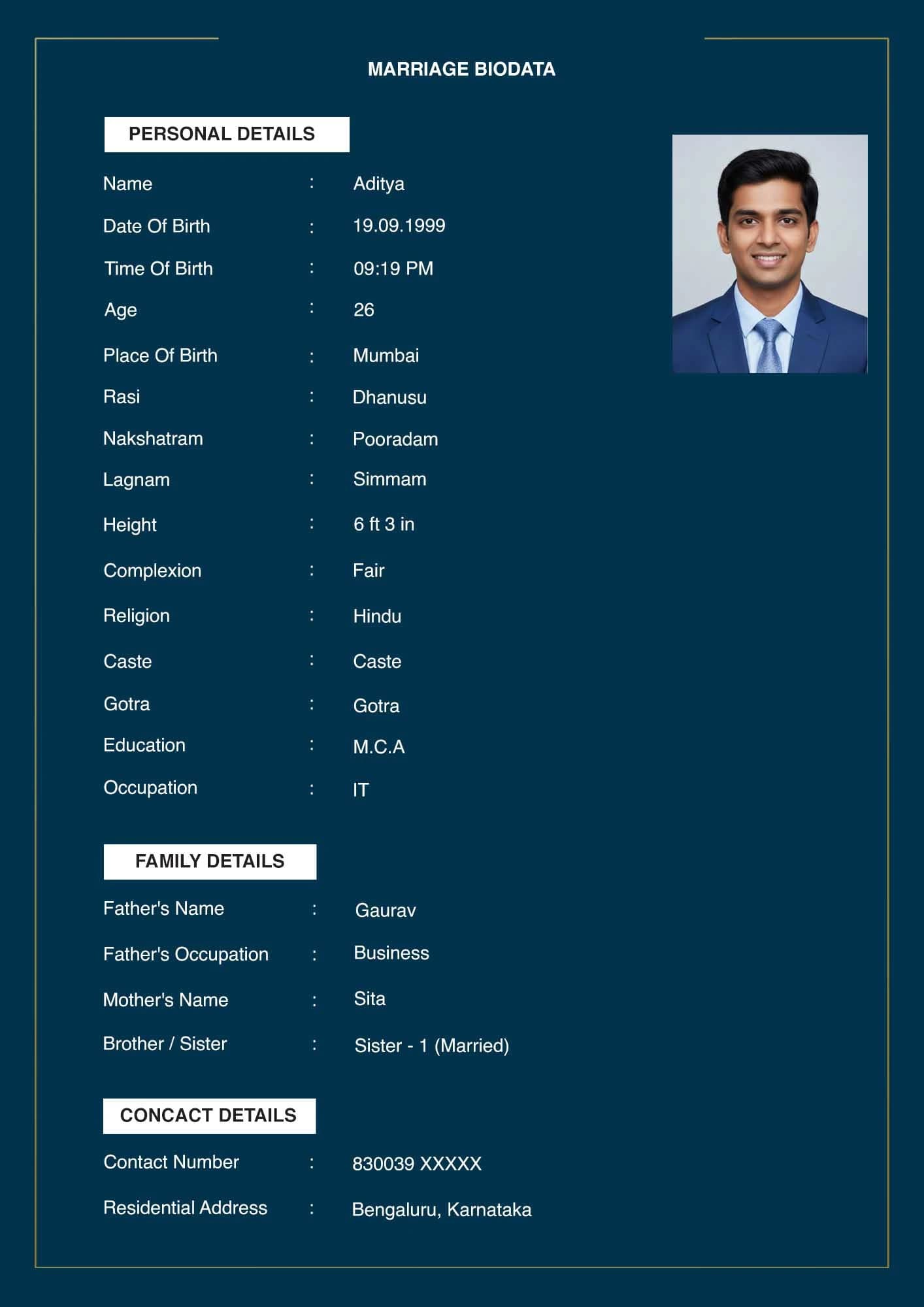
Minimalist Elite
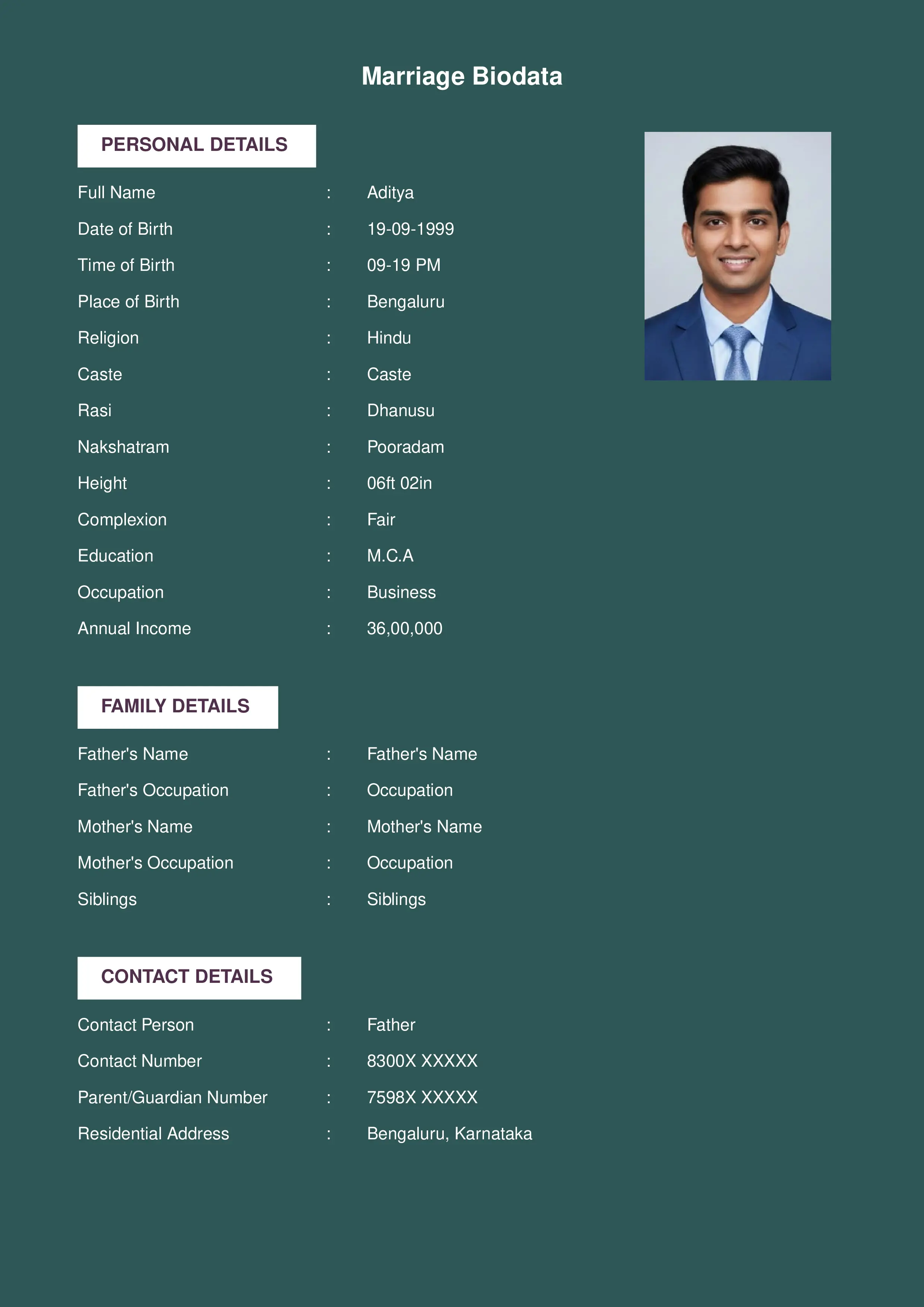
Modern Crimson
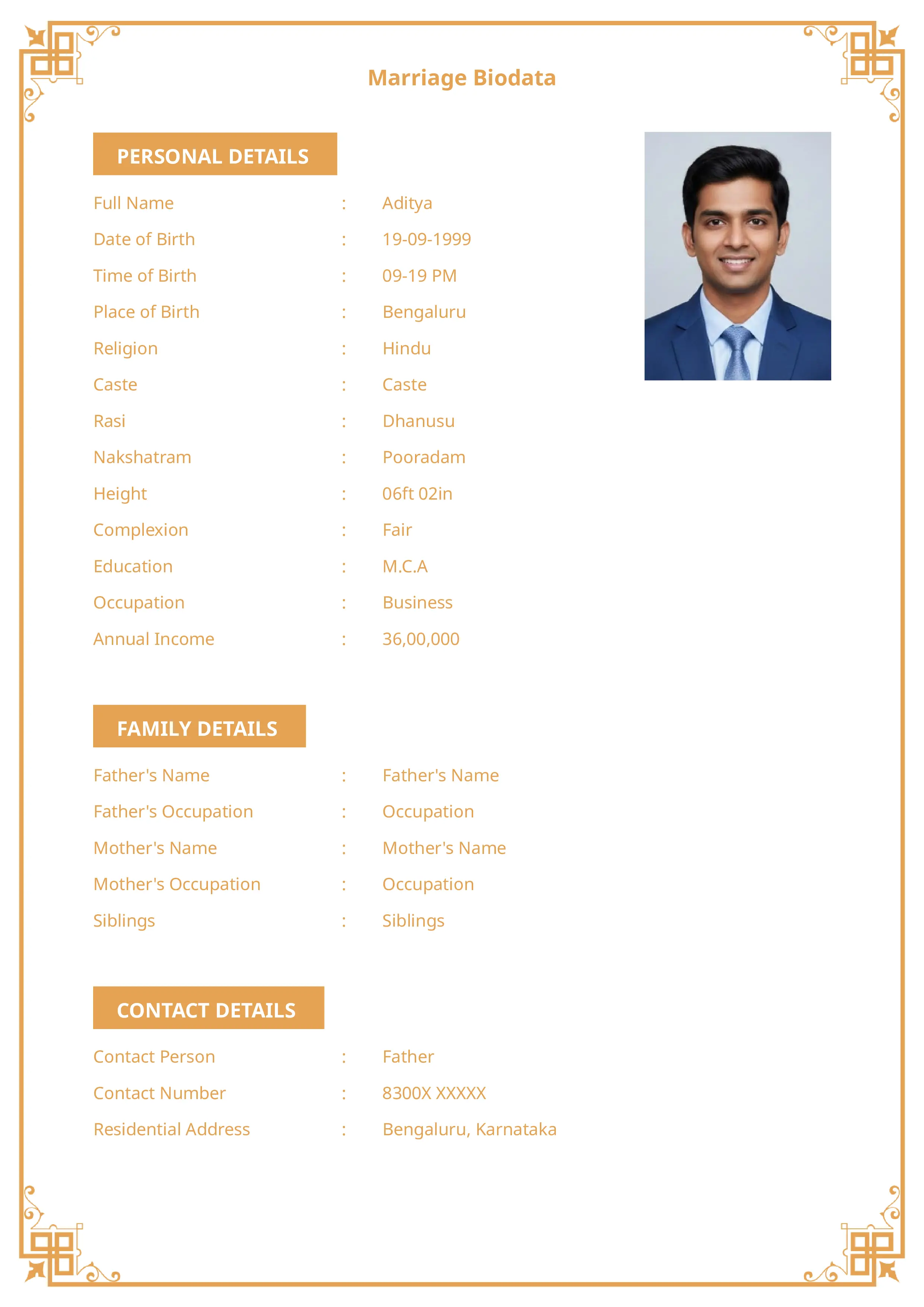
Elegant Sapphire
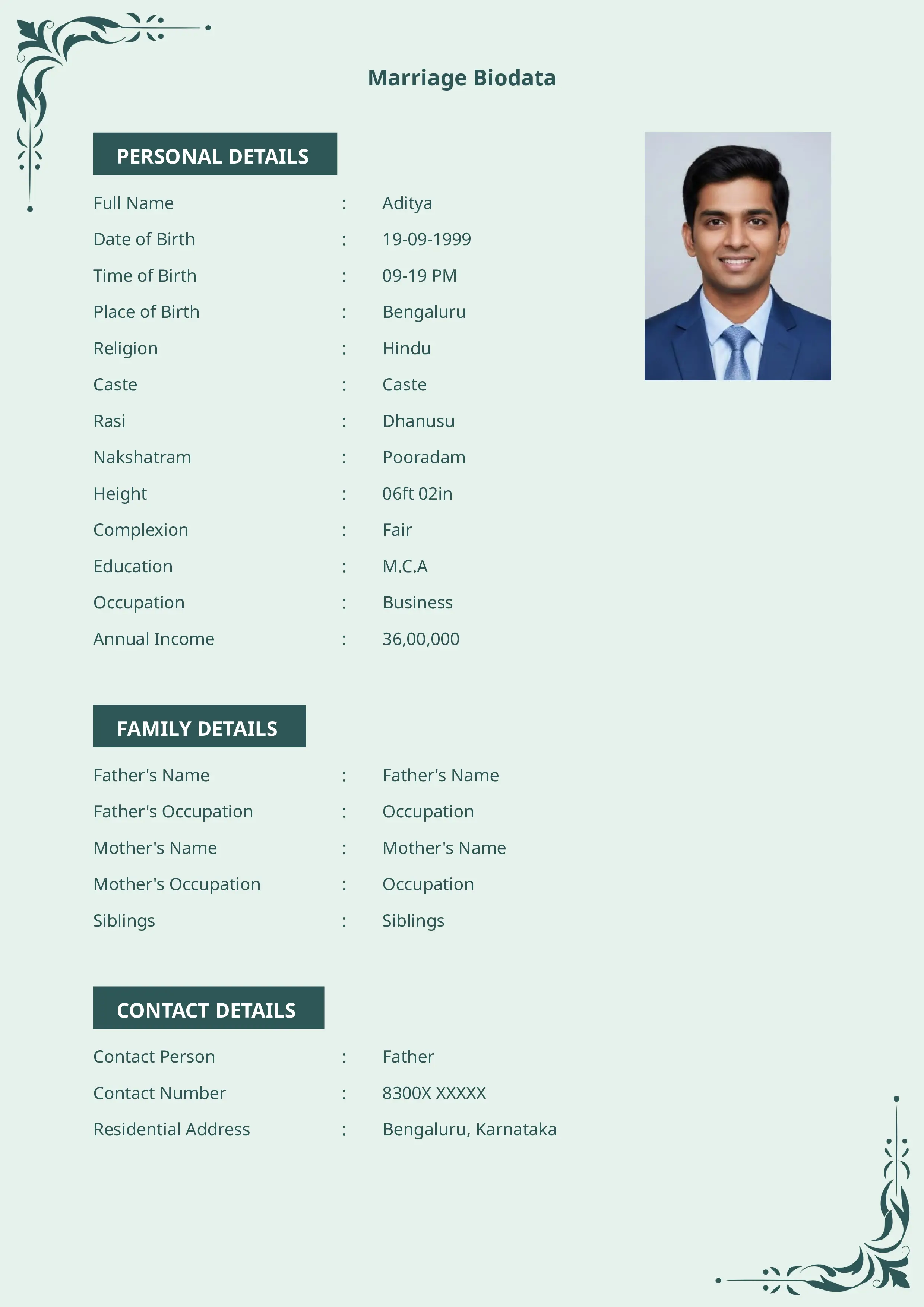
Floral Pastel

Premium Corporate
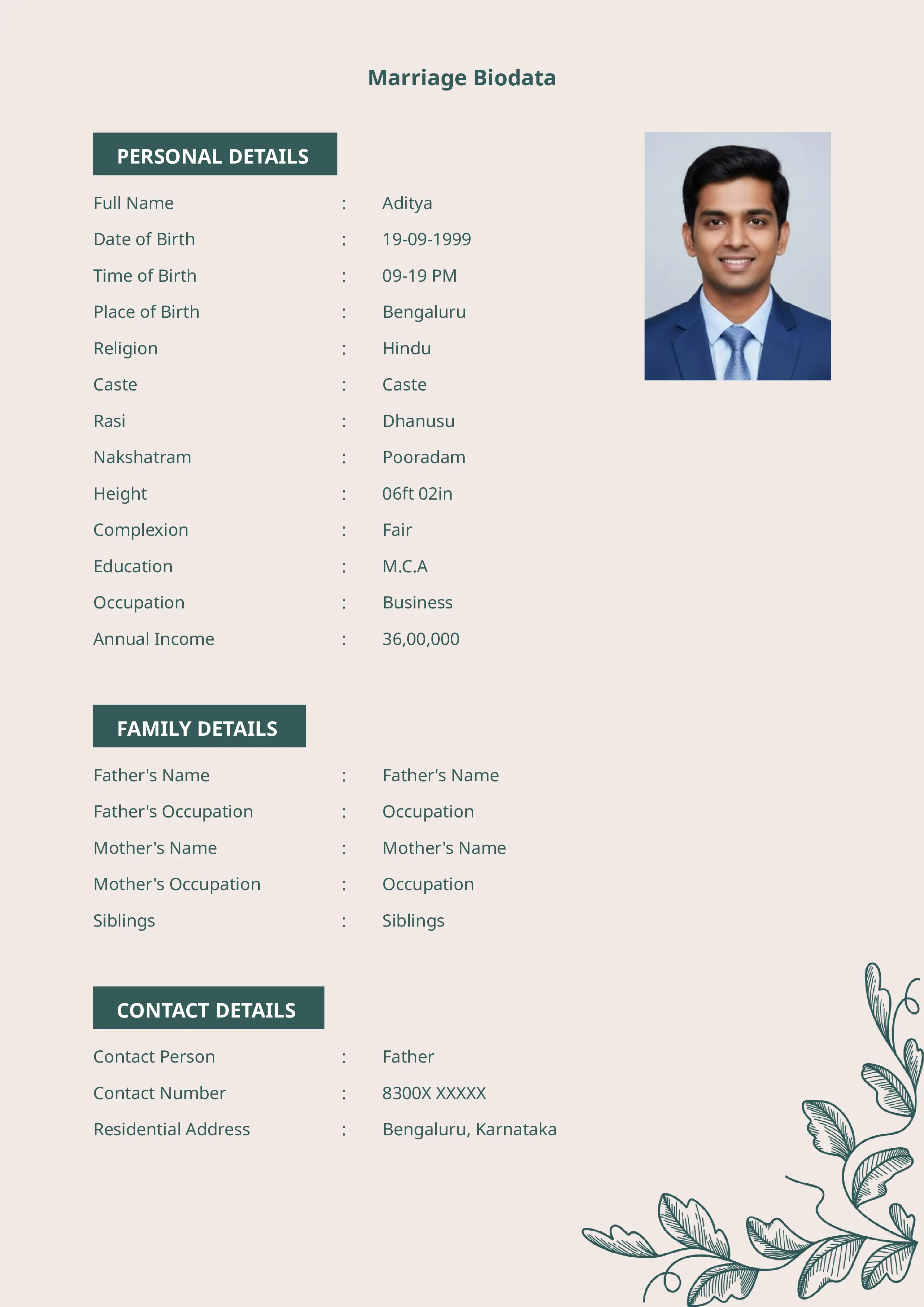
Family Heritage
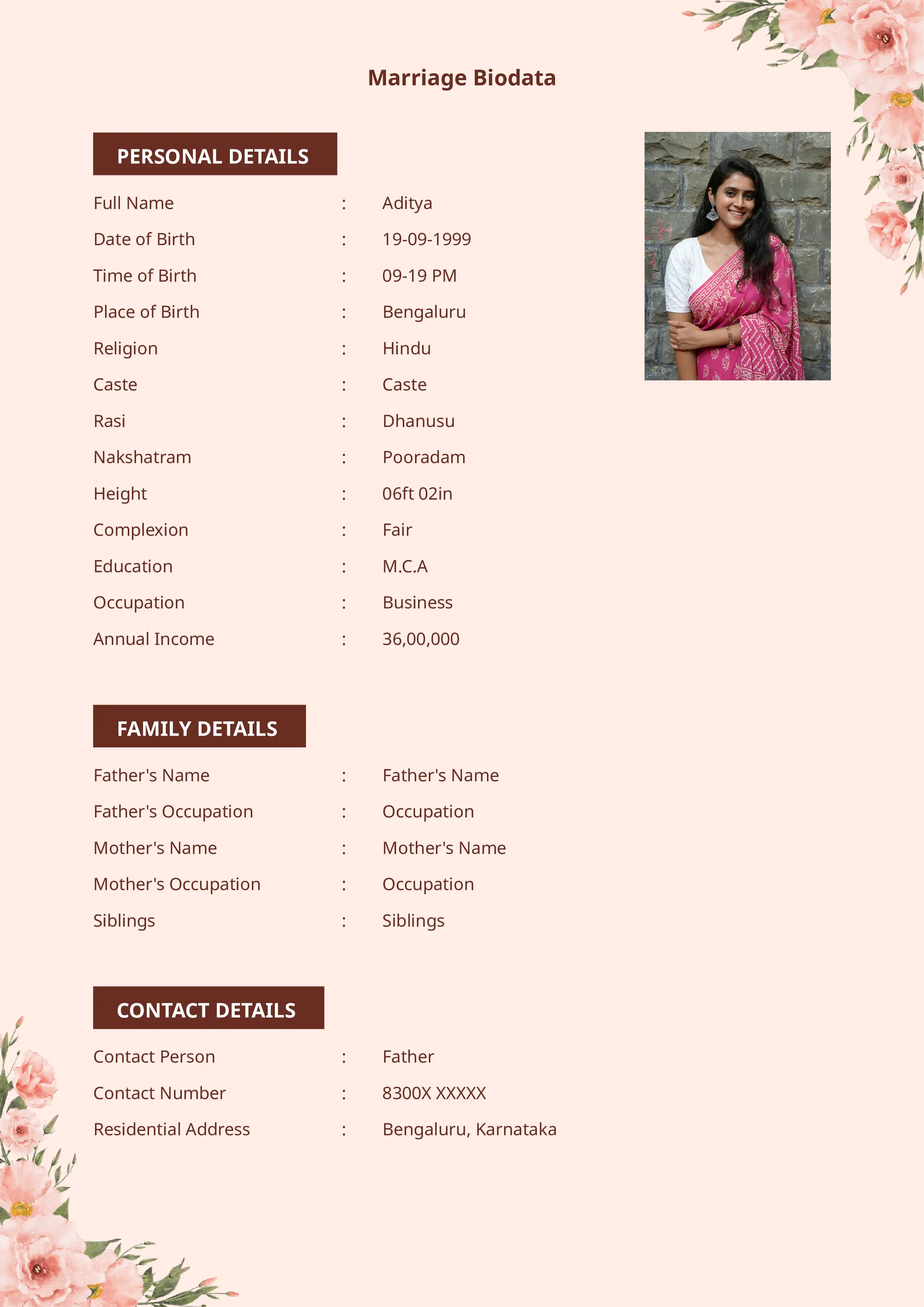
Modern Emerald
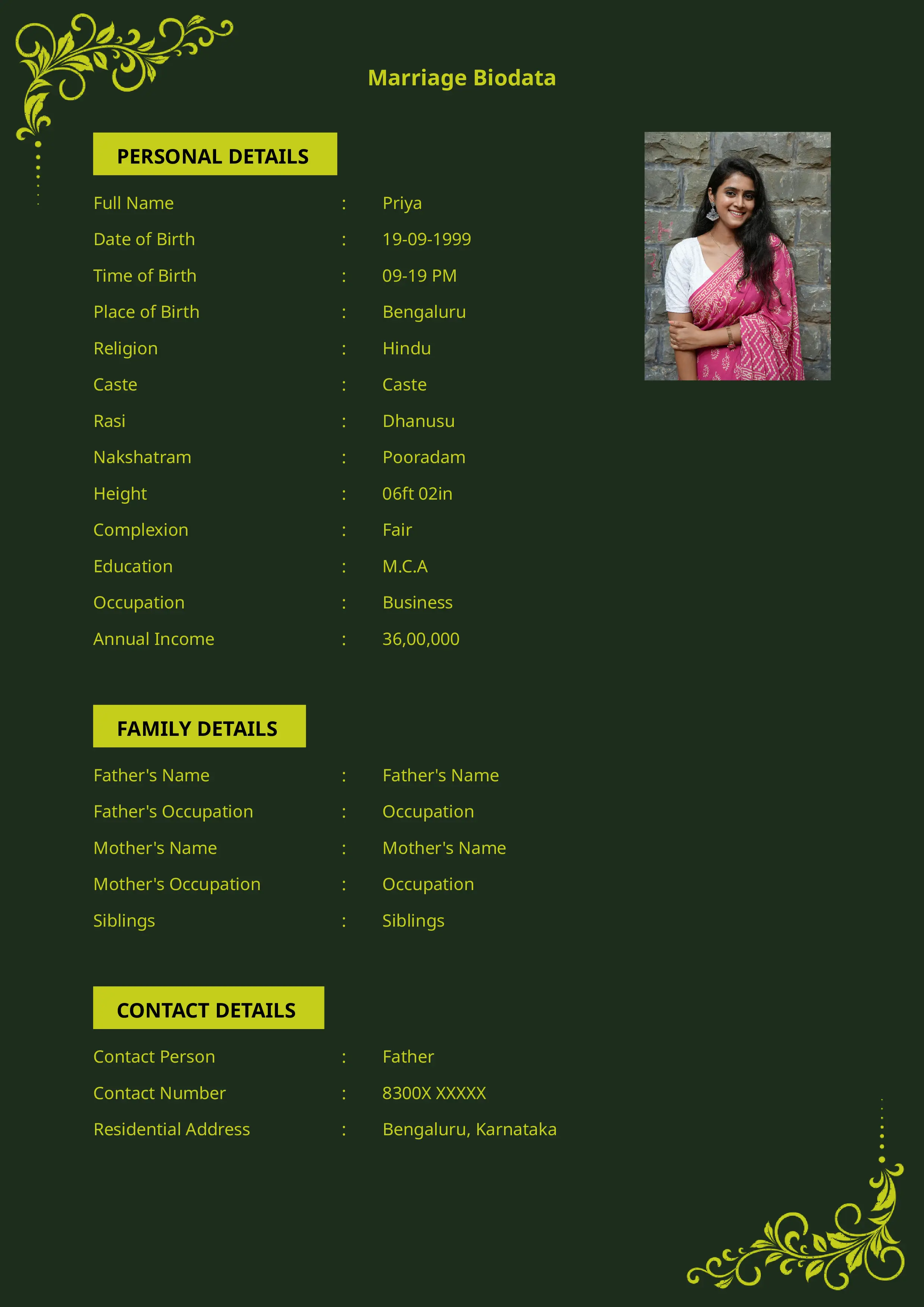
Traditional Saffron
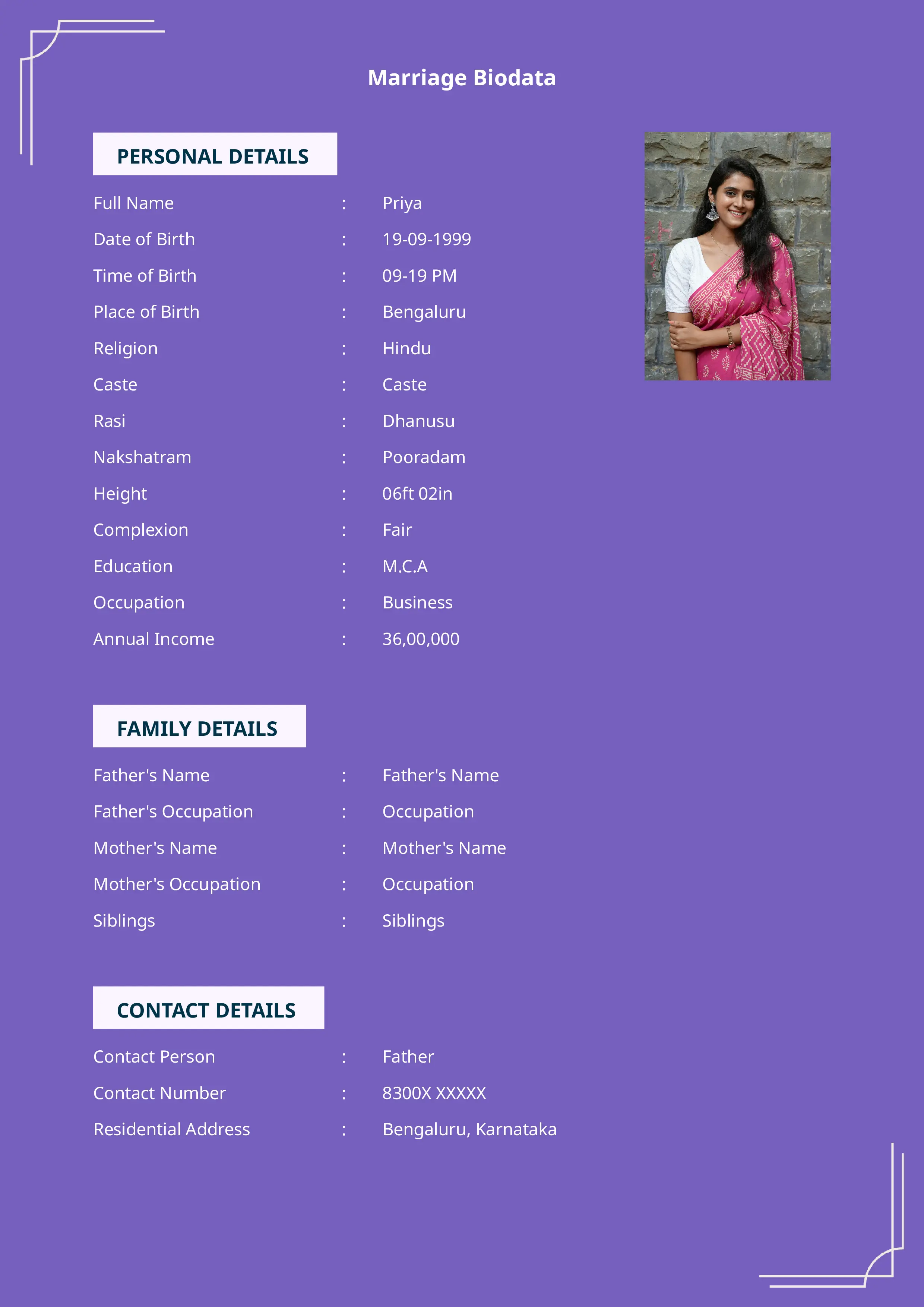
Single Page Pearl
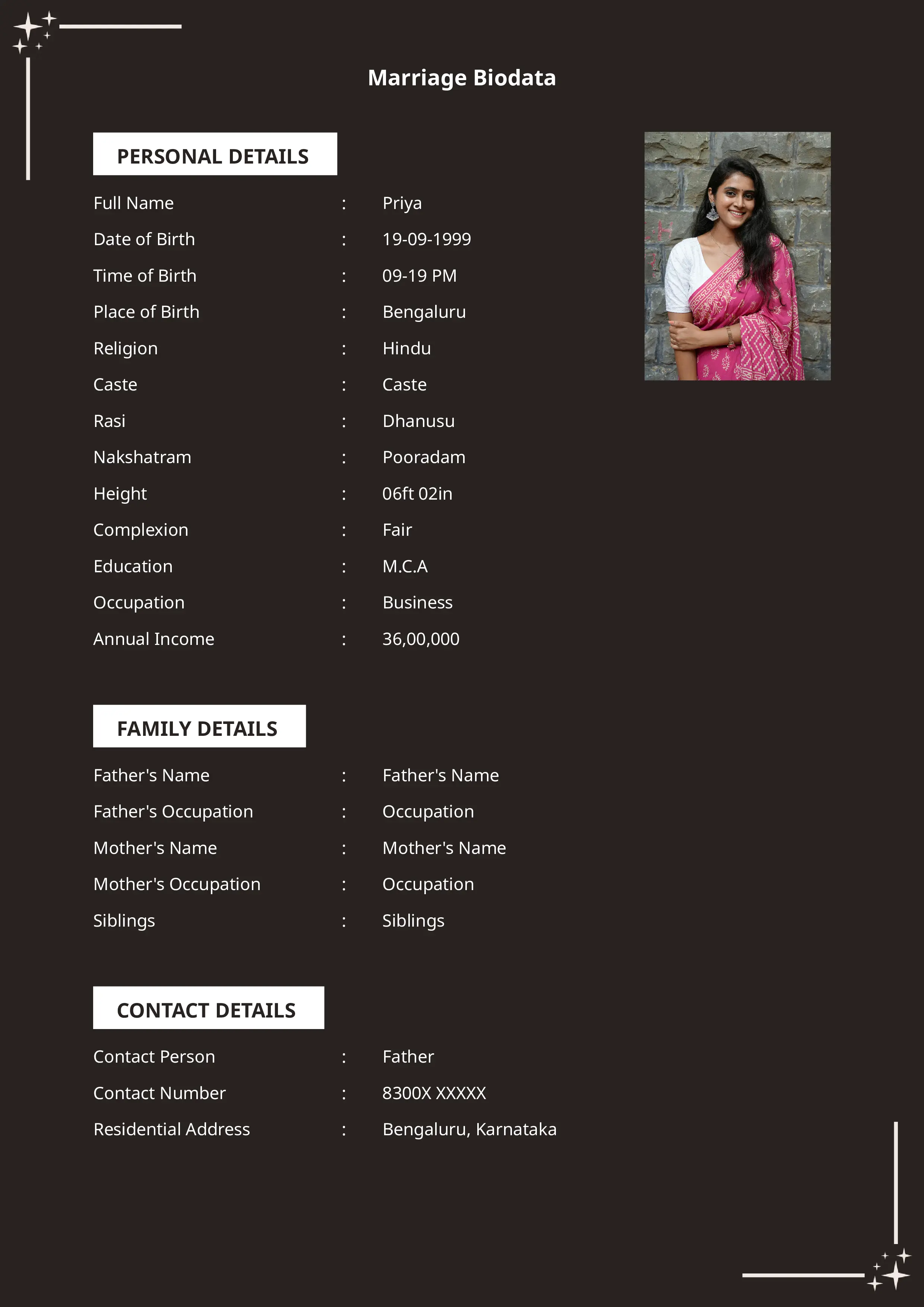
Modern Slate
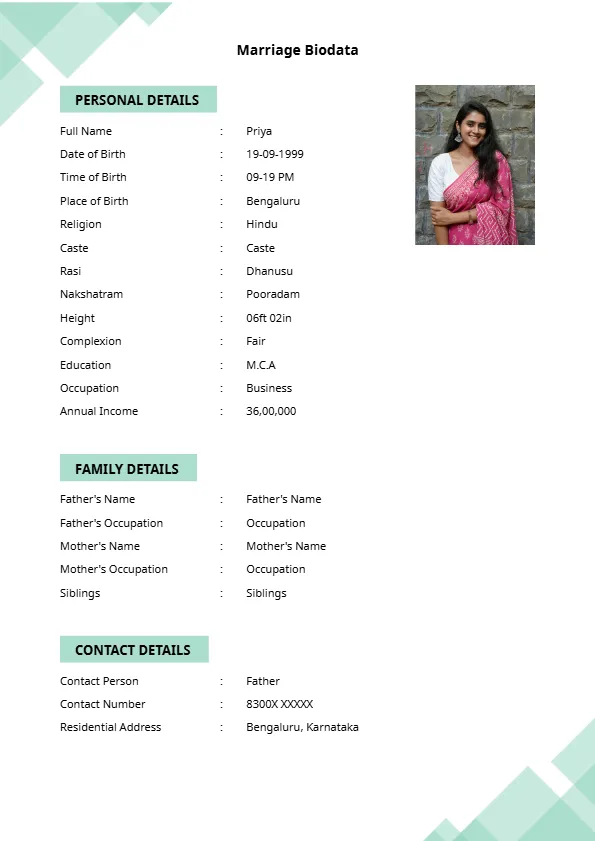
Clean Ivory
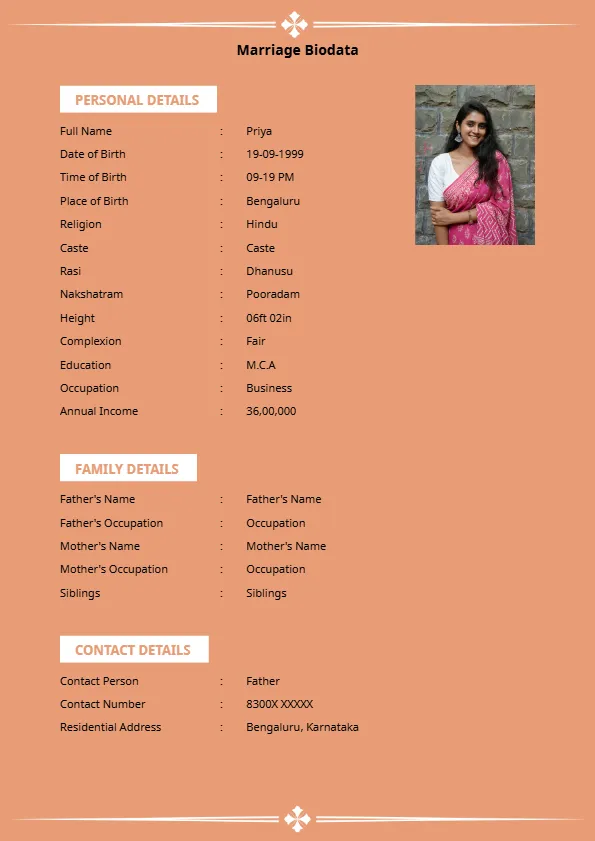
Creative Typography
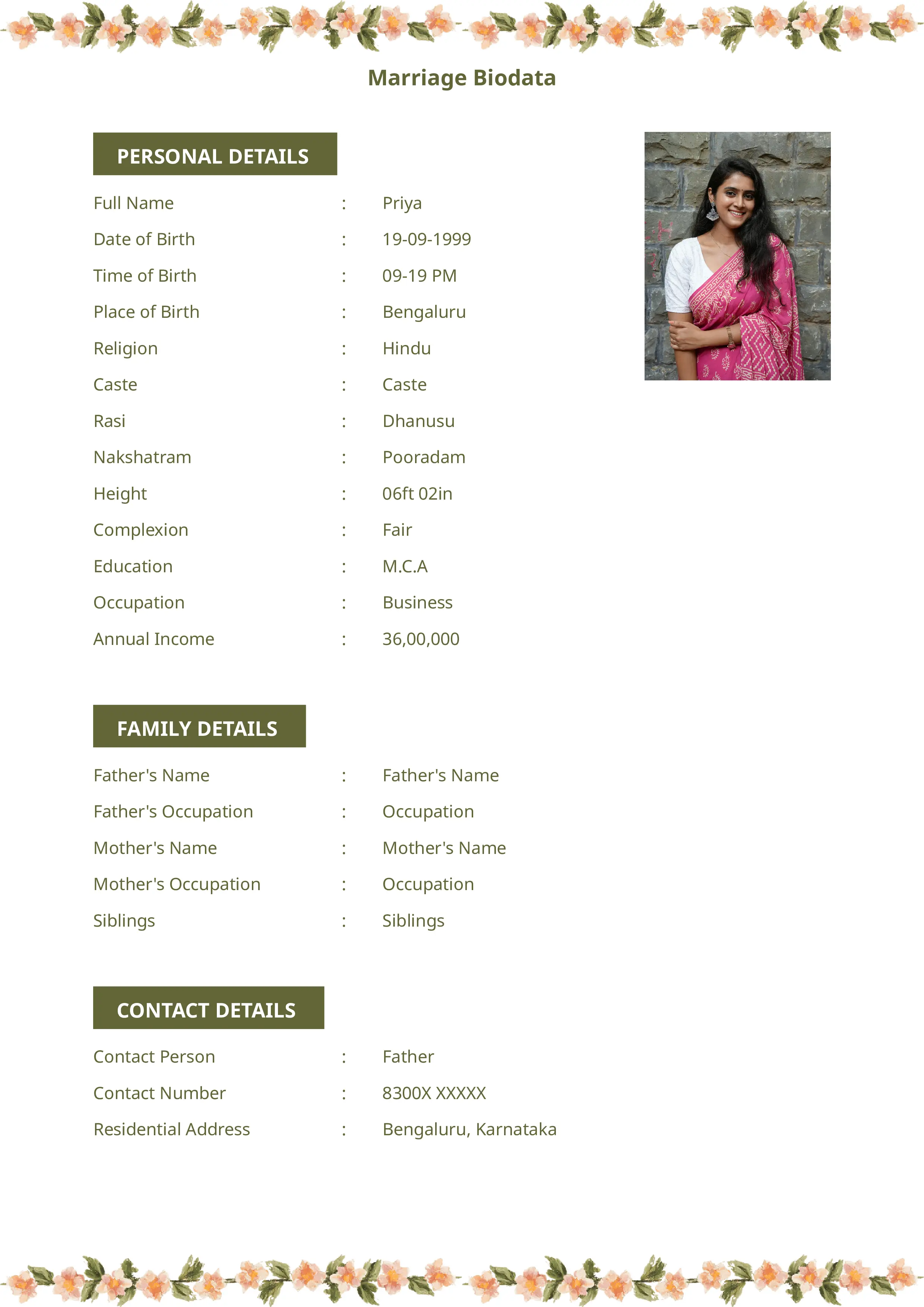
Professional Blue
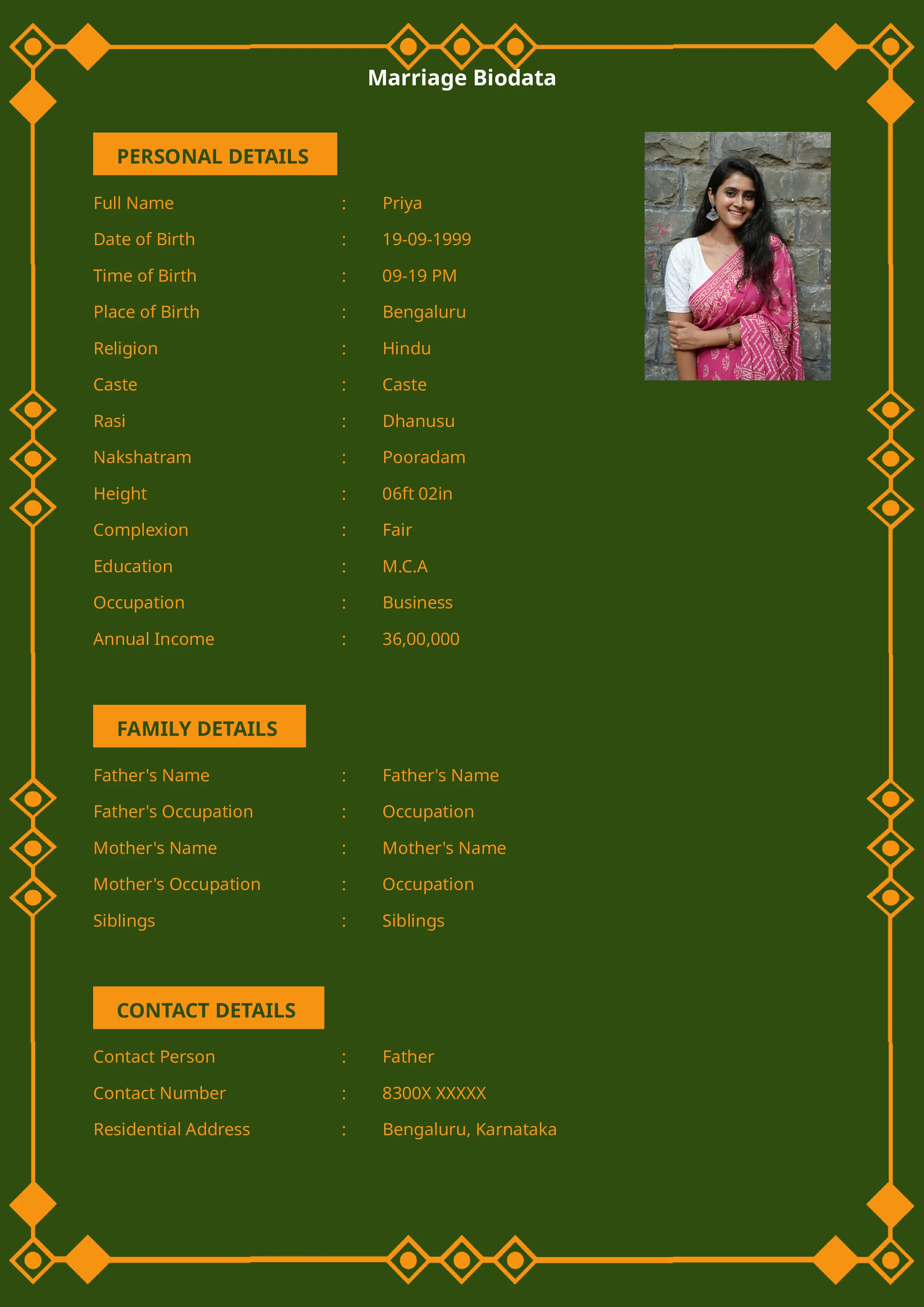
Cultural Rust
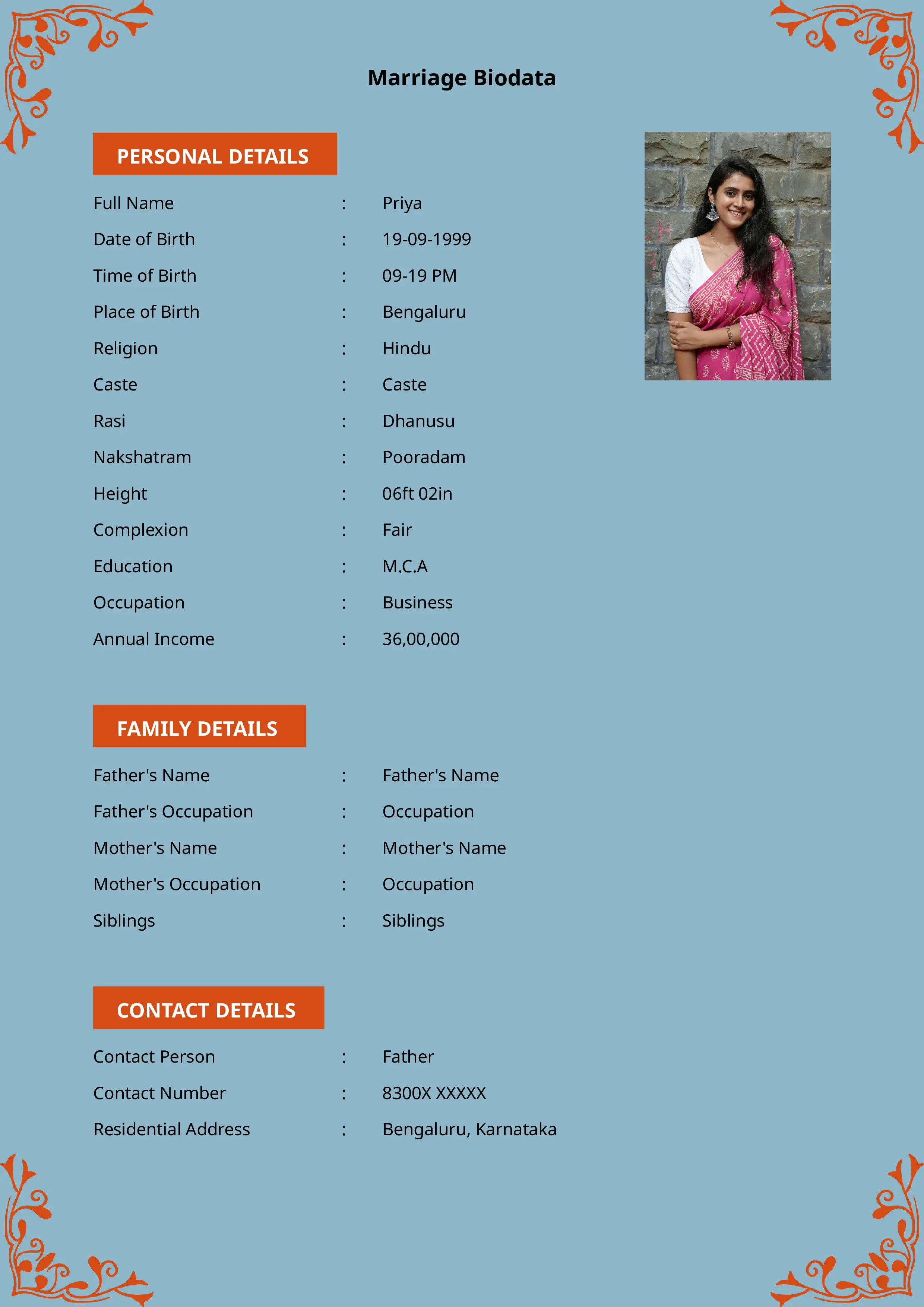
Indian Ruby
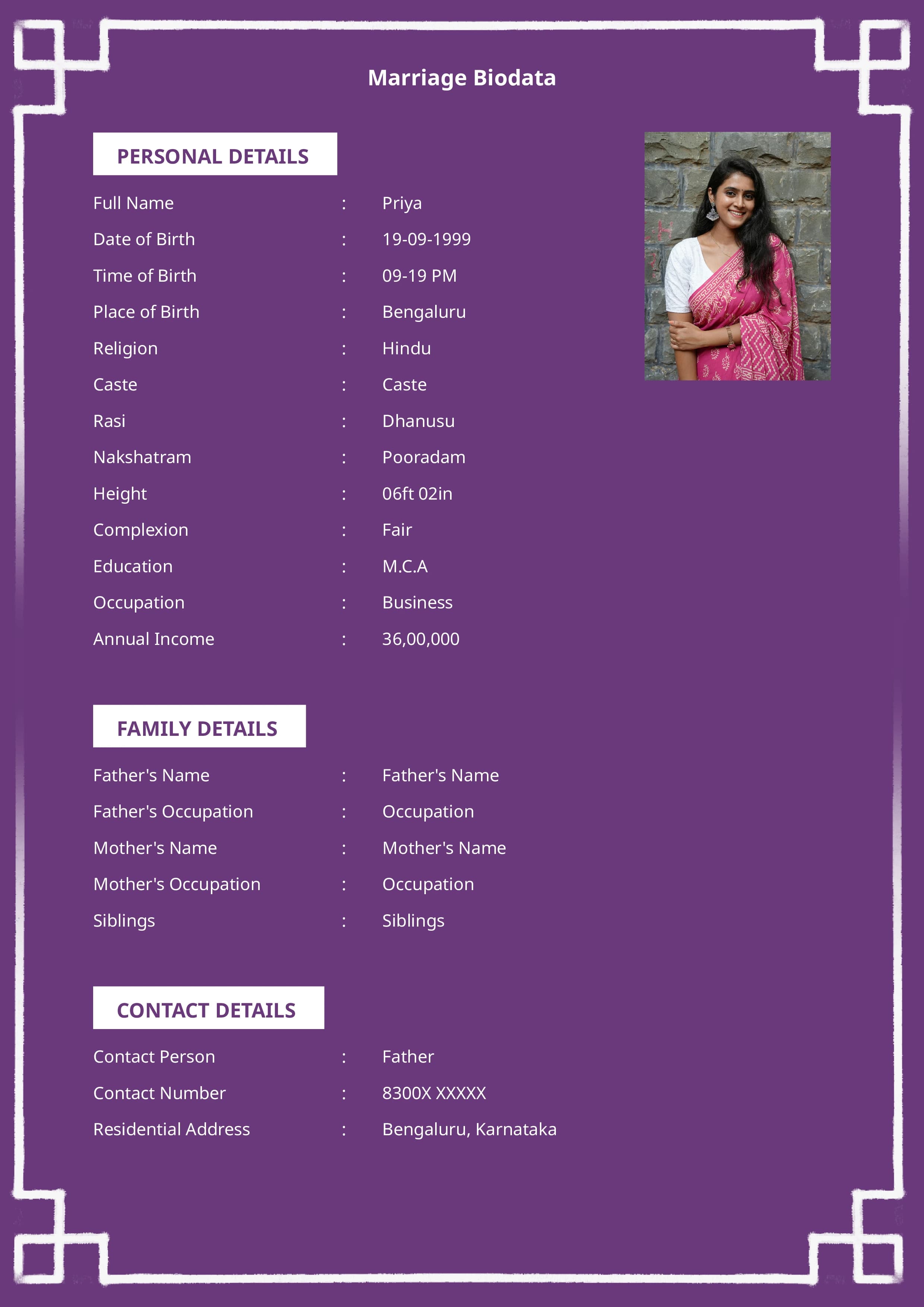
Premium Violet
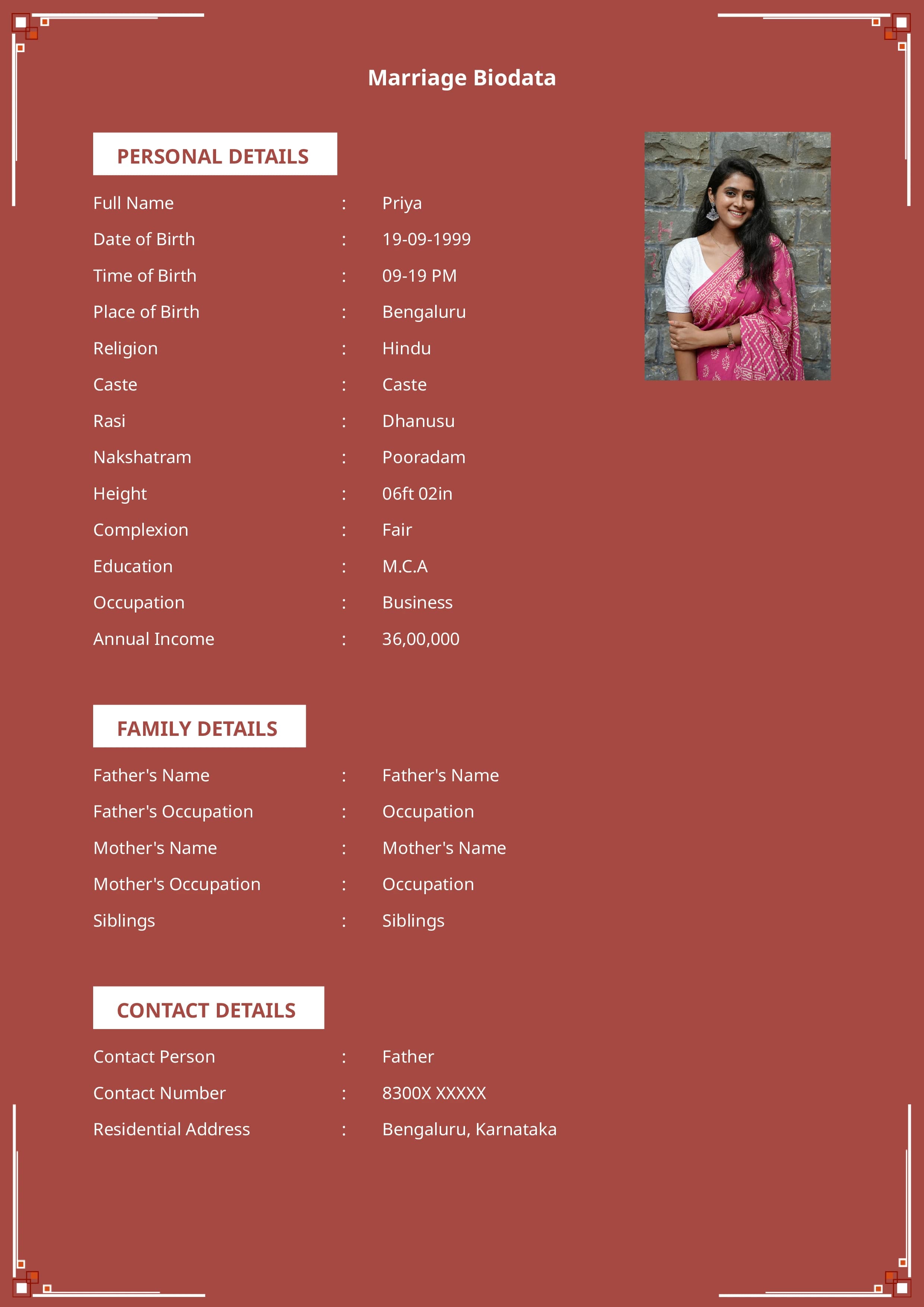
Simple Print Gray
Floral Blush
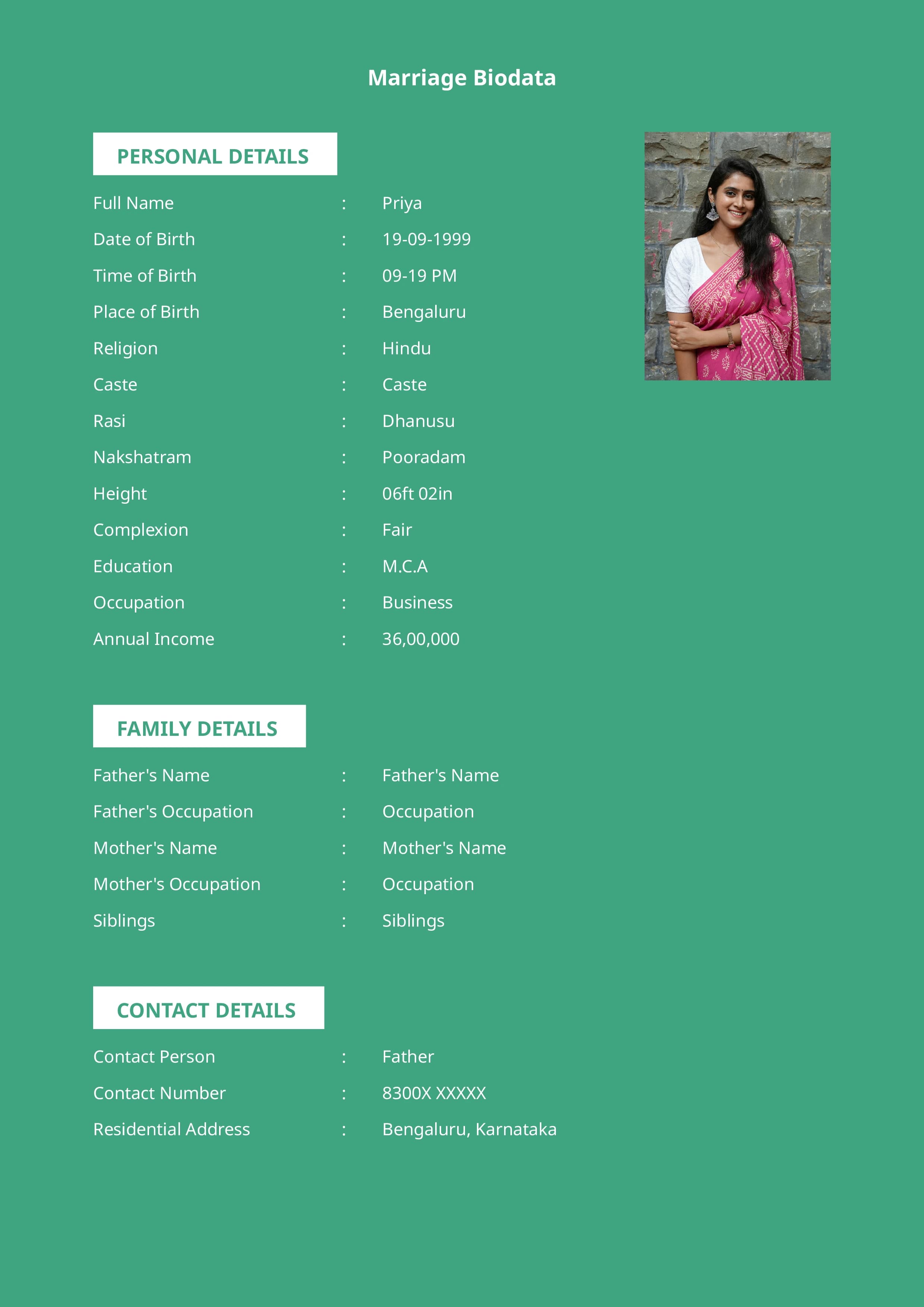
Classic Ochre
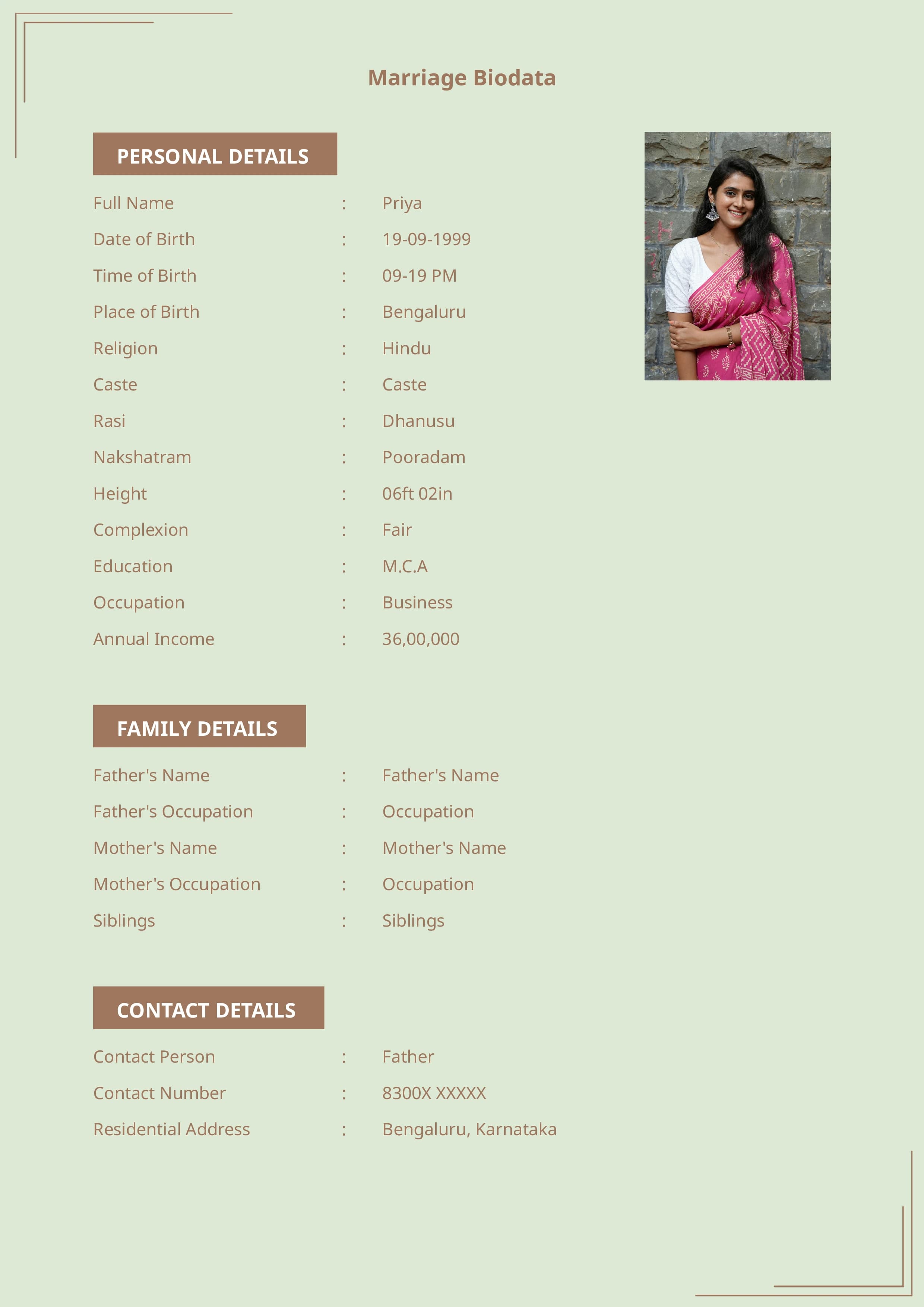
Minimalist Sand
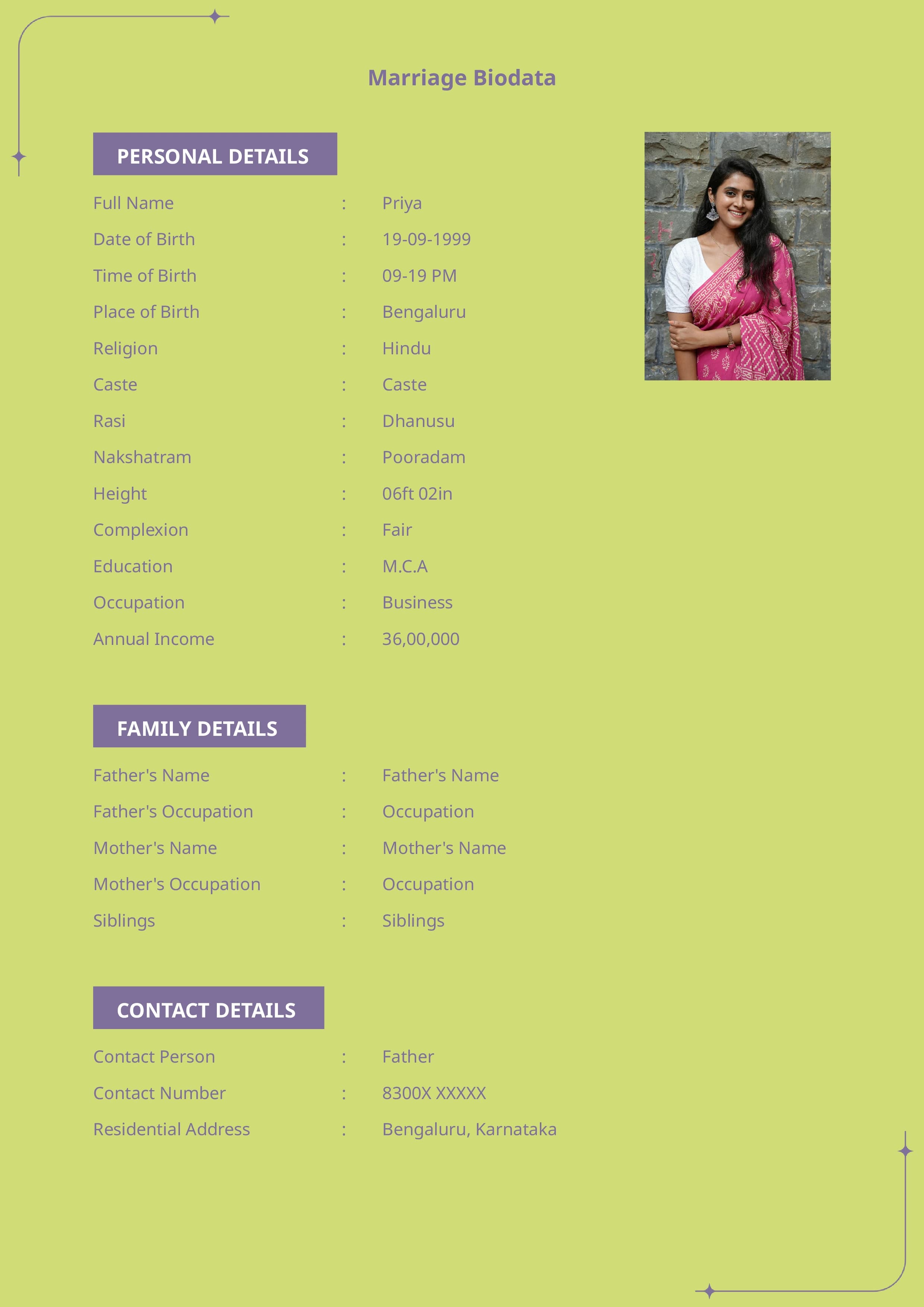
Crafted Magenta
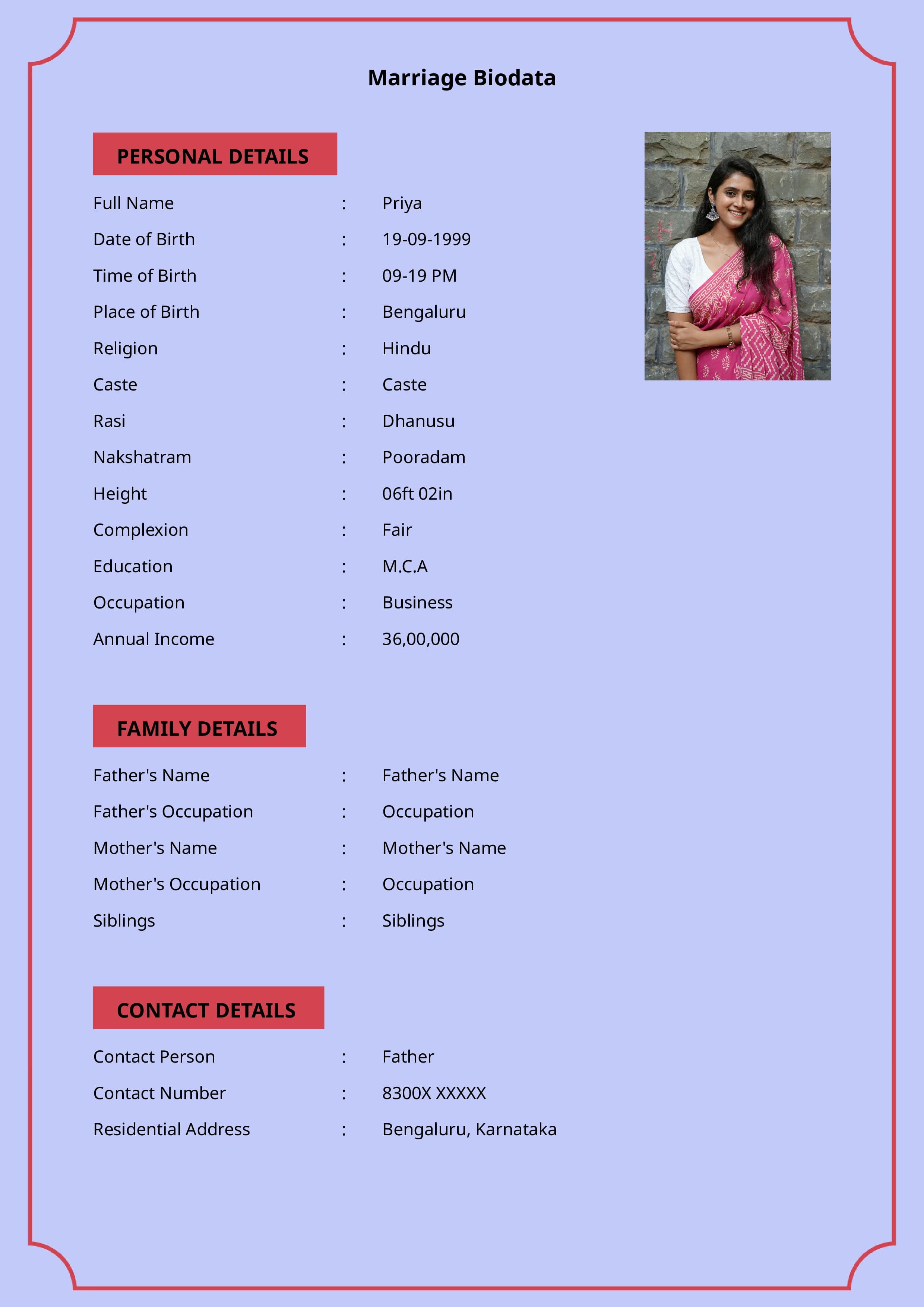
Clean Charcoal
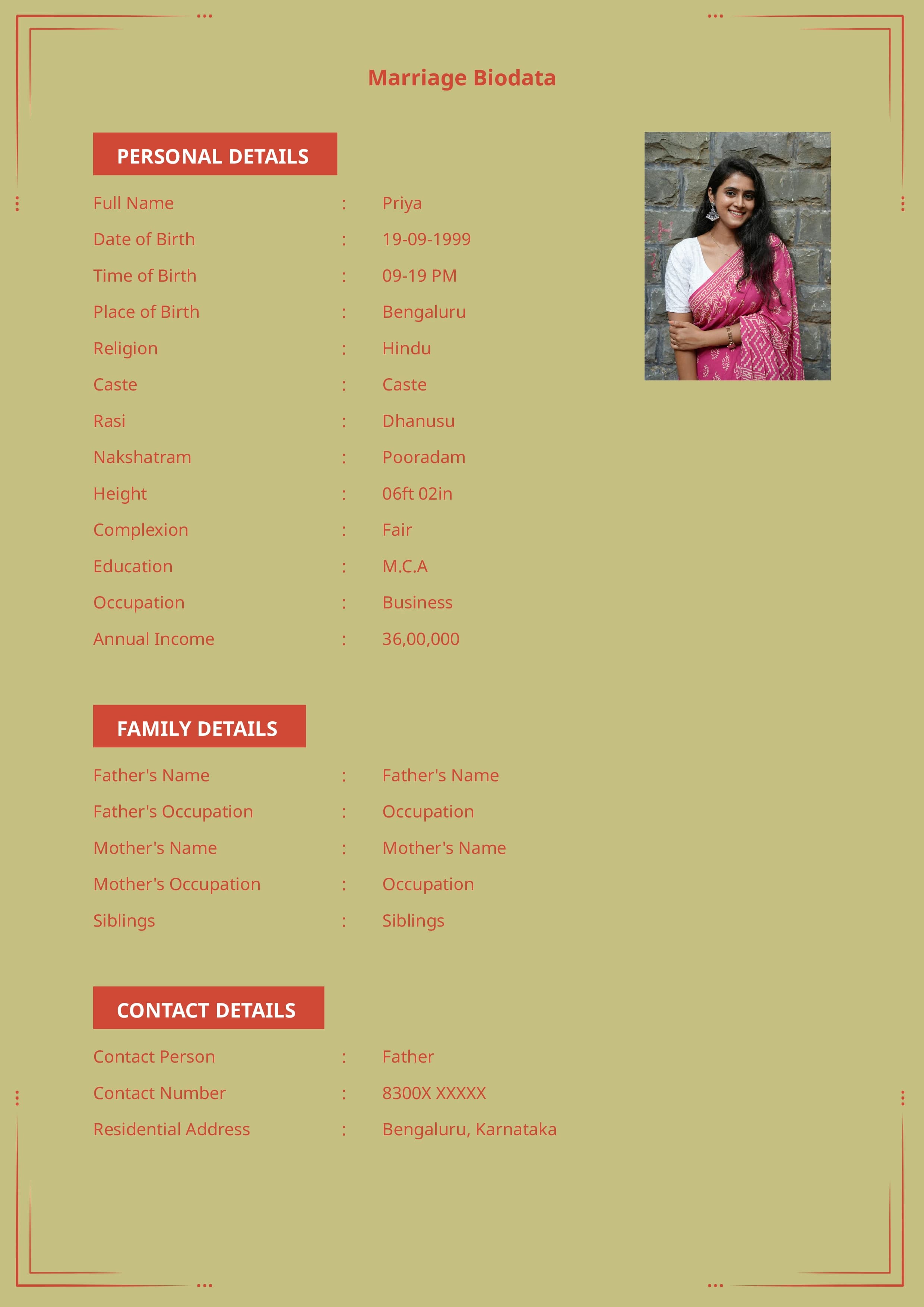
Traditional Jade
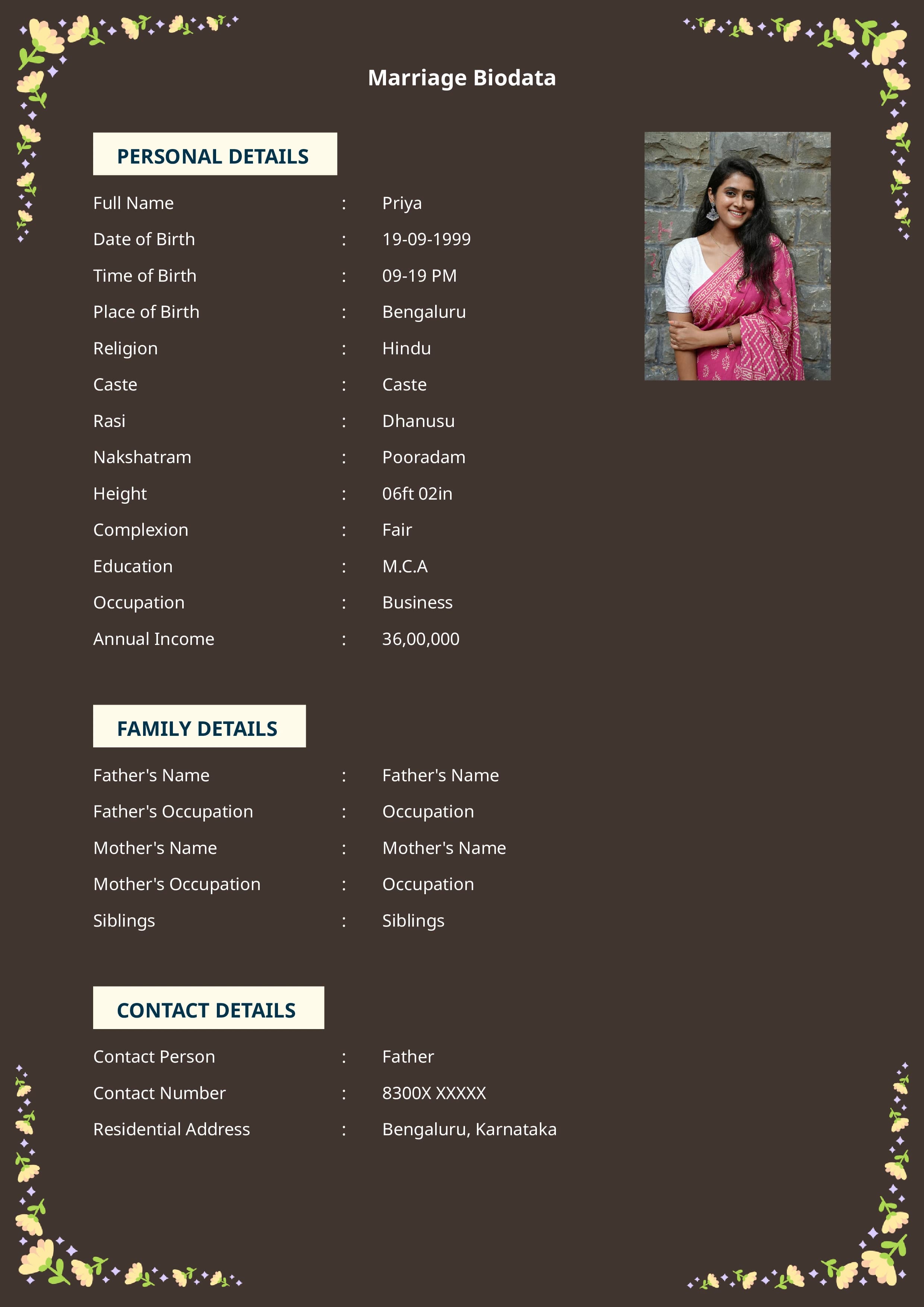
Simple Mint
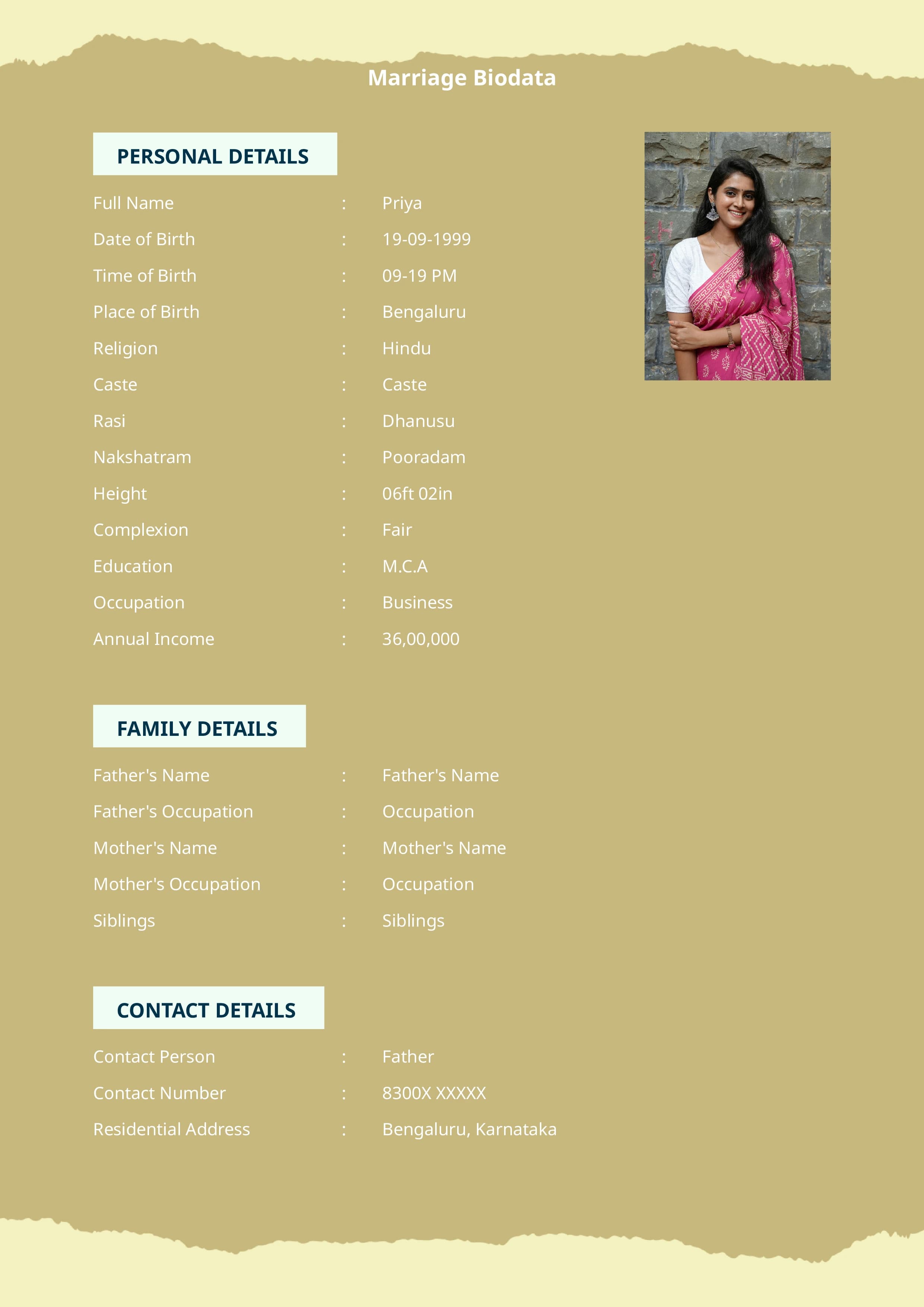
Premium Indigo
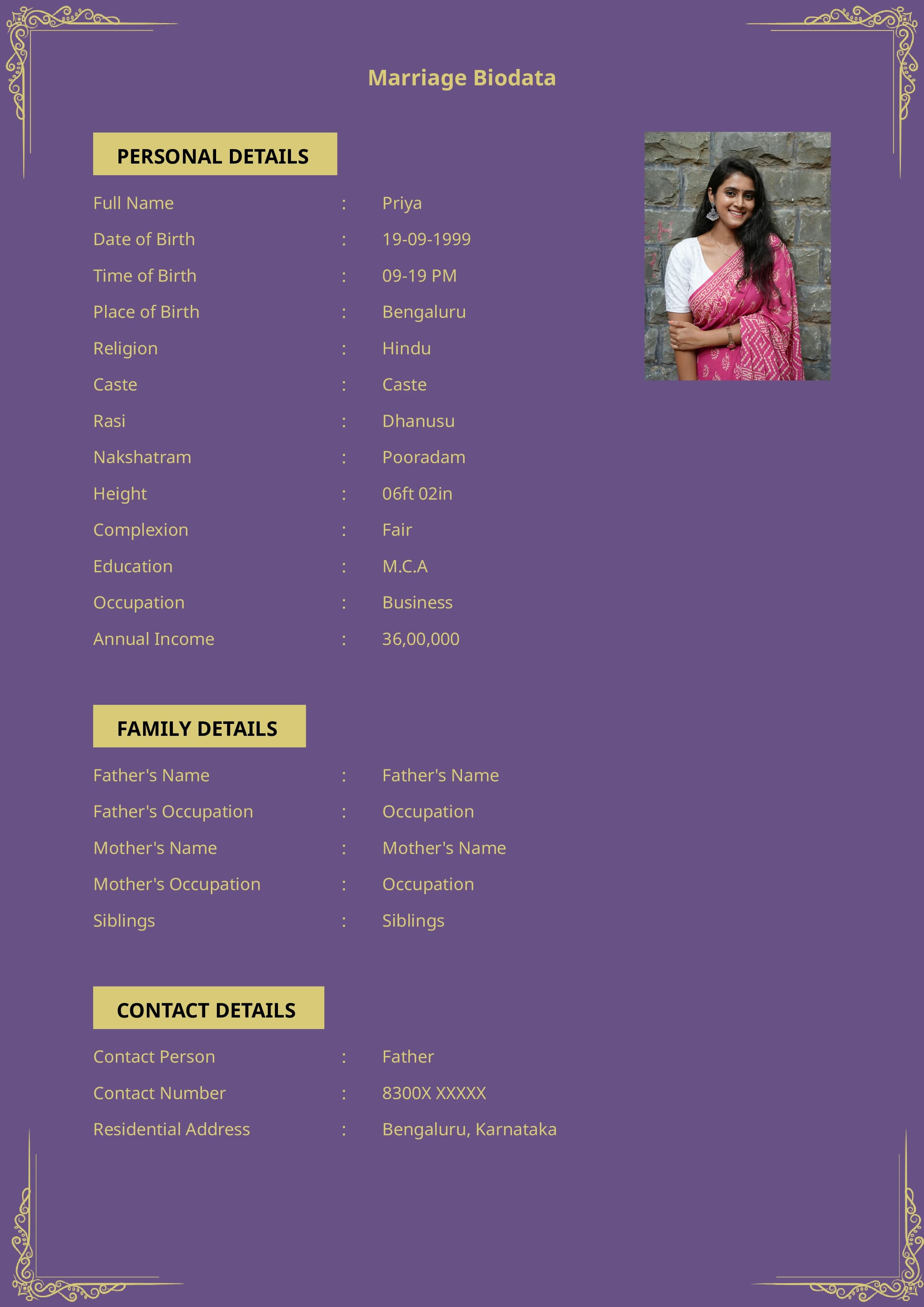
Ultimate Platinum
Frequently Asked Questions
What makes a Hindu biodata format different?
A Hindu marriage biodata explicitly includes astrological and community details such as Gotra, Rashi, Nakshatra, Gan, Nadi, and Manglik status, which are crucial for Kundli matching.
Is it mandatory to include Kundli details?
It depends on the family's beliefs. If your family relies on horoscope matching, including these details upfront saves time for both parties.