Muslim Marriage Biodata Format in PDF
When creating a biodata for a Muslim marriage, clarity around religious practices and family background is key. Use these examples to structure your own marriage biodata pdf perfectly.
How the Muslim Marriage Process Works Through a Biodata
In Muslim arranged marriages, the biodata acts as the crucial first step. Here is the traditional step-by-step journey from sharing the biodata to finalizing the match.
Exchanging Biodata
Families exchange the marriage biodata. A well-formatted PDF creates a strong first impression, highlighting personal, educational, and important religious details like Sect and practices.
Background Check
Once the biodata is shortlisted, families verify details and assess compatibility, often consulting mutual acquaintances or relatives.
The First Meeting (Ta'aruf)
If there is a mutual interest, families arrange a formal meeting where the prospective bride and groom get to interact under respectful guidelines.
Finalizing the Match
If both parties are satisfied and give their consent, the families proceed to finalize the marriage and plan for the Nikkah.
Sample Muslim Marriage Biodata & Best Practices
Wondering what exactly to write? Here is a reference table for a traditional Muslim biodata, along with essential dos and don'ts.
| Section | What to Include (Examples) |
|---|---|
| Personal Details | Full Name, Age & Date of Birth, Height, Marital Status, Complexion, Blood Group. |
| Religious & Community Details | Sect (e.g., Sunni, Shia), Maslak / Caste, Religious Practices (e.g., Daily Prayers, Fasting), Diet (Halal), Dress Code (e.g., Hijab/Beard). |
| Education & Career | Highest Qualification (e.g., MS, BDS), Current Job Title, Company Name, Annual Income (Optional). |
| Family Details | Father's & Mother's Names and Occupations, Number of Siblings, Native Place/Hometown. |
| Contact Information | Parent's Mobile Number, Current Residential Address, Email Address. |
What to Write (The Dos)
- •Specify Sect and Maslak: Clearly state if you are Sunni or Shia, and your Maslak (e.g., Deobandi, Barelvi, Ahl-e-Hadith). This is usually the first filter in a Muslim marriage process.
- •Detail your religious practices: Mention your adherence to daily prayers (Namaz), fasting (Roza), and whether you have performed Hajj/Umrah.
- •State appearance preferences: If you wear a Hijab, Niqab, or Abaya, or if you maintain a beard (for men), mention it clearly so expectations align immediately.
- •Provide clear family details: Islamic marriages deeply involve family ties. Ensure your family's background, native place, and siblings' details are accurately presented.
What NOT to Do (The Don'ts)
- •Don't hide previous marital status: Whether unmarried, divorced, or widowed, Islamic principles require complete honesty. Do not conceal past marriages.
- •Don't skip dietary habits: While Halal is standard, clarify if you have other specific dietary restrictions or allergies.
- •Don't exaggerate your Deen: Be truthful about your level of religious practice. Do not claim to pray 5 times a day if you do not, as this will lead to conflict later.
- •Don't Overcomplicate demands: Keep the focus on character (Akhlaq) and Deen. Avoid overly materialistic or highly specific conditions that complicate the Ta'aruf.
Explore Other Biodata Formats
Explore Muslim Biodata Templates
Choose from our curated collection of elegant traditional designs.
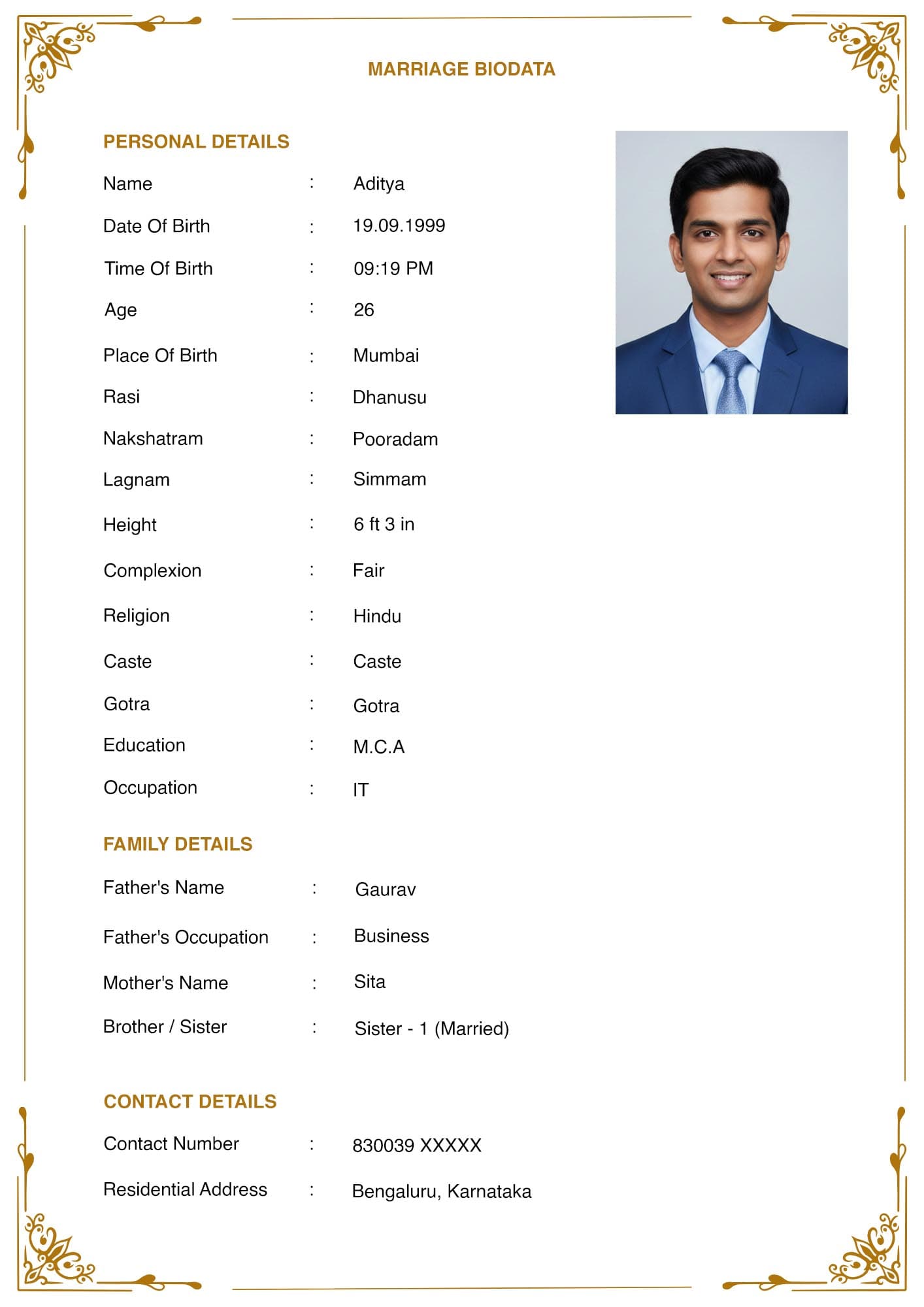
Traditional Elegance
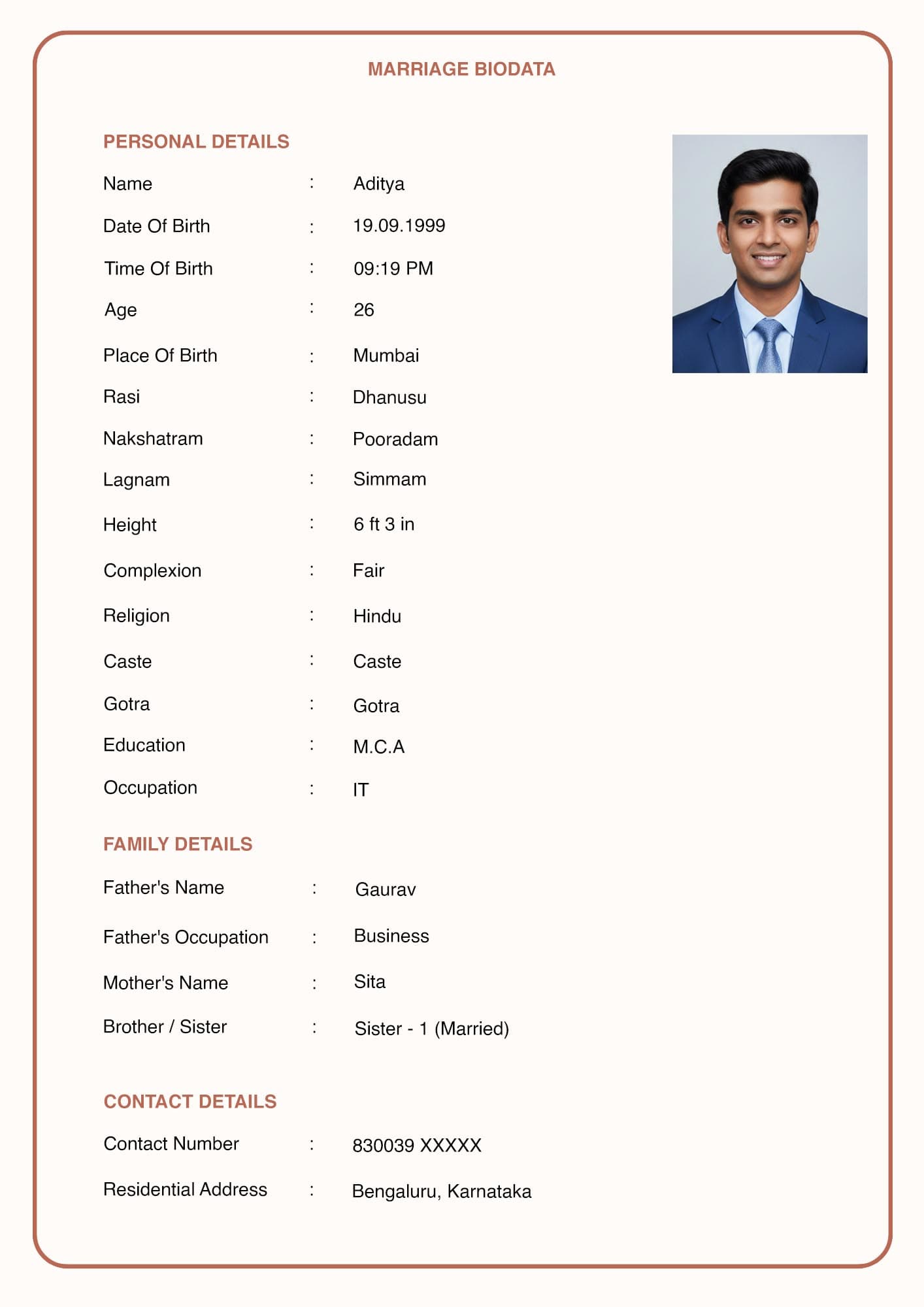
Modern Minimalist
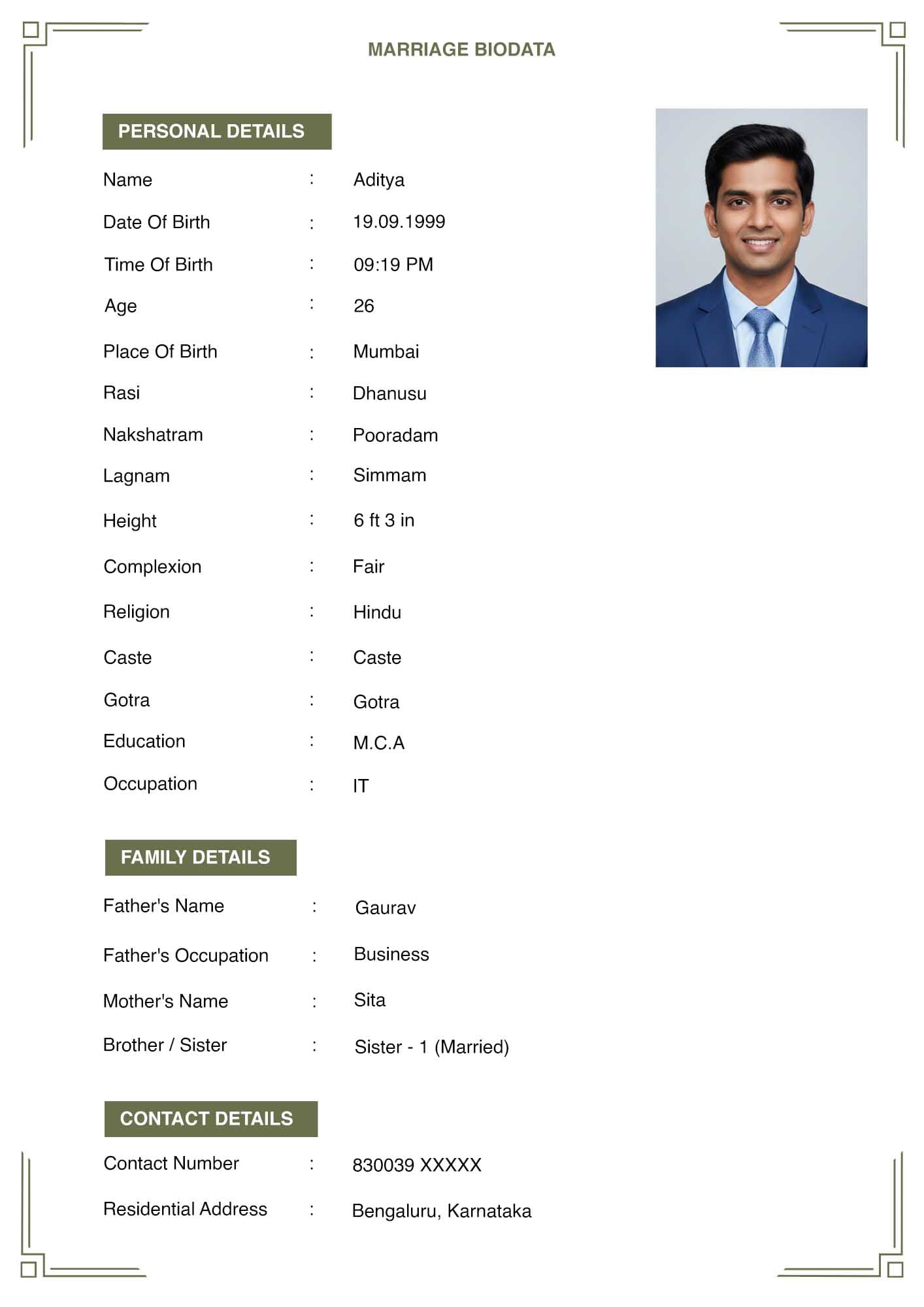
Floral Classic
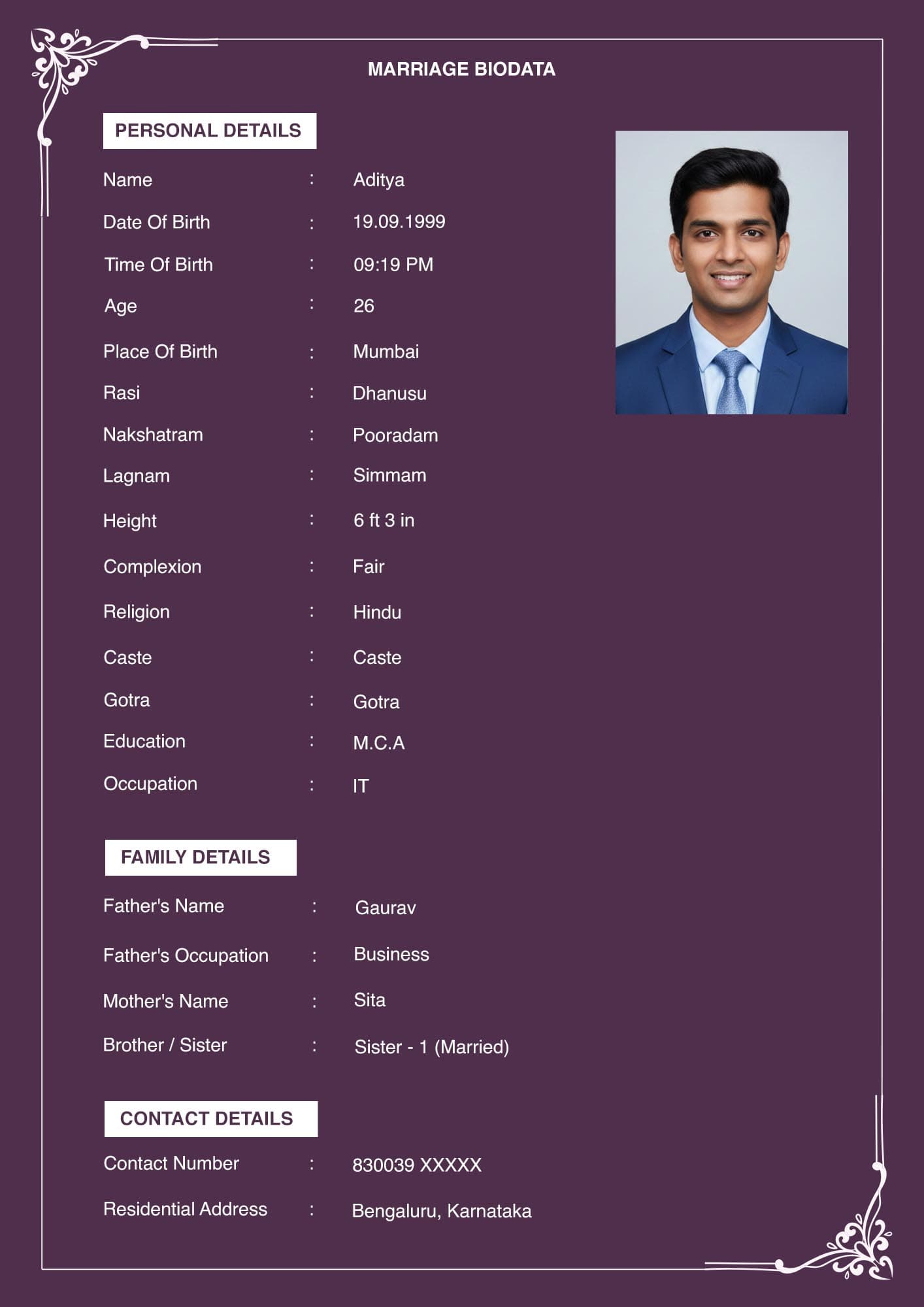
Royal Heritage
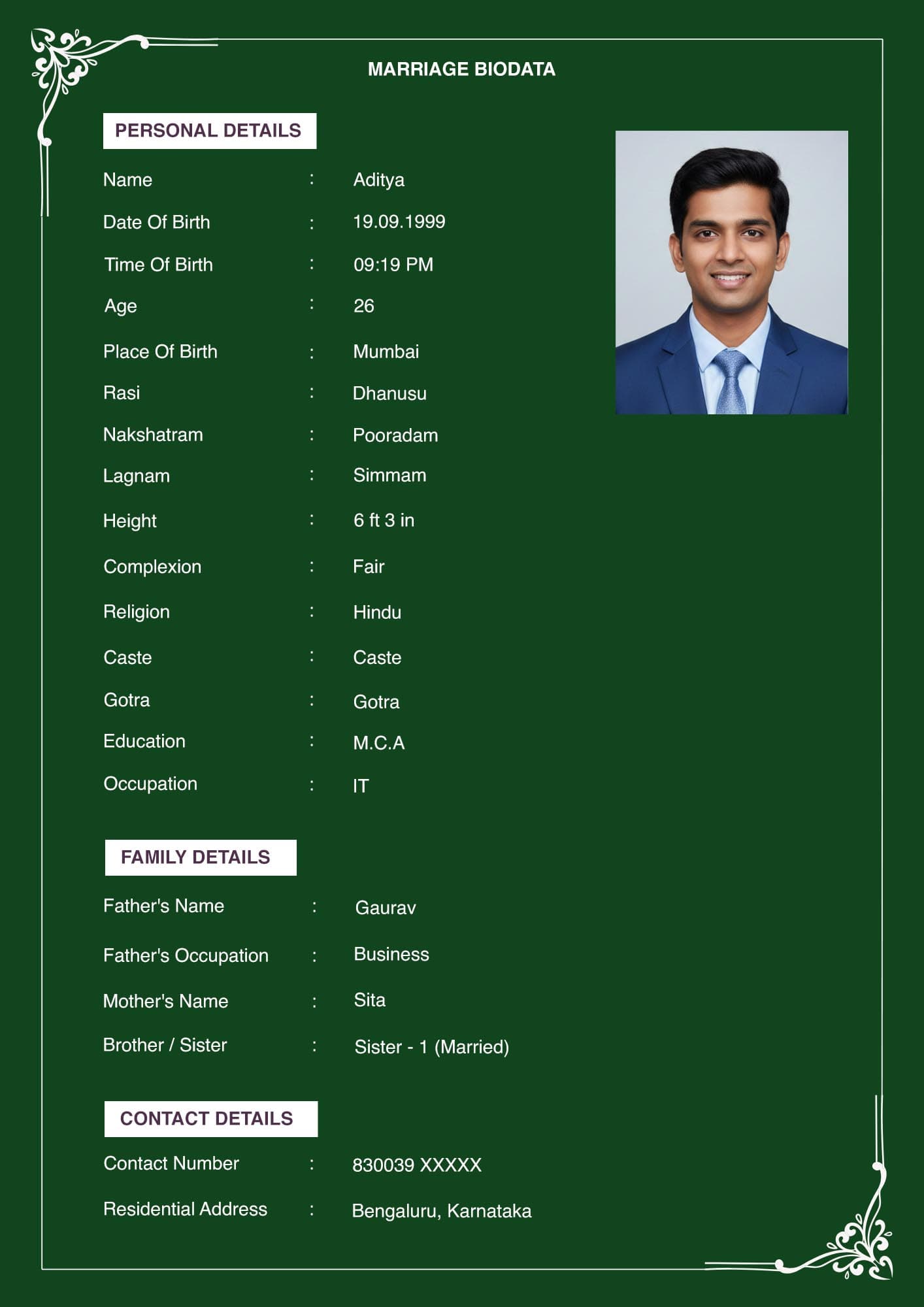
Elegant Simple
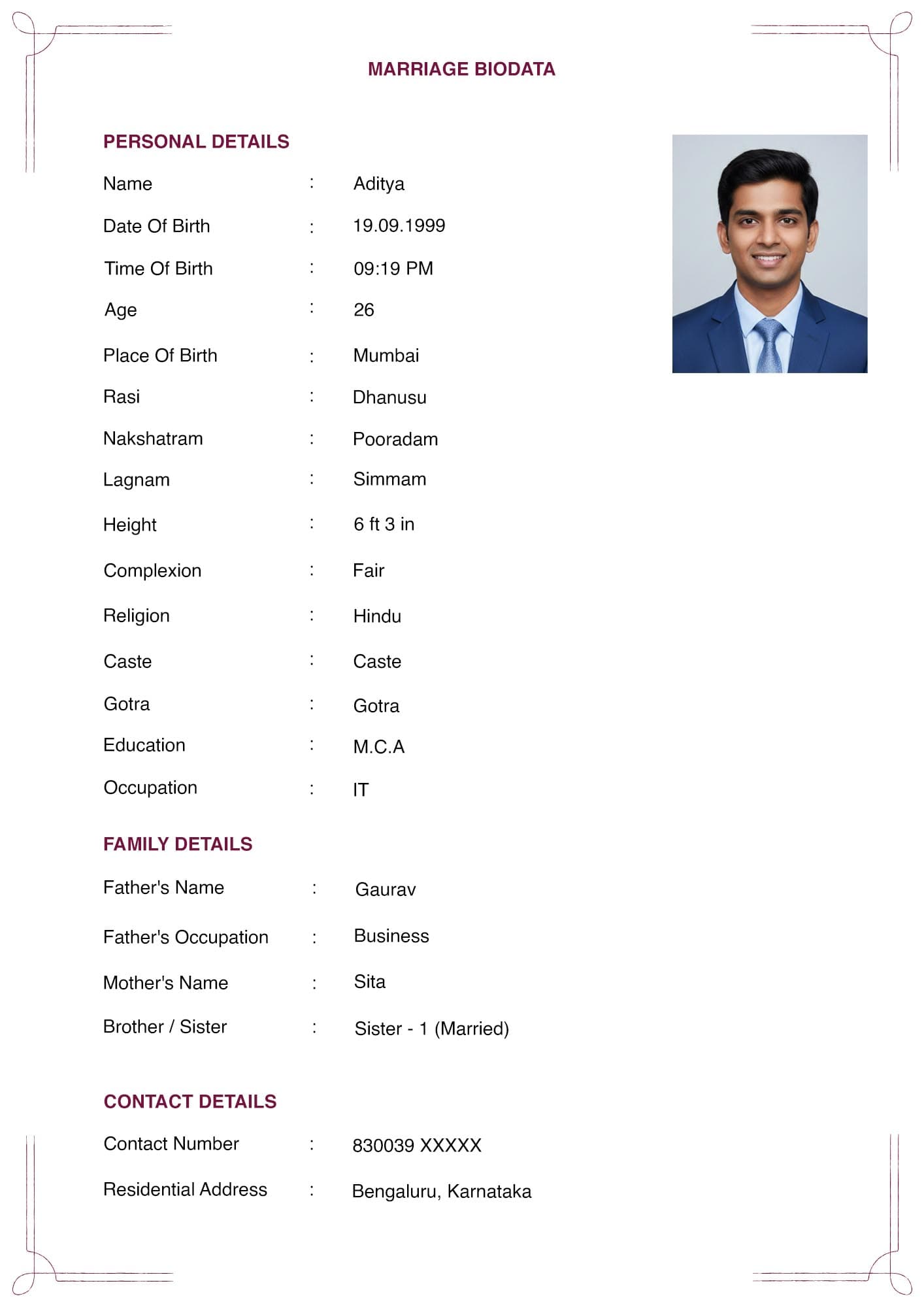
Contemporary Style
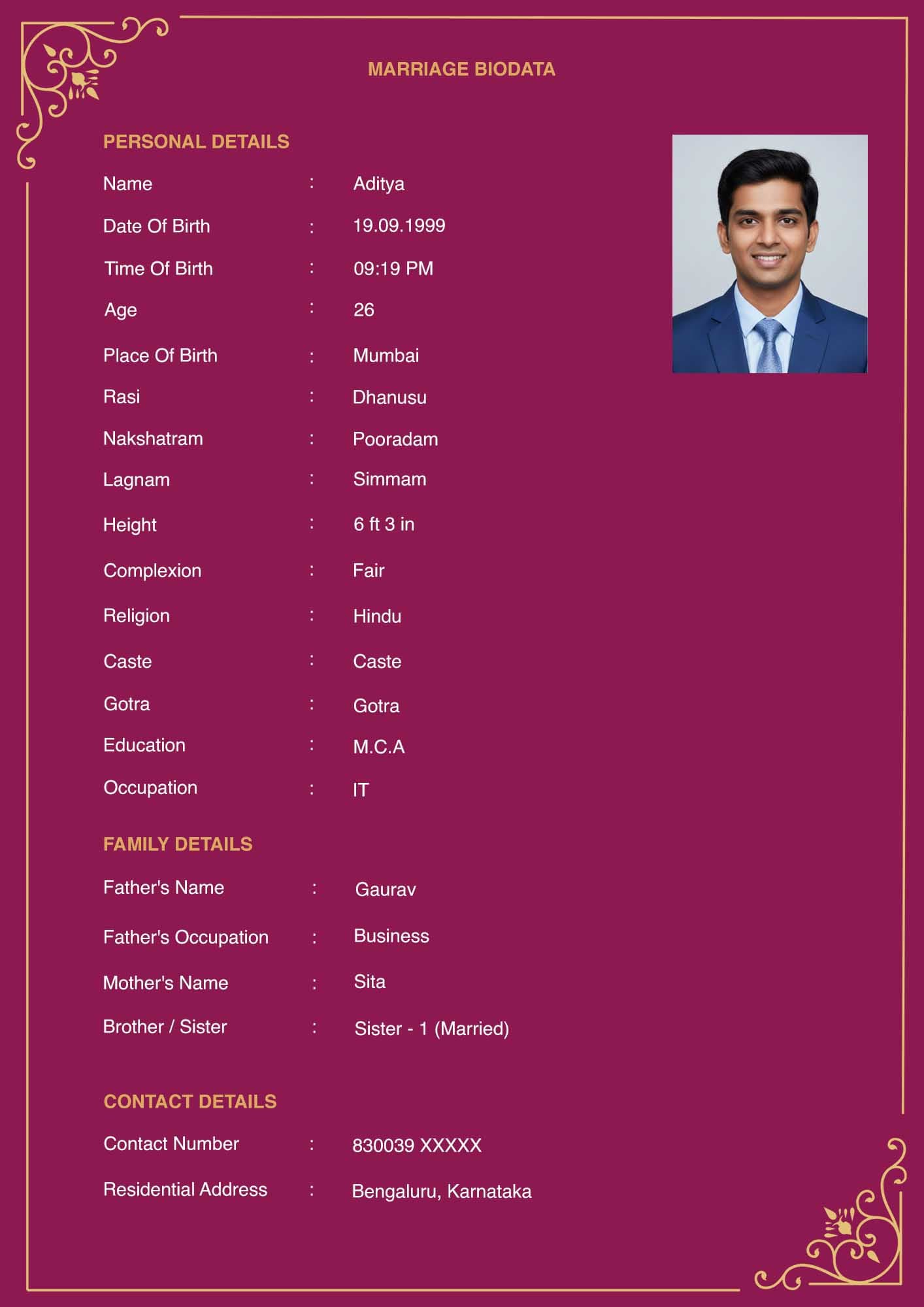
Royal Purple
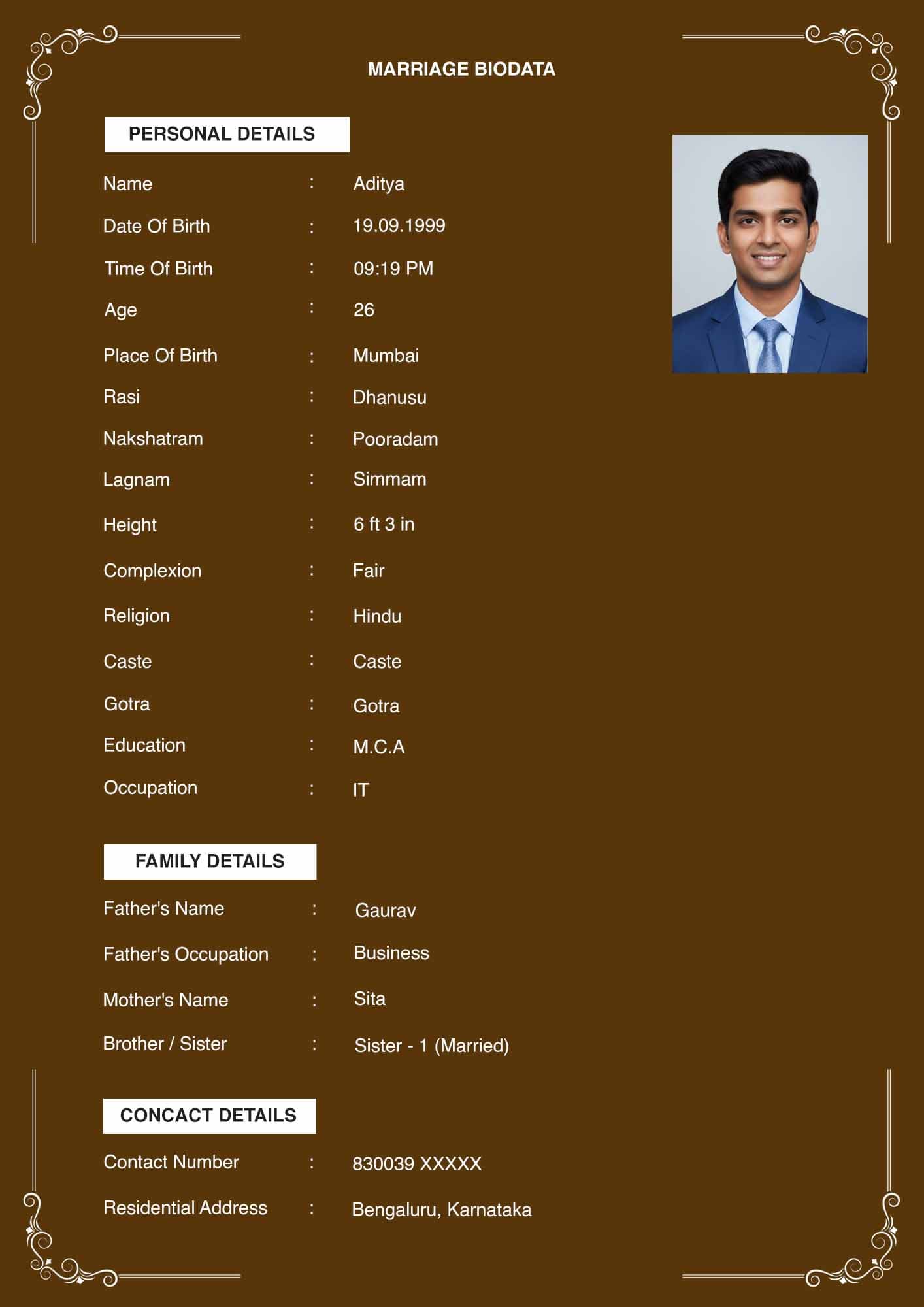
Classic Brown
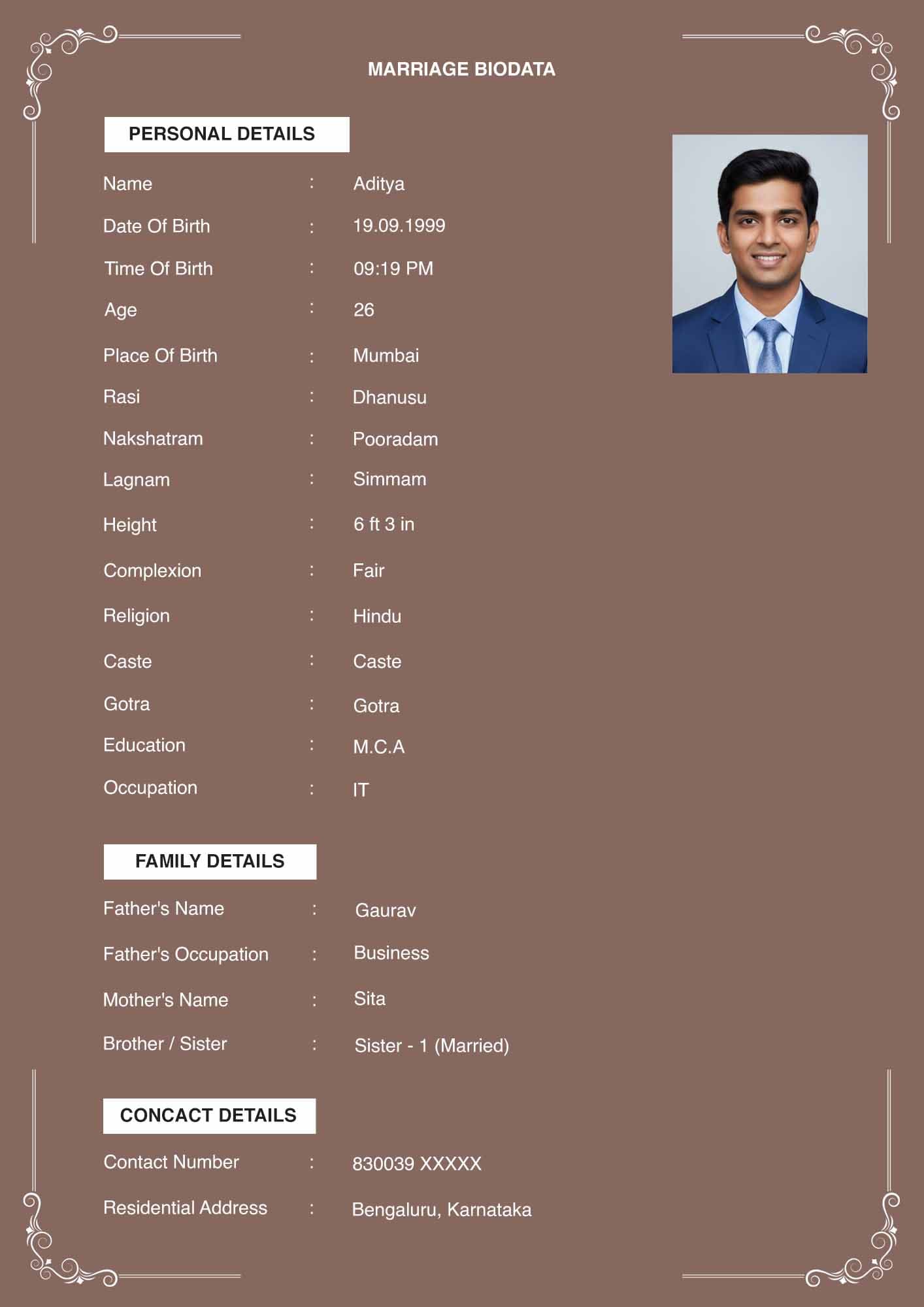
Warm Earth
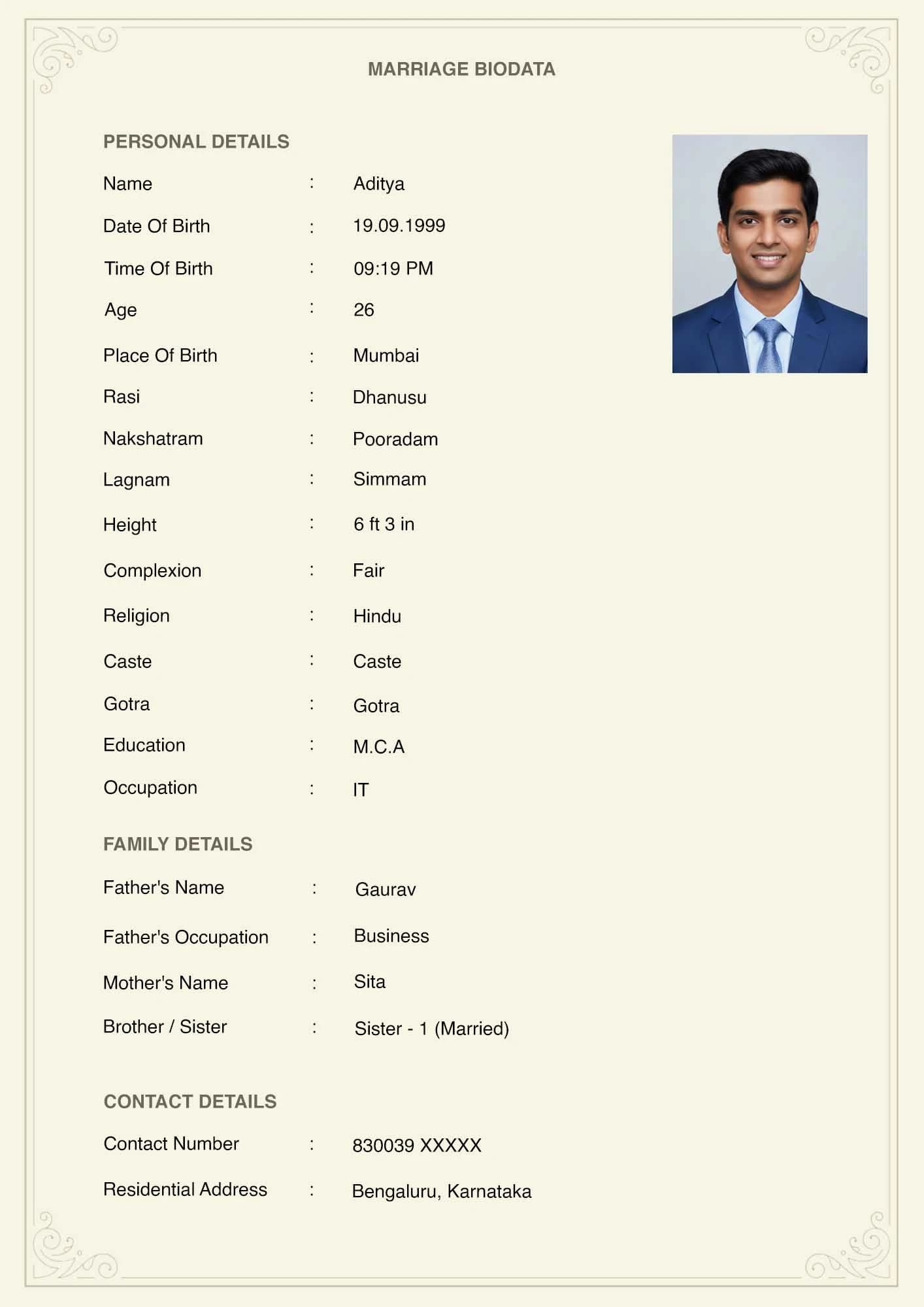
Aesthetic Maroon
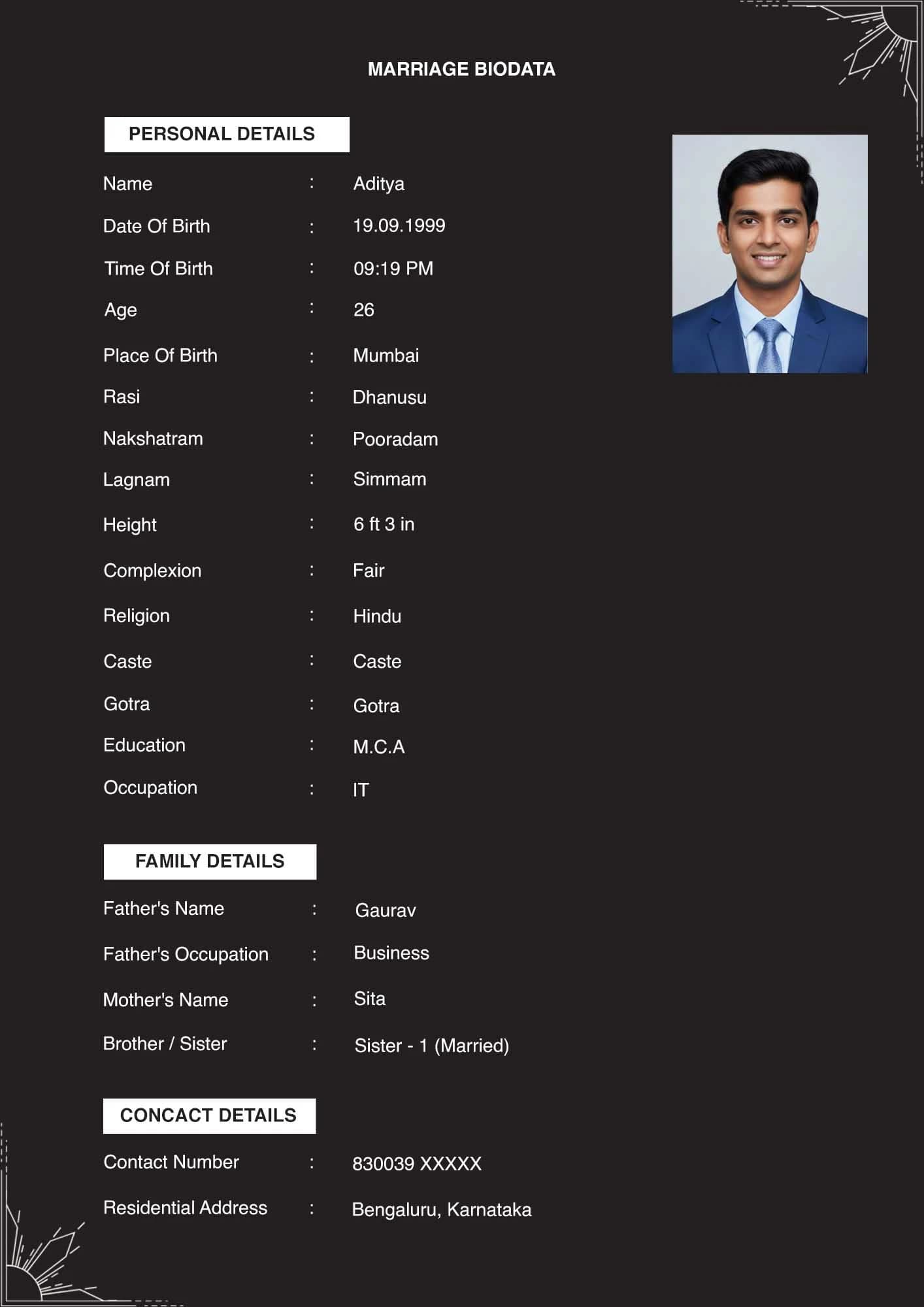
Classic Golden
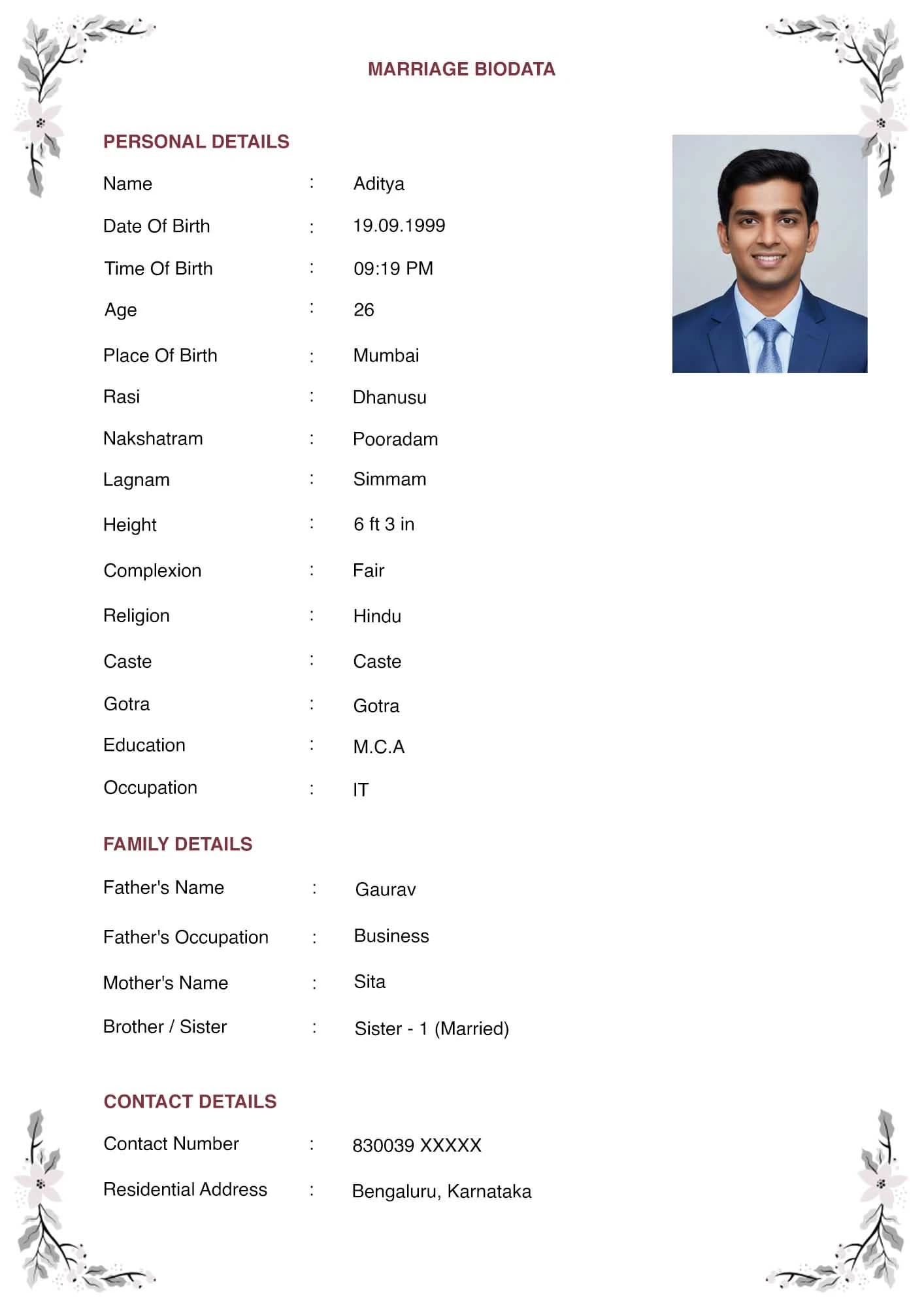
Contemporary Teal
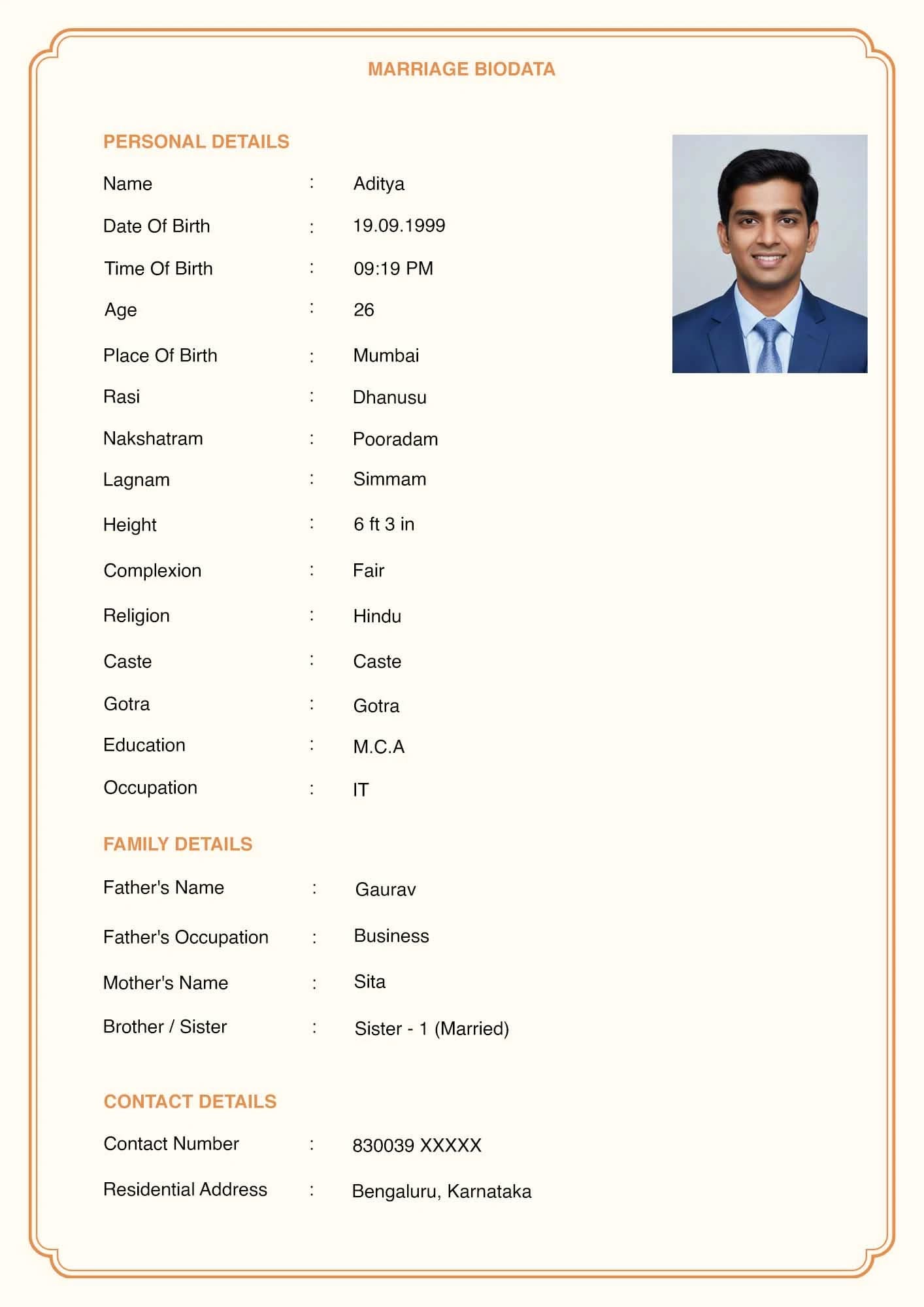
Bridal Rose
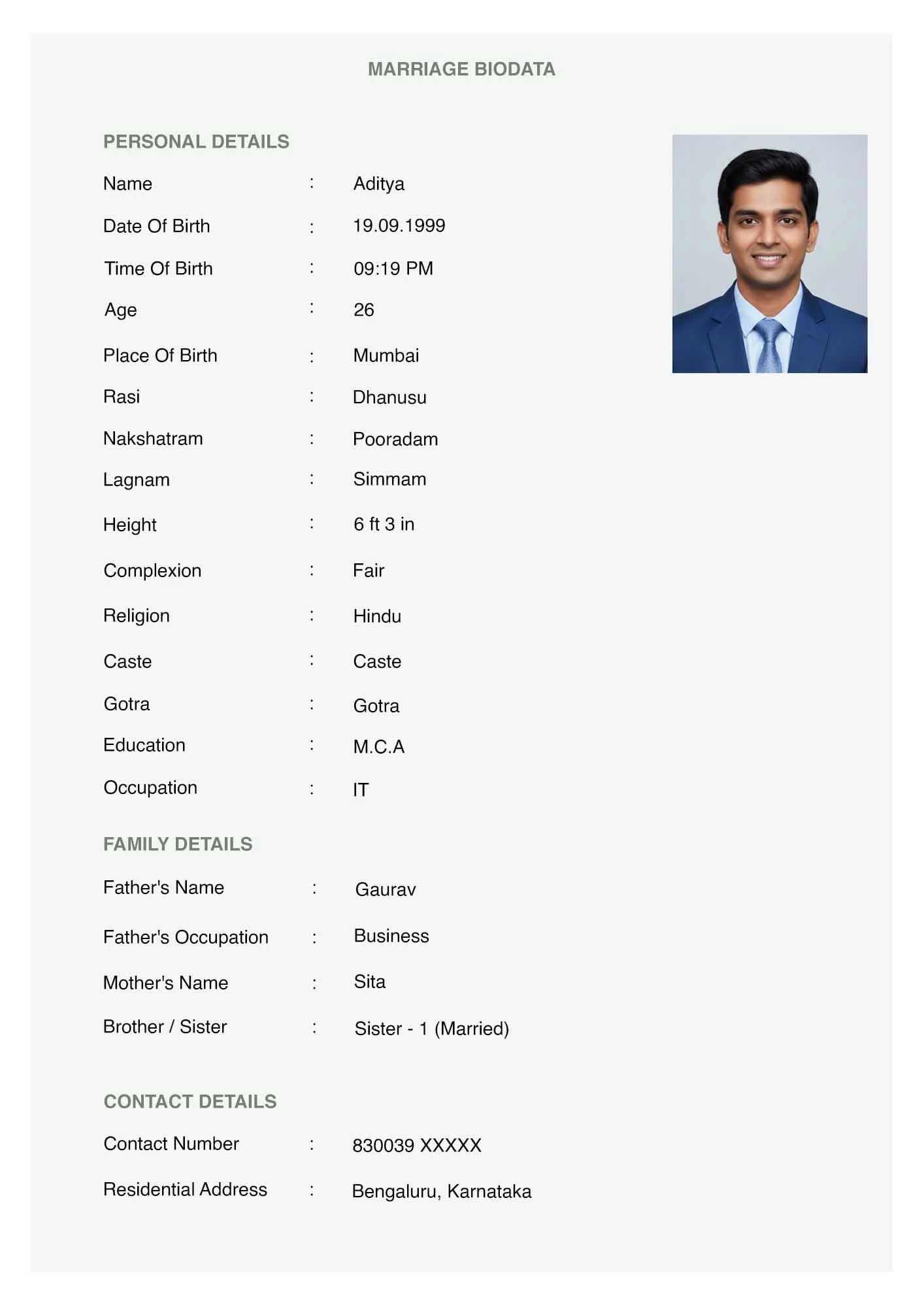
Sophisticated Navy
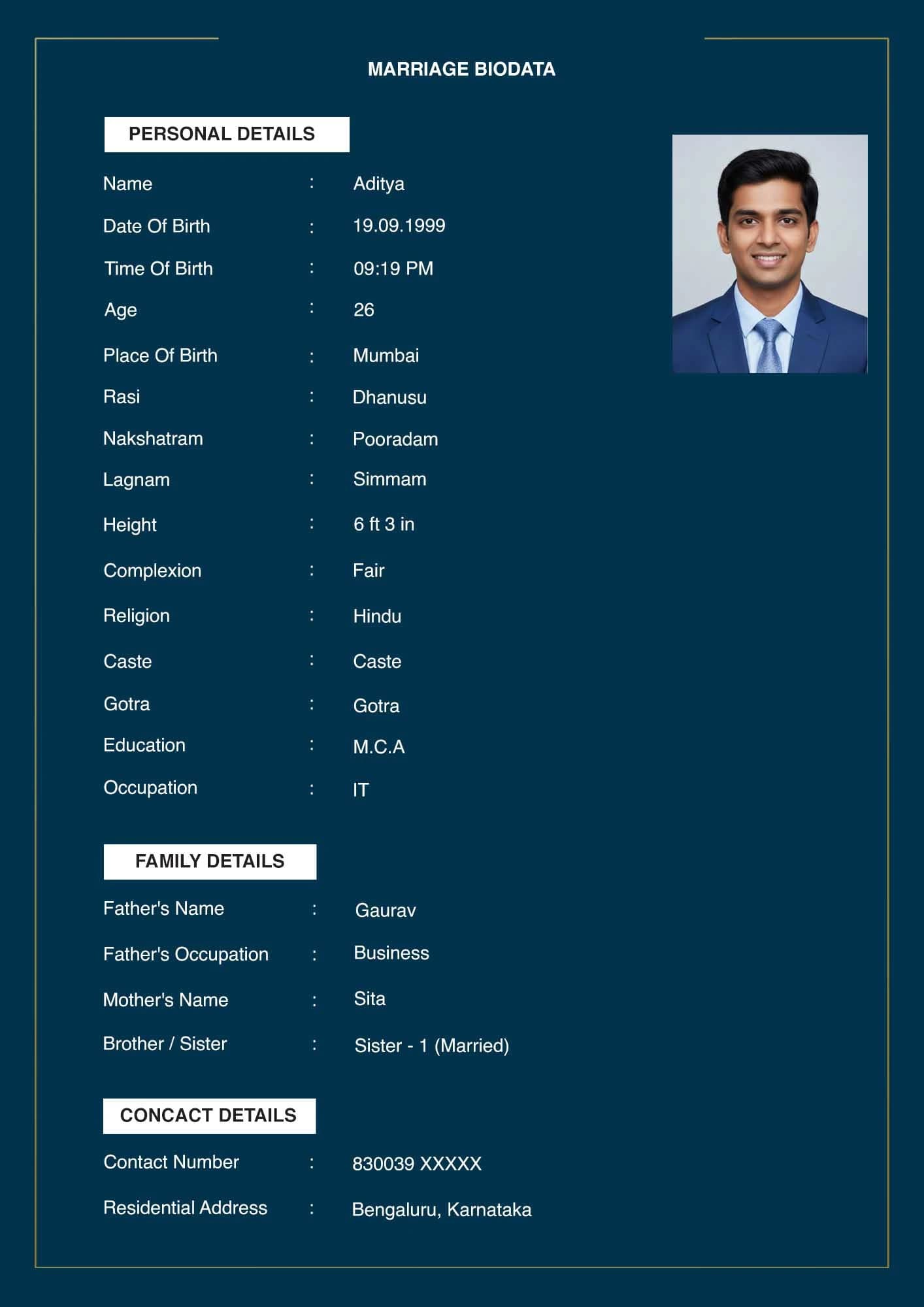
Minimalist Elite
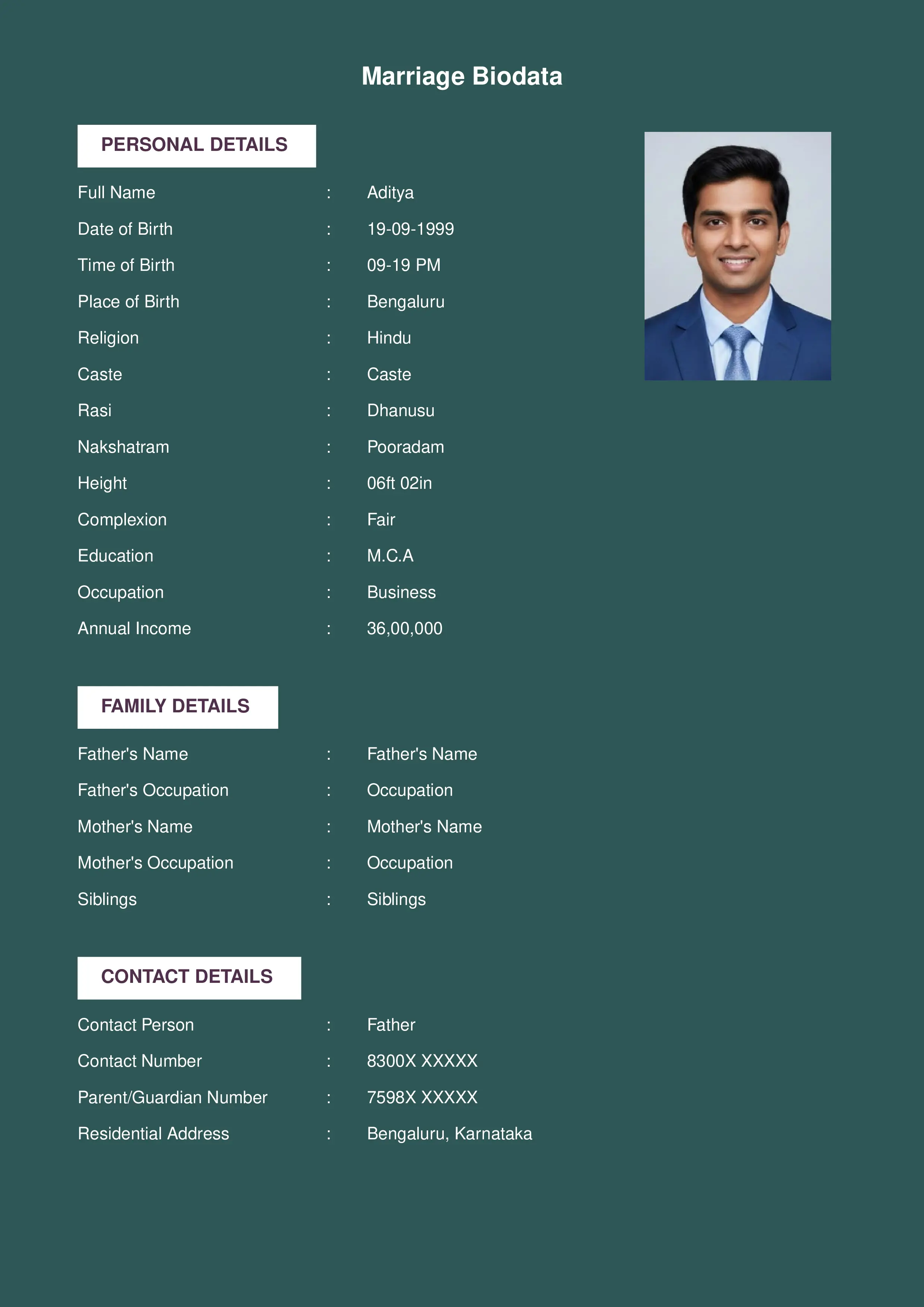
Modern Crimson
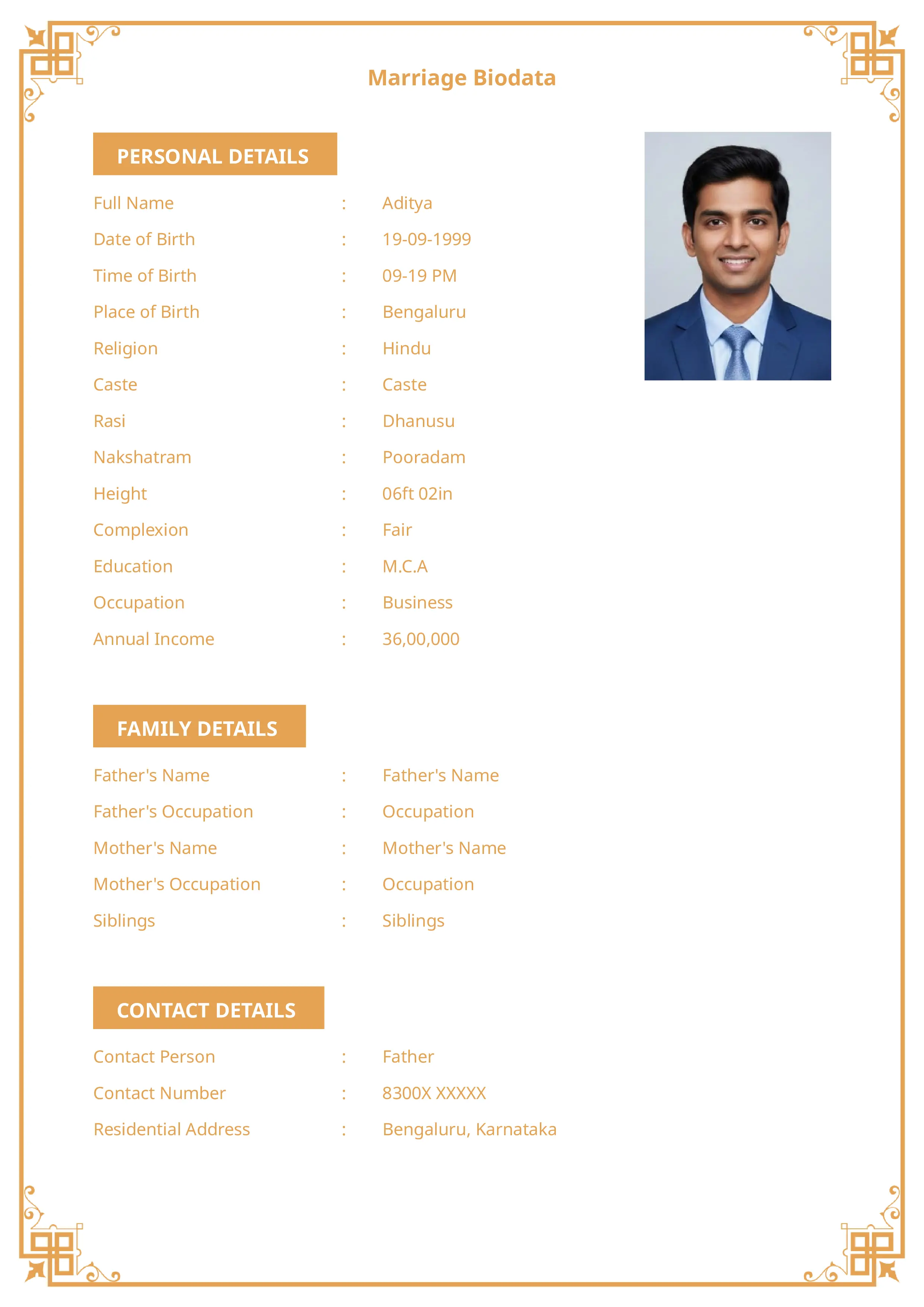
Elegant Sapphire
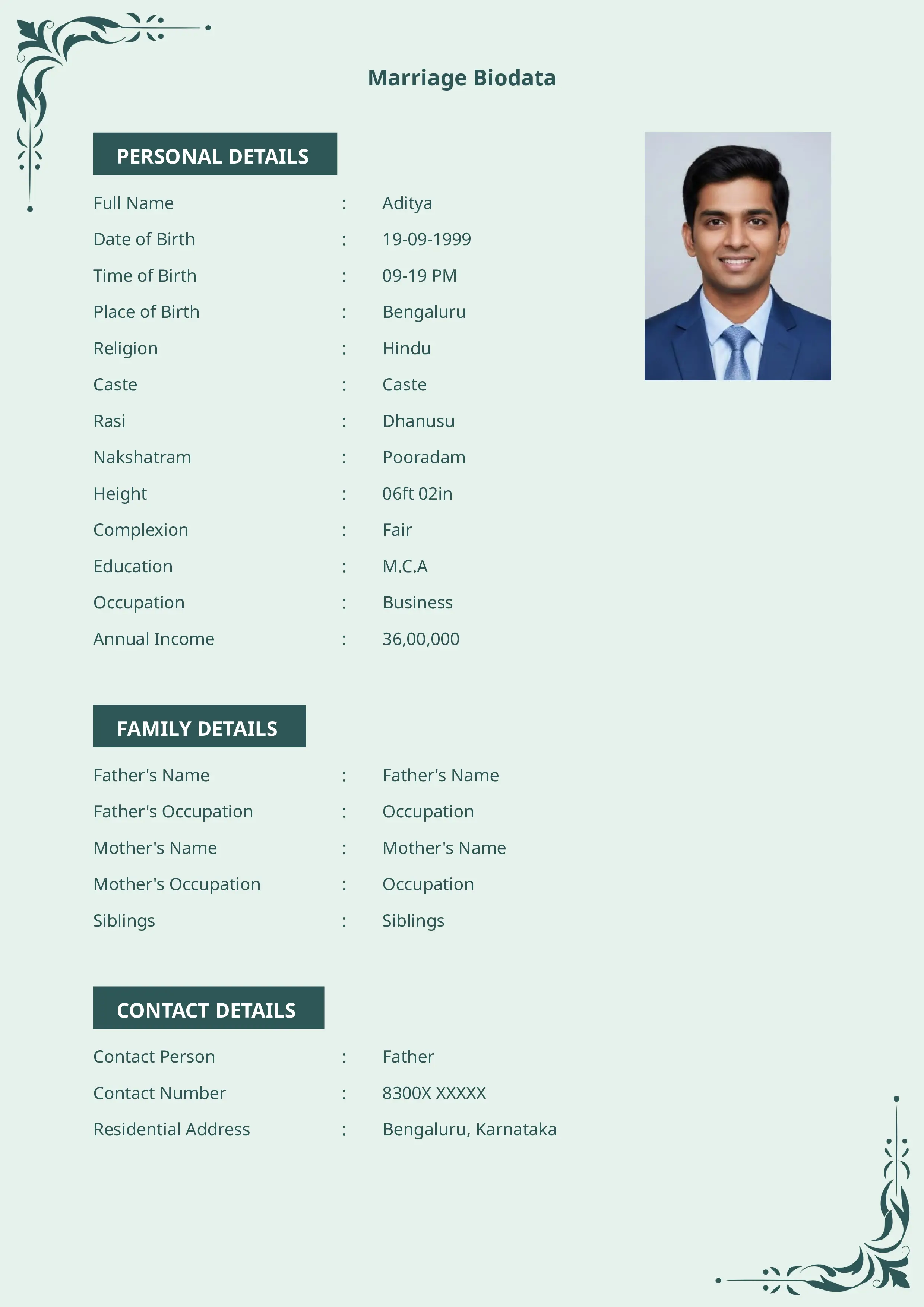
Floral Pastel

Premium Corporate
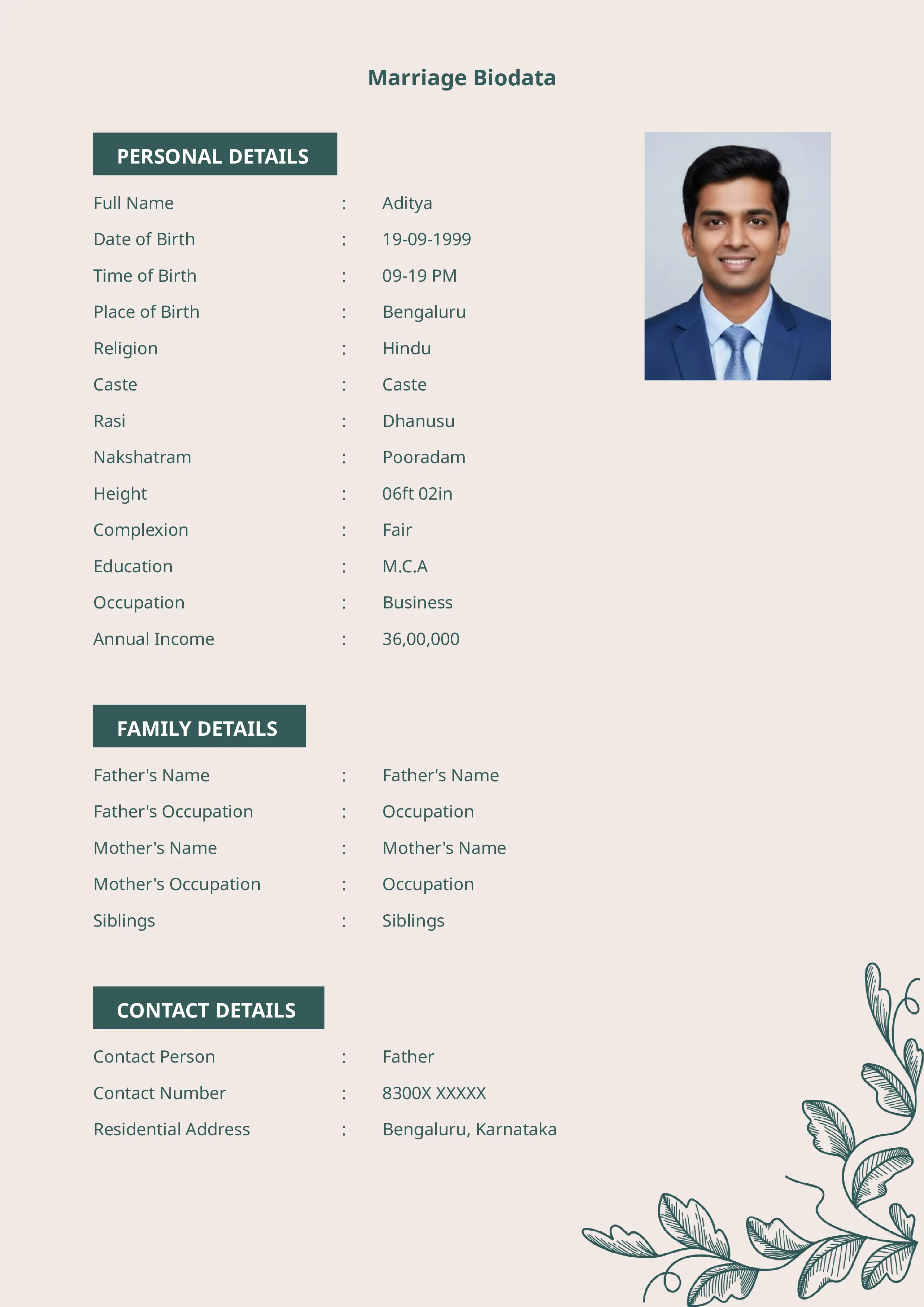
Family Heritage
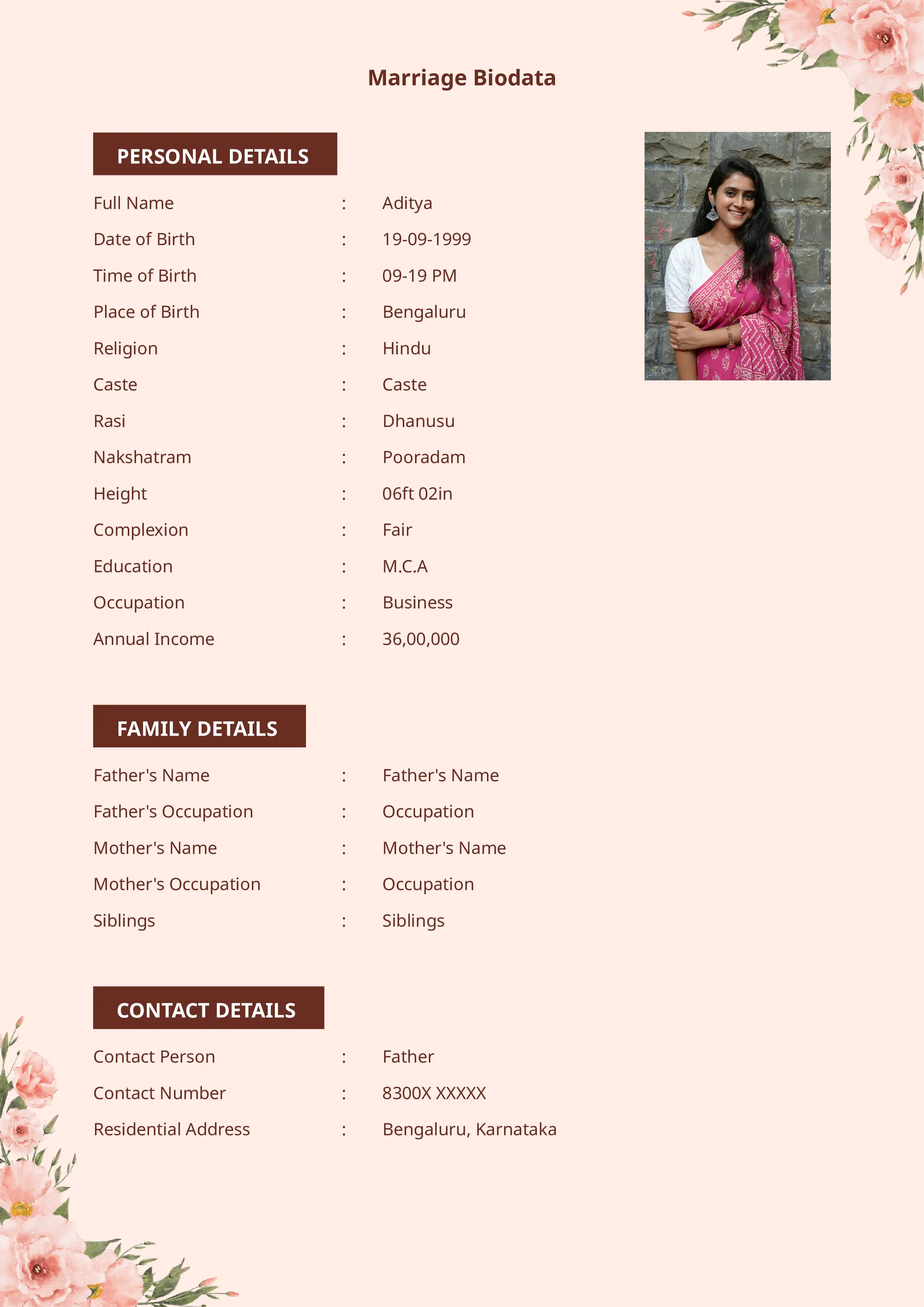
Modern Emerald
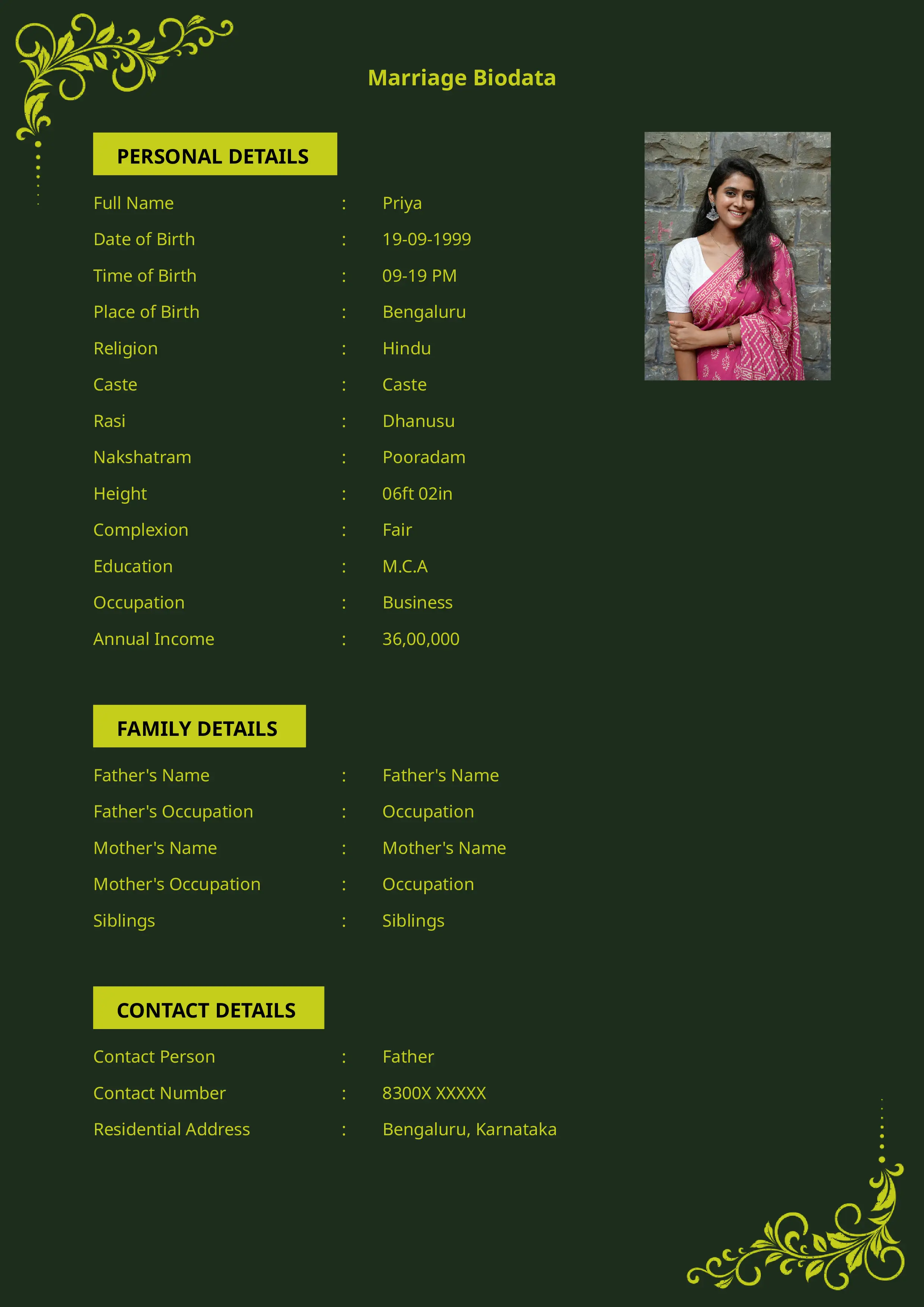
Traditional Saffron
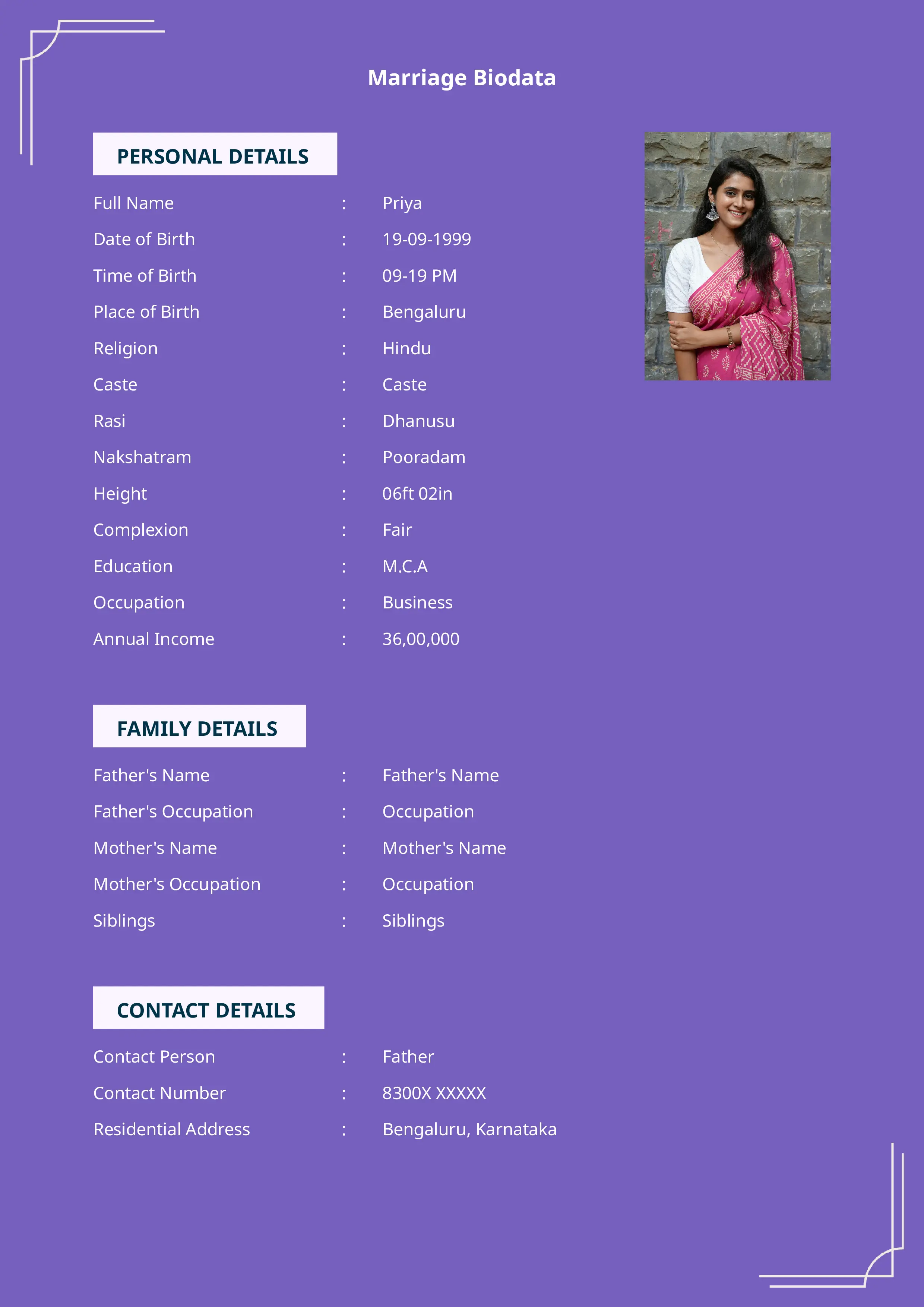
Single Page Pearl
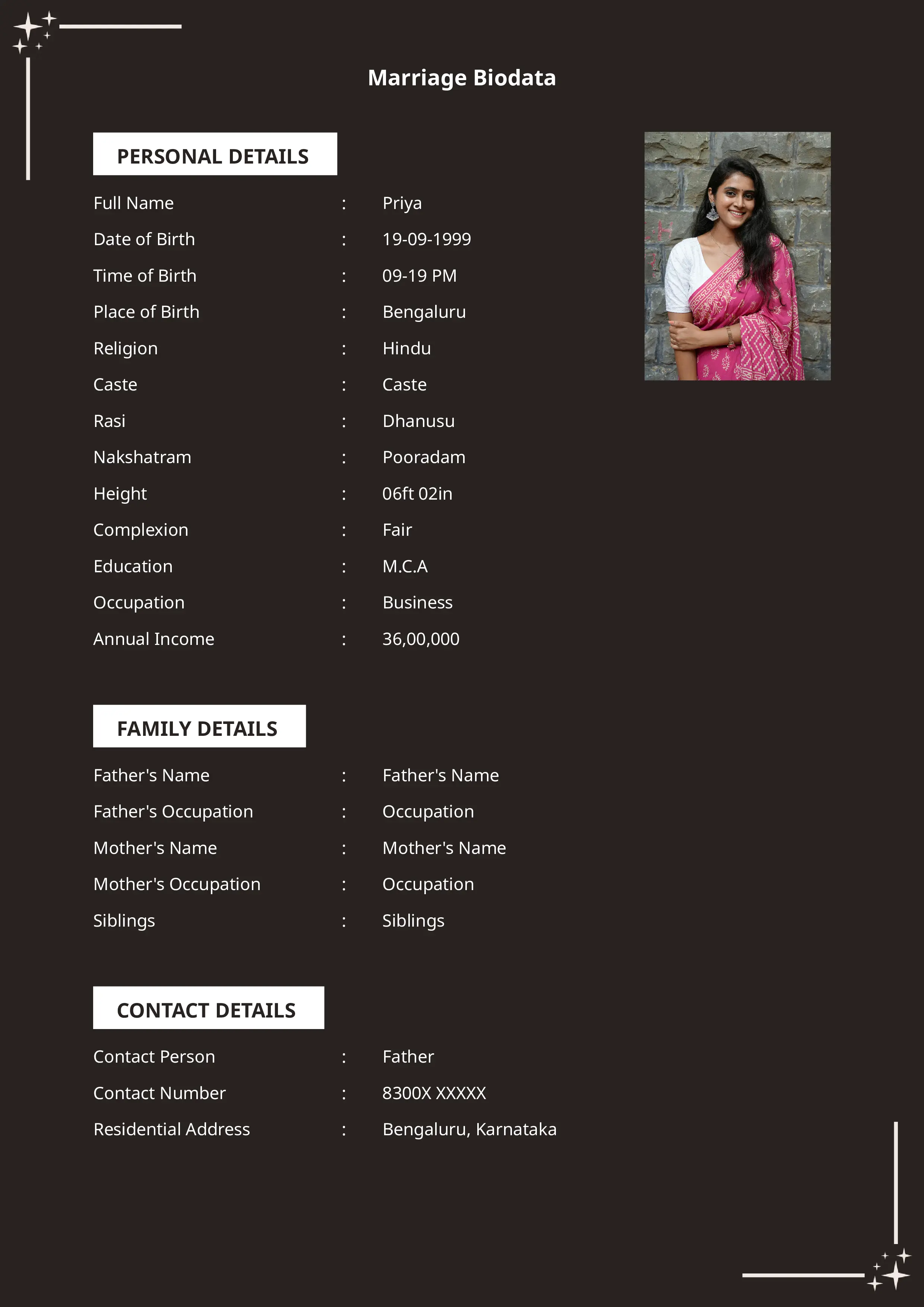
Modern Slate
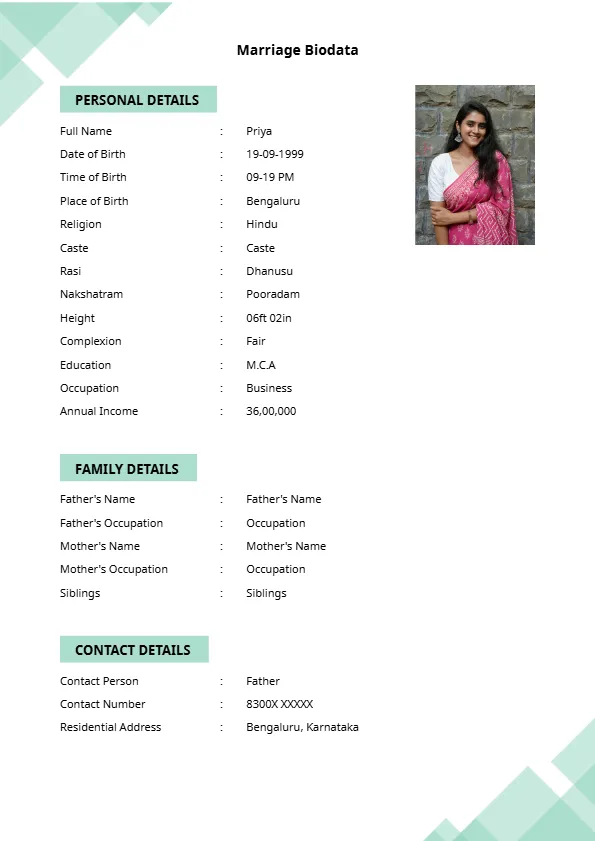
Clean Ivory
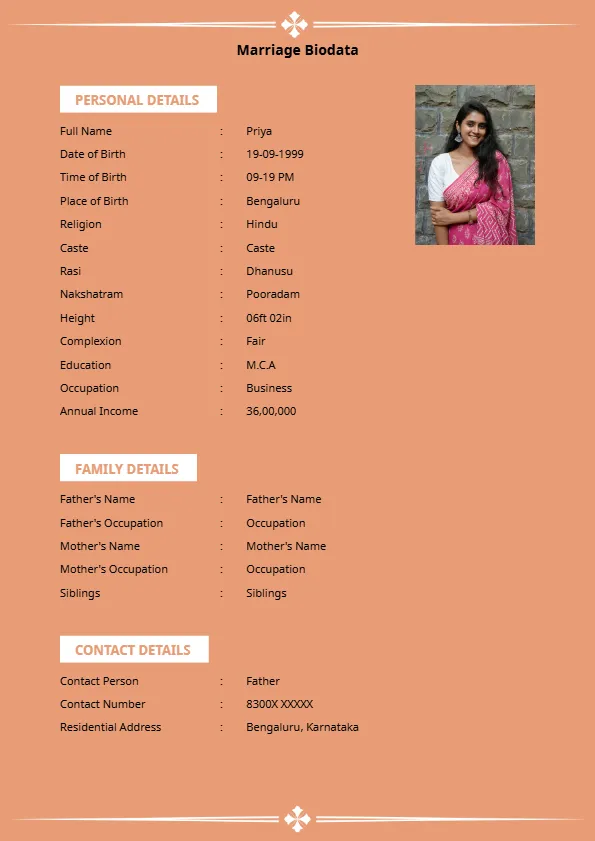
Creative Typography
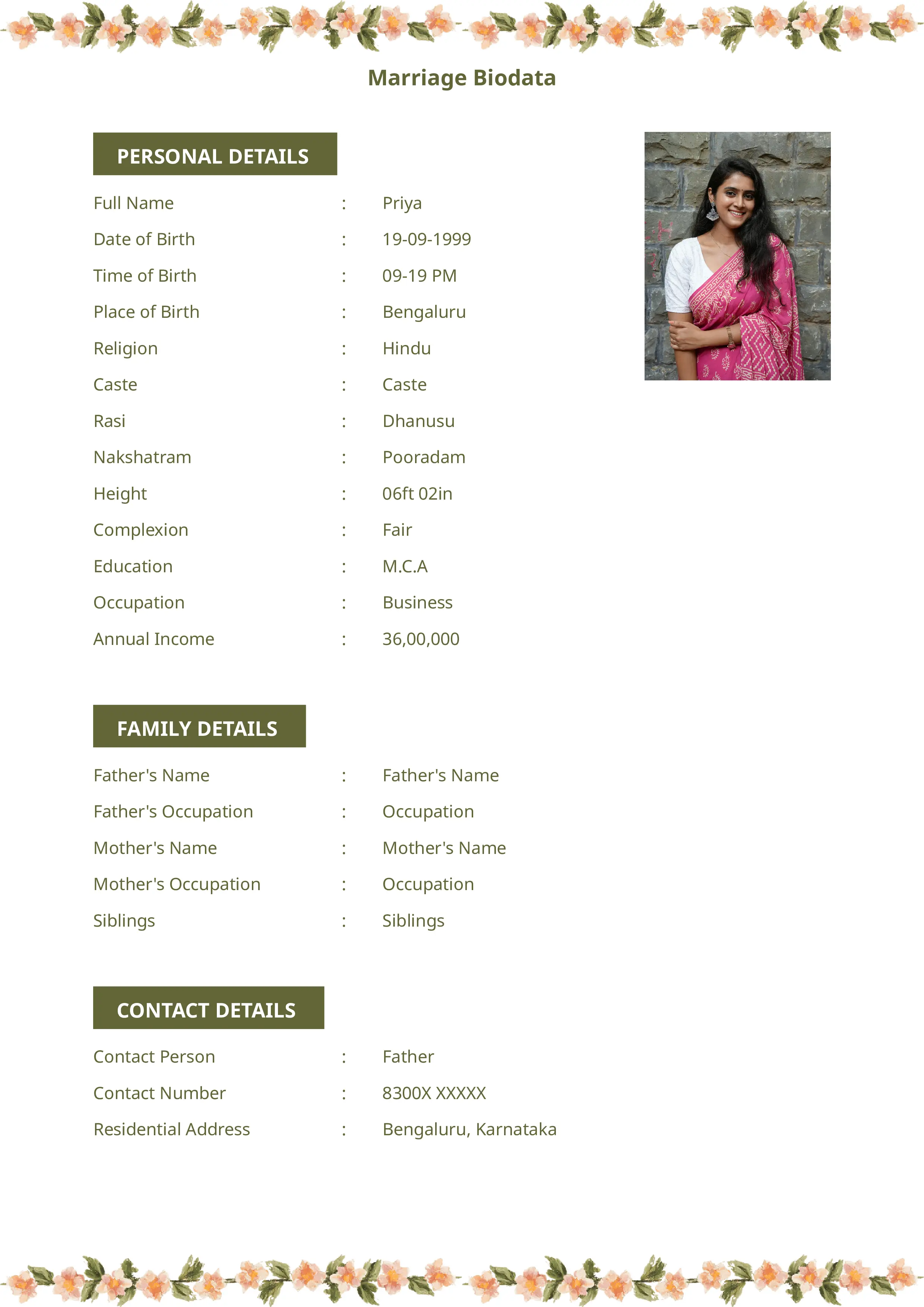
Professional Blue
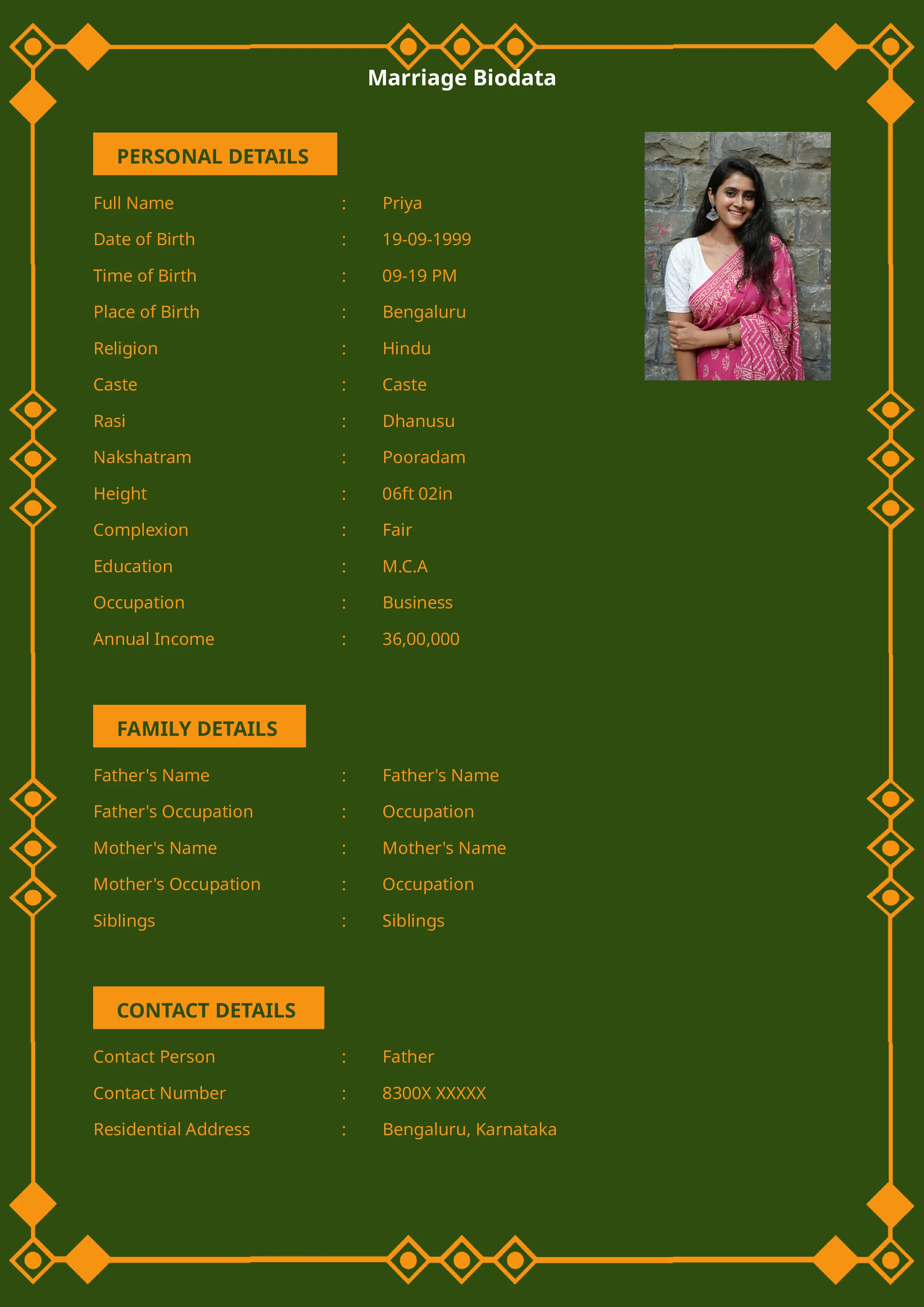
Cultural Rust
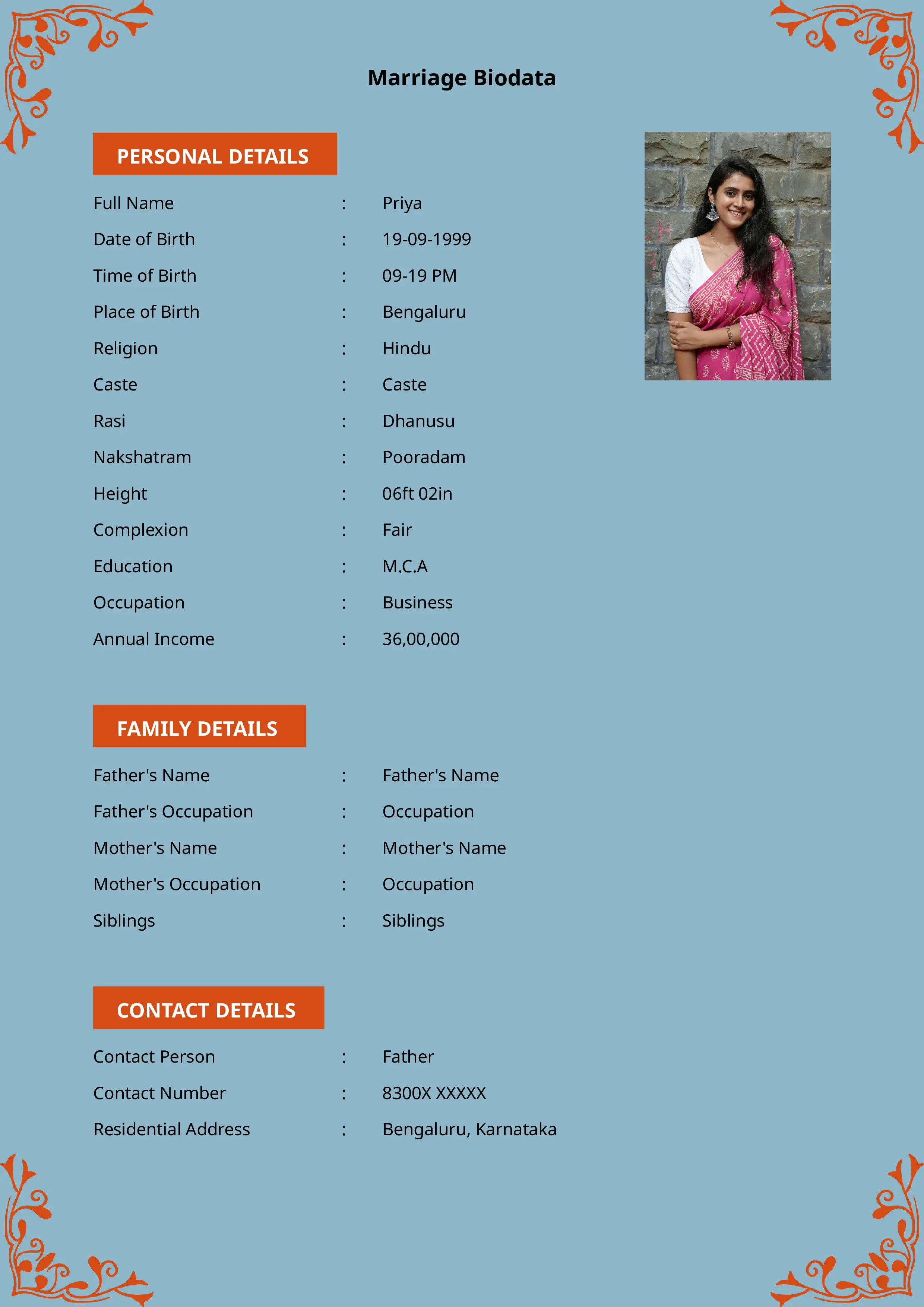
Indian Ruby
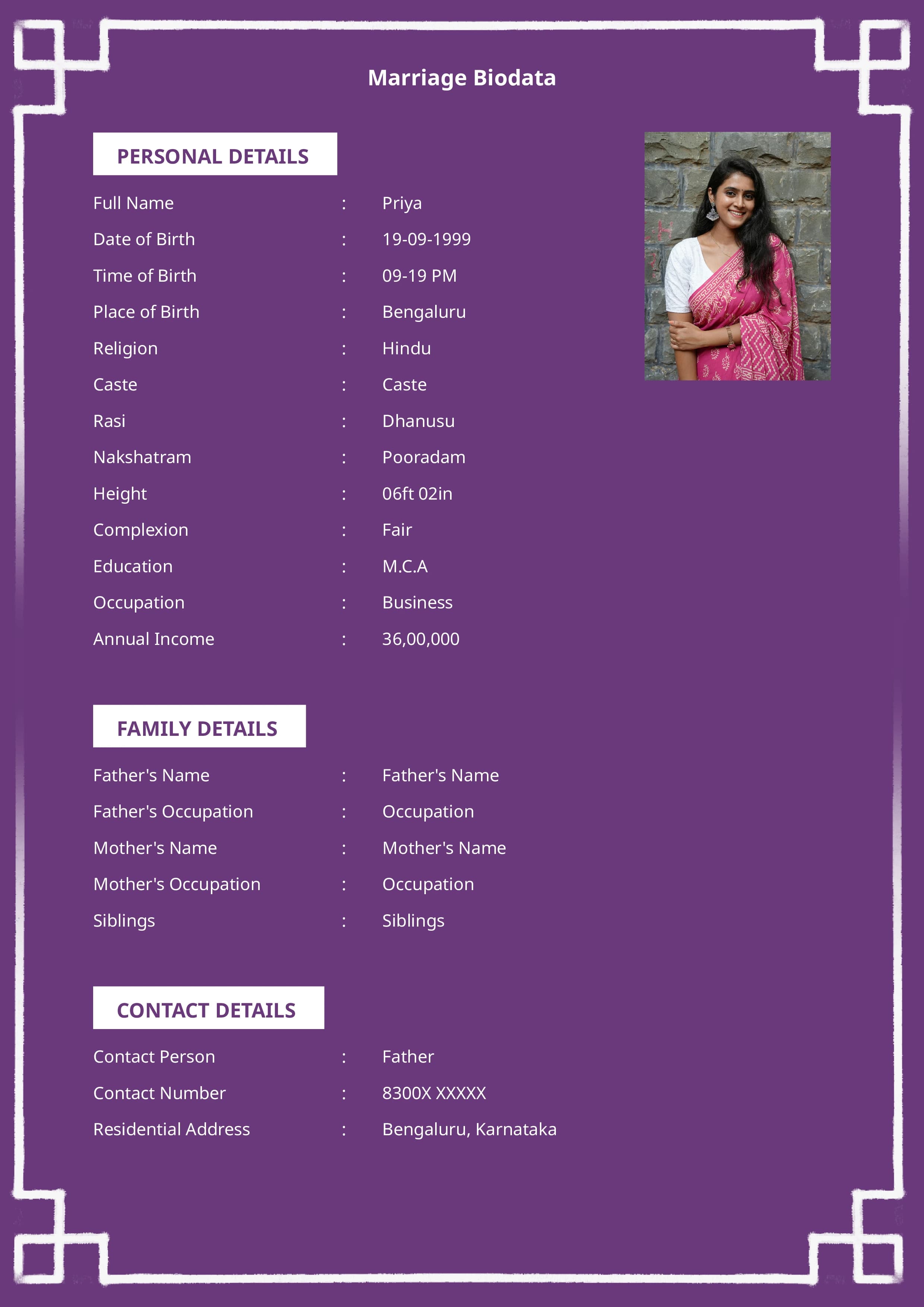
Premium Violet
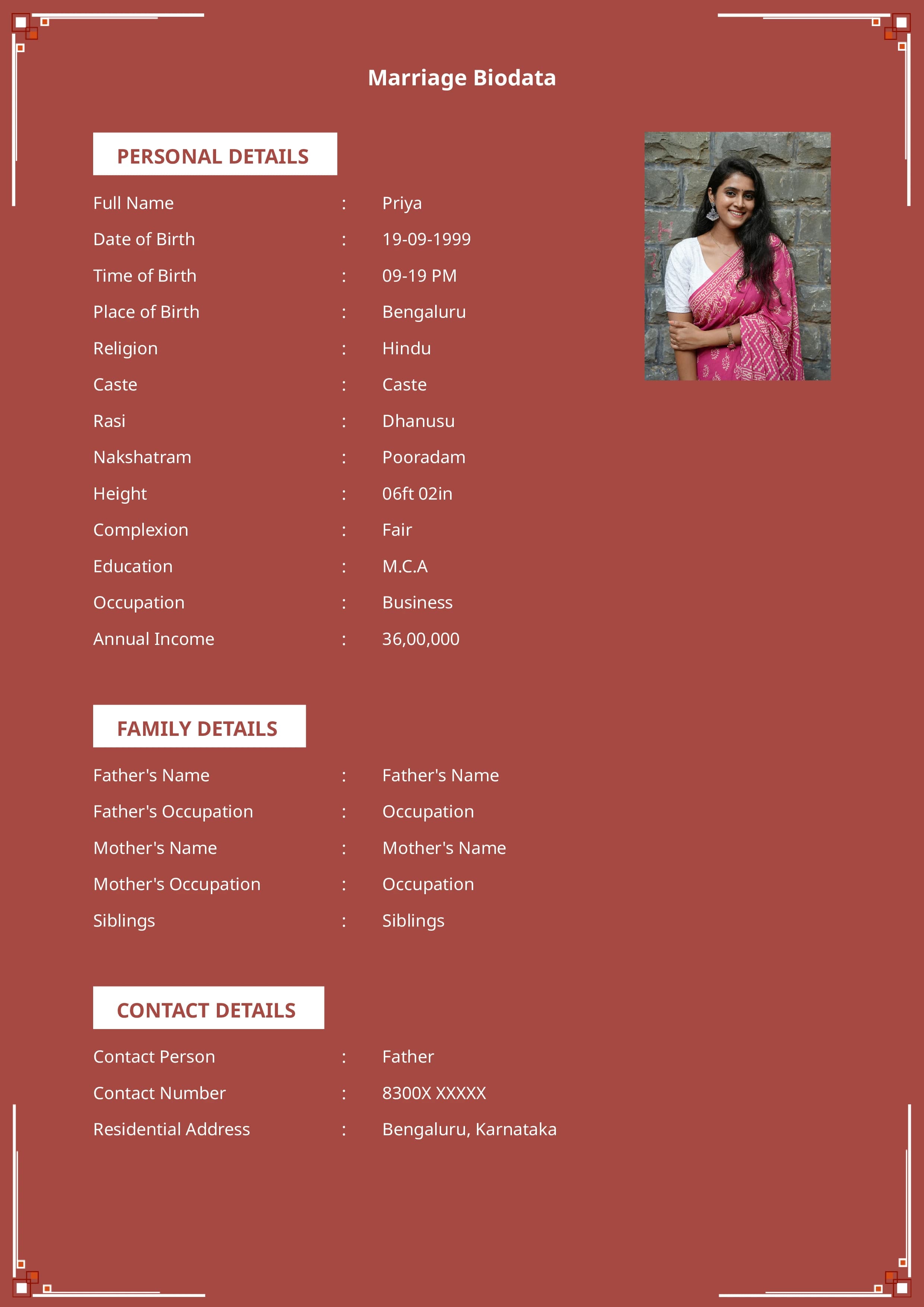
Simple Print Gray
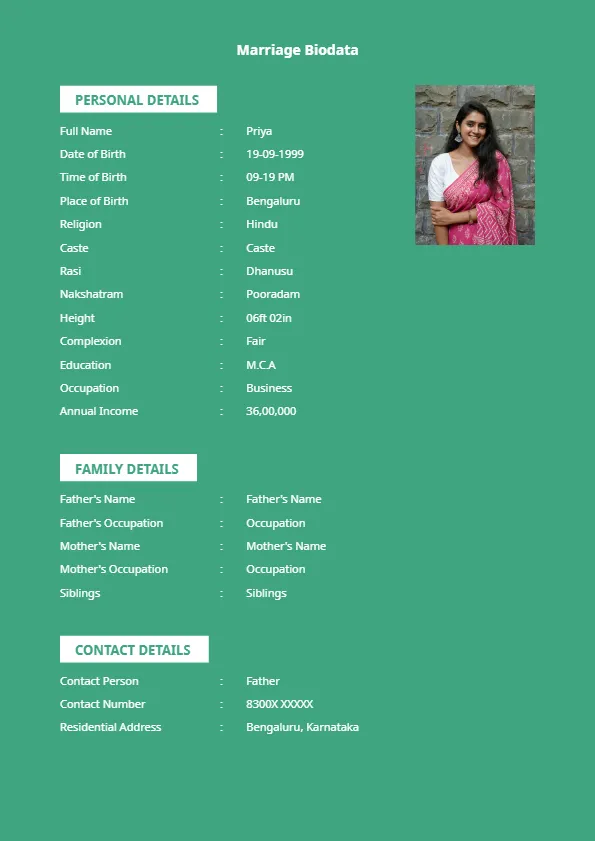
Floral Blush
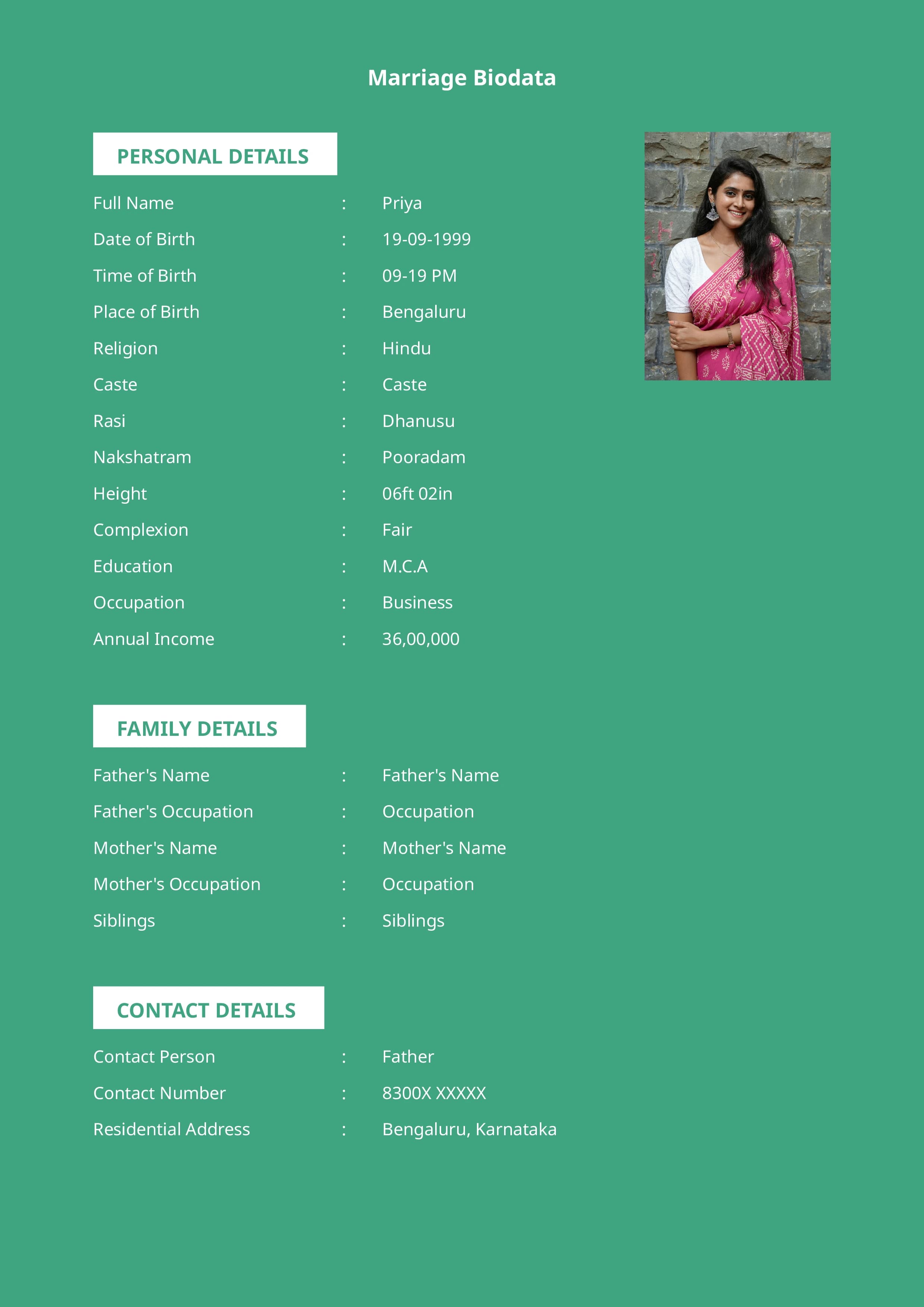
Classic Ochre
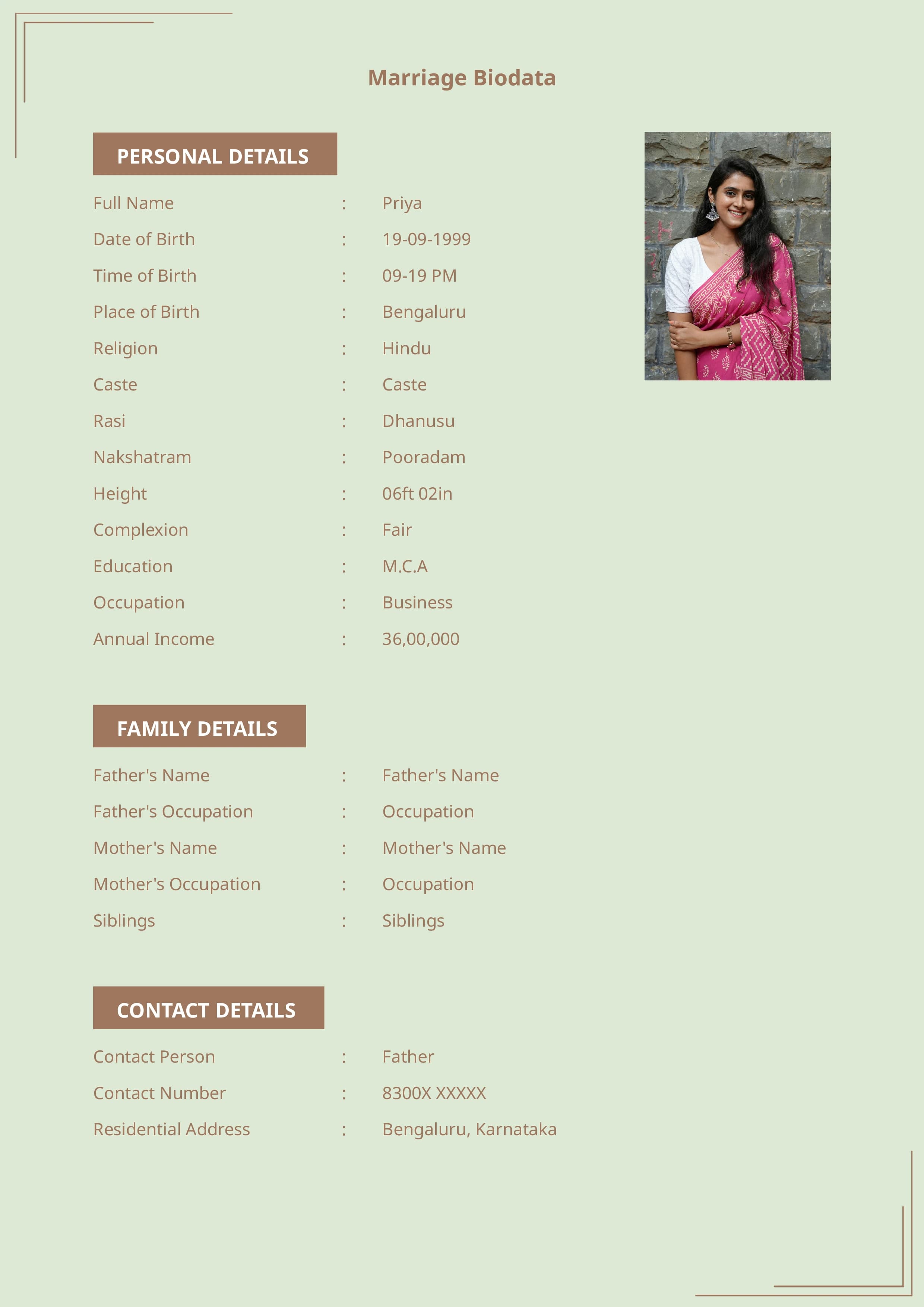
Minimalist Sand
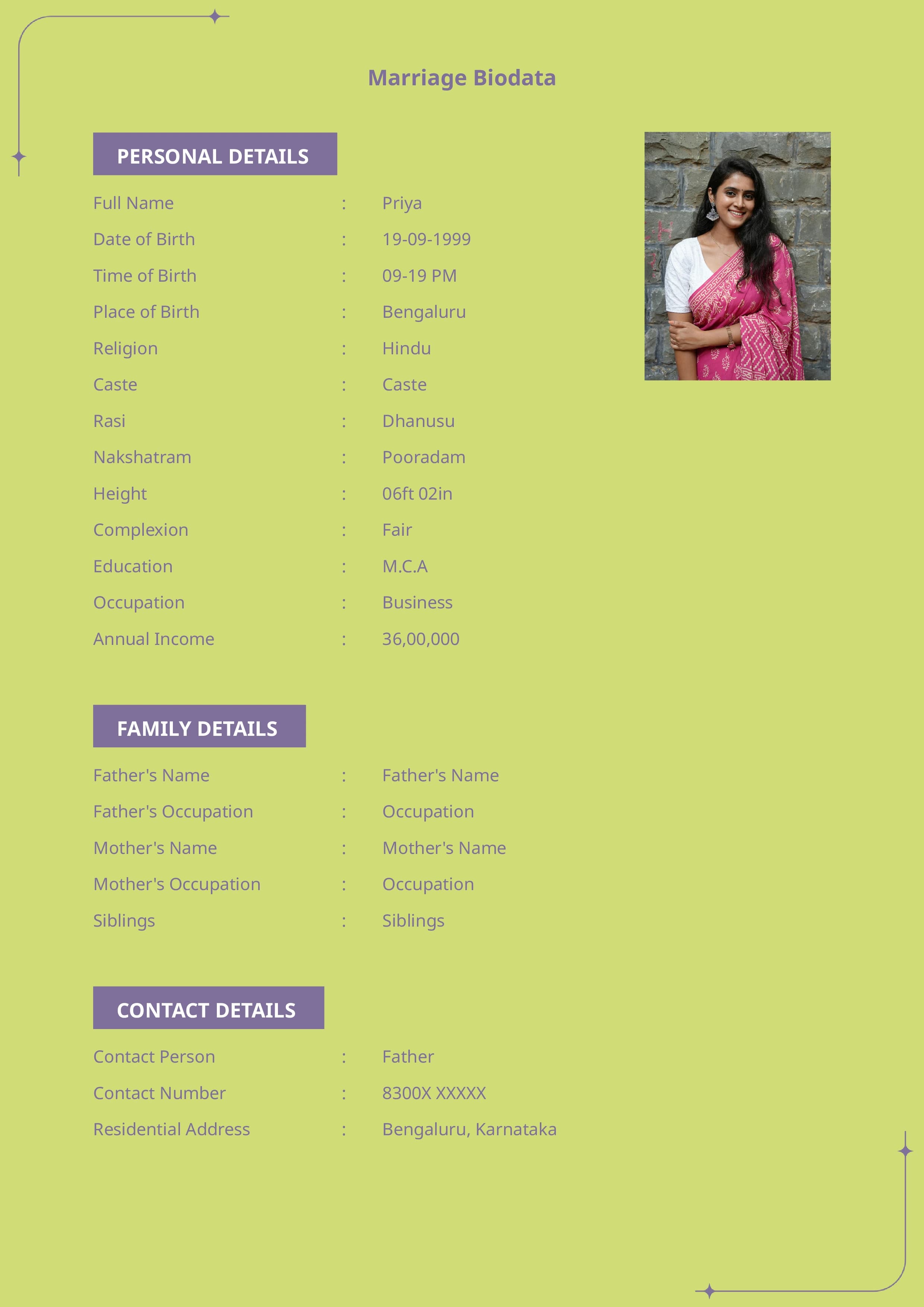
Crafted Magenta
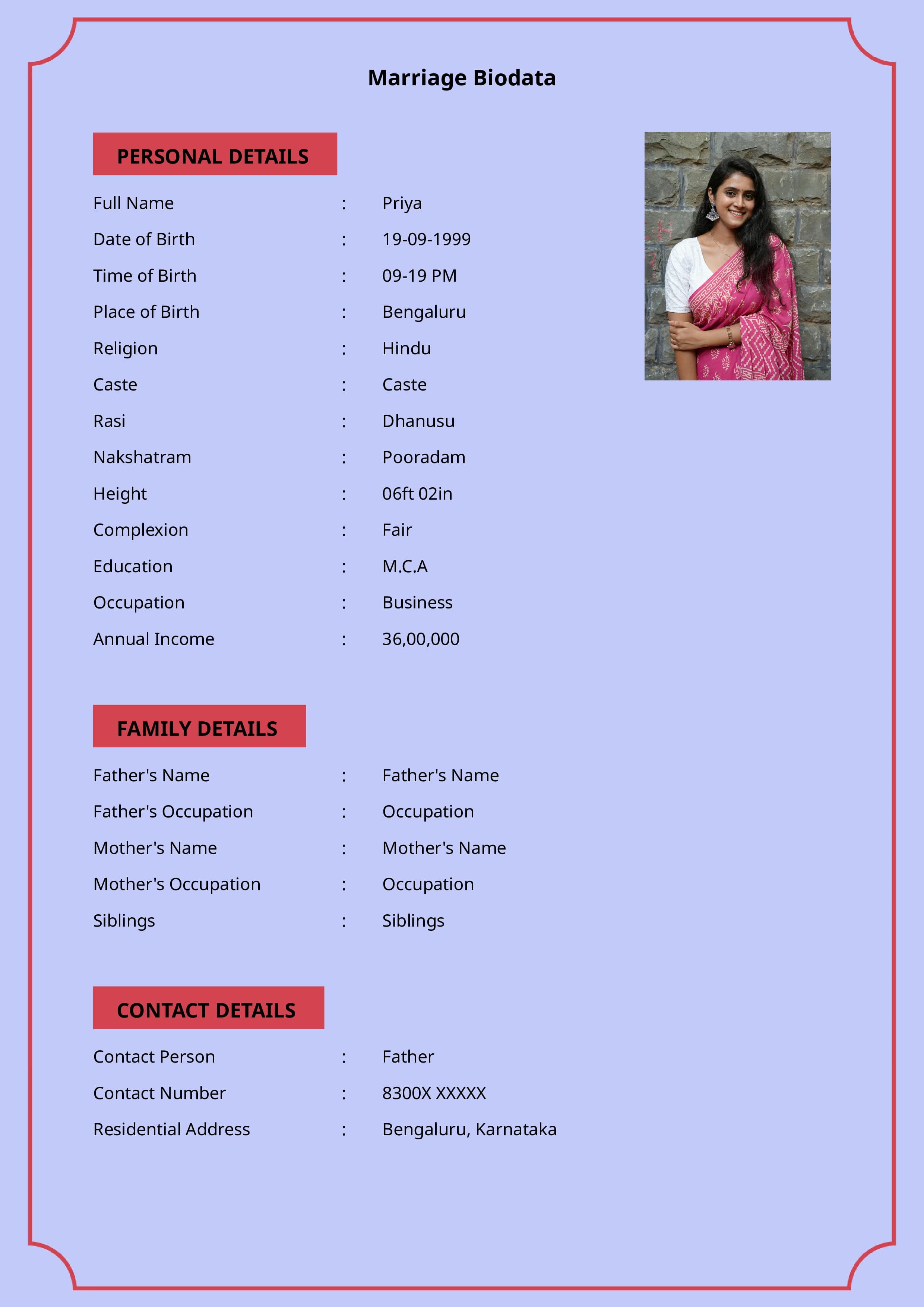
Clean Charcoal
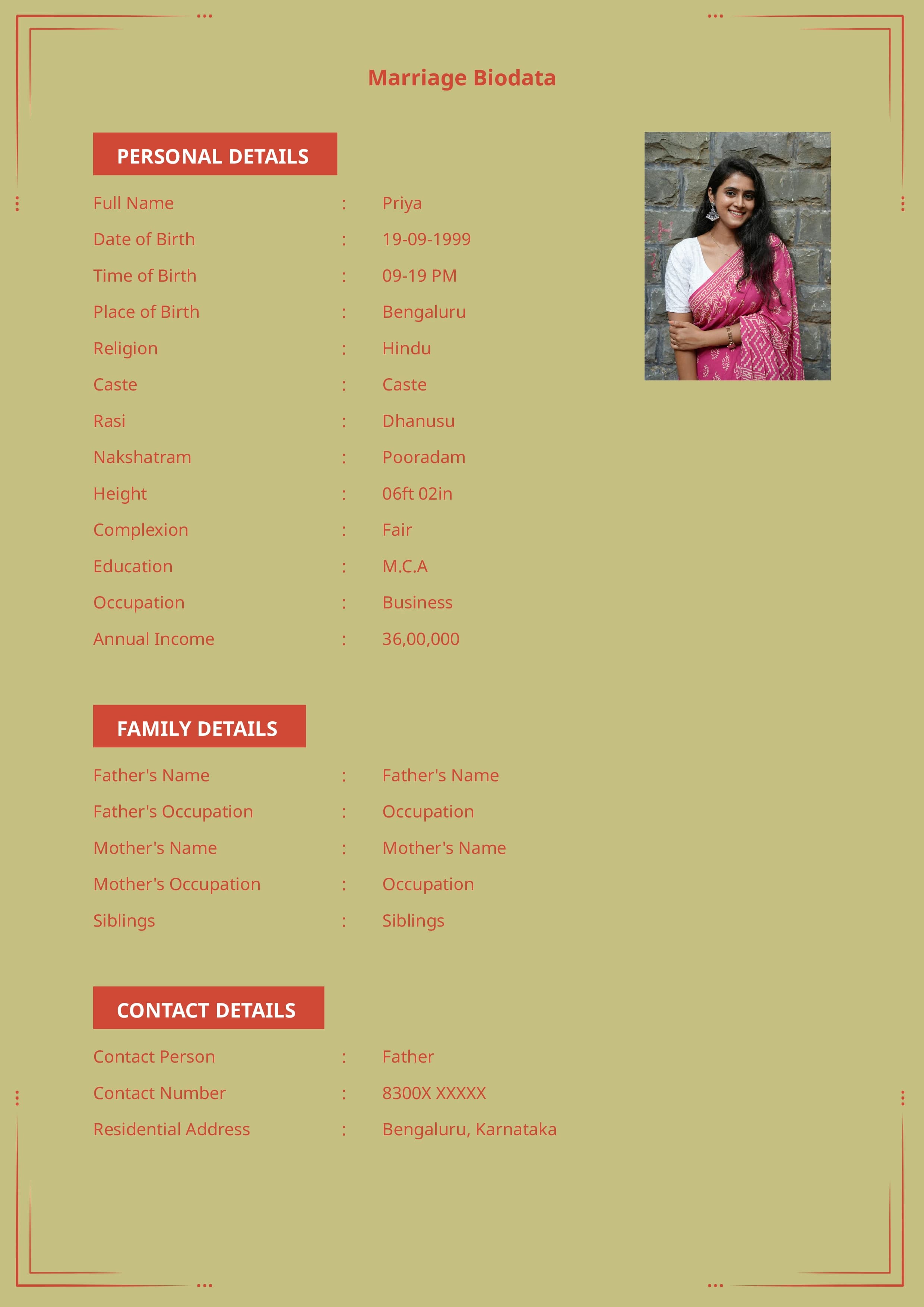
Traditional Jade
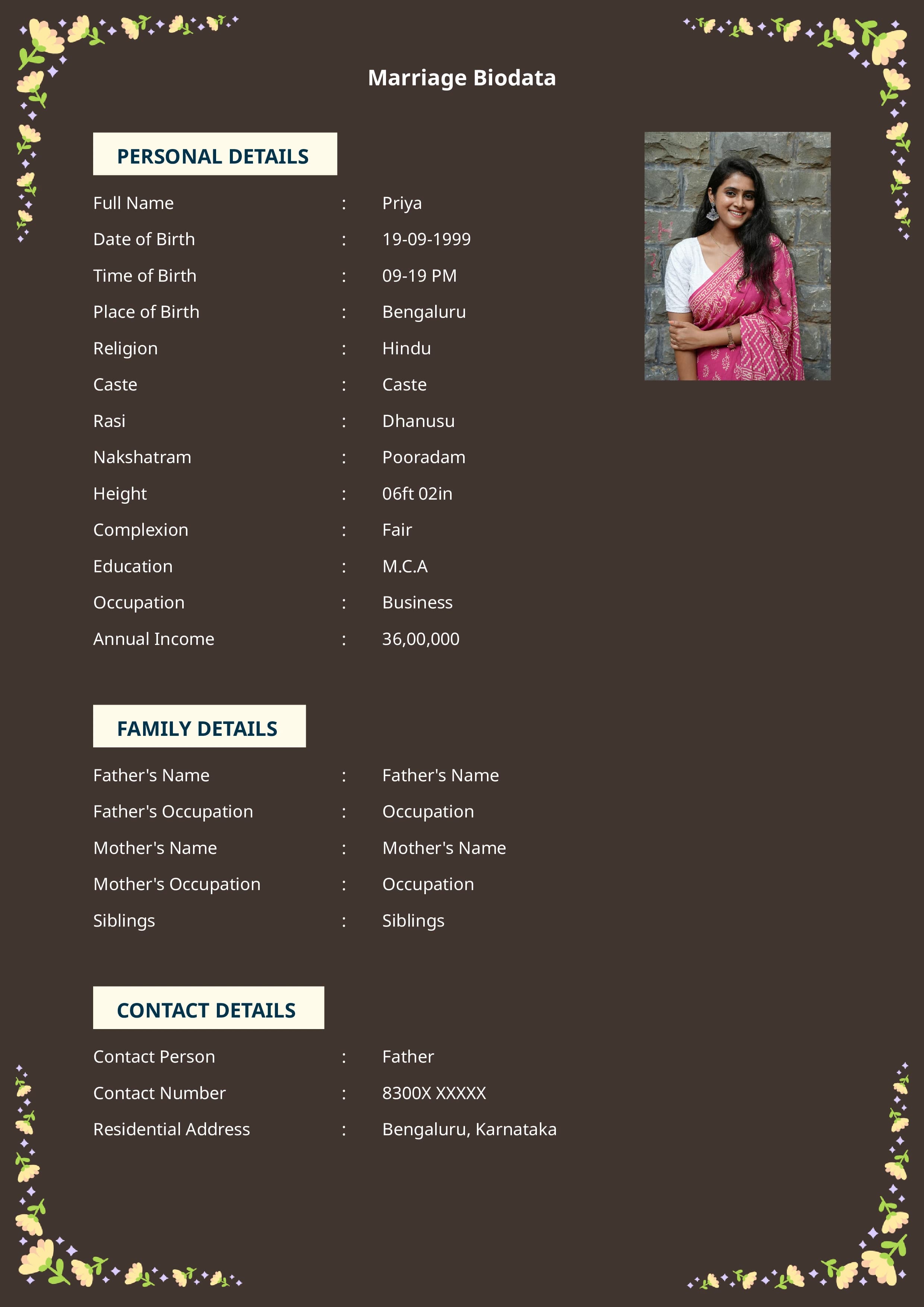
Simple Mint
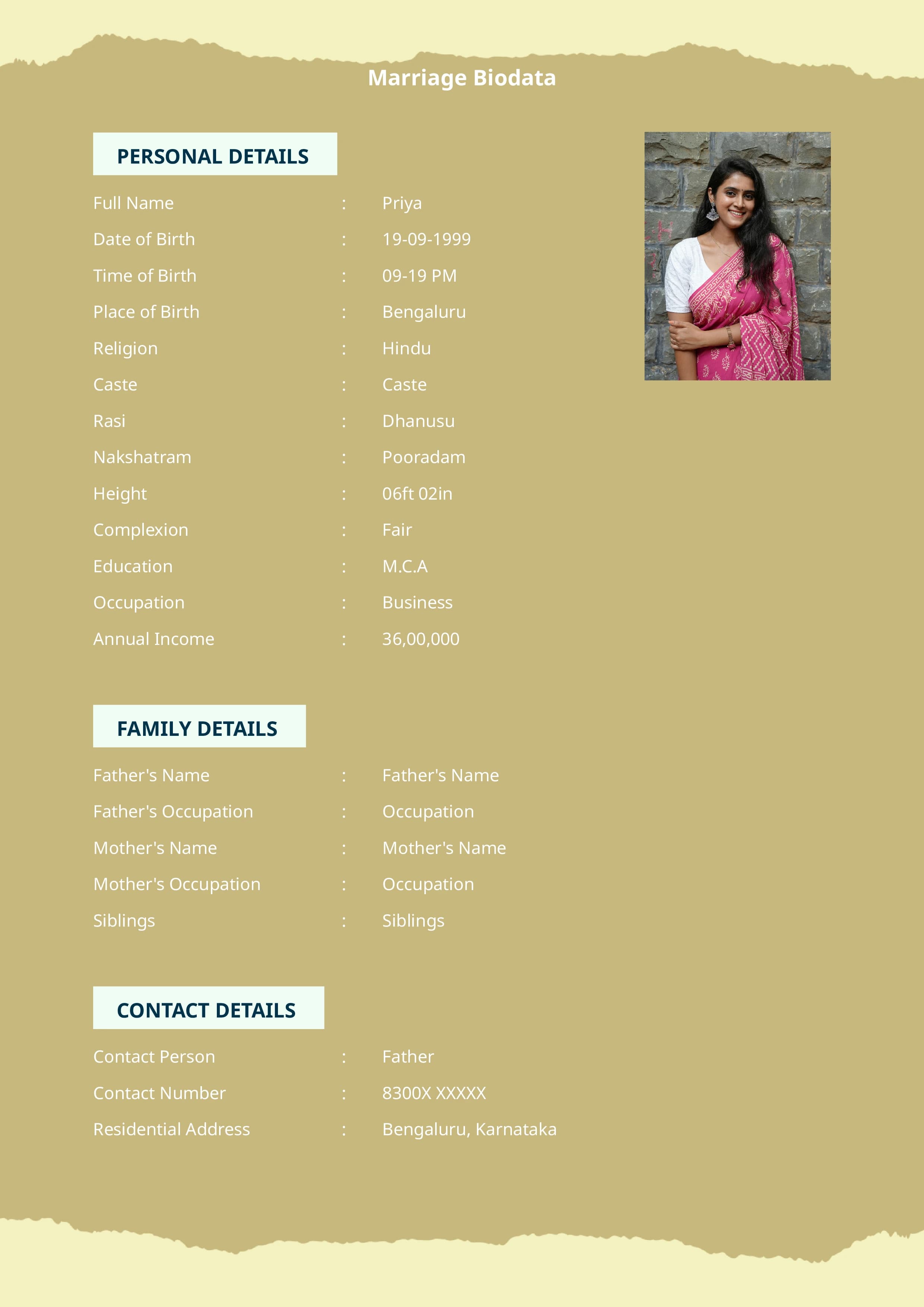
Premium Indigo
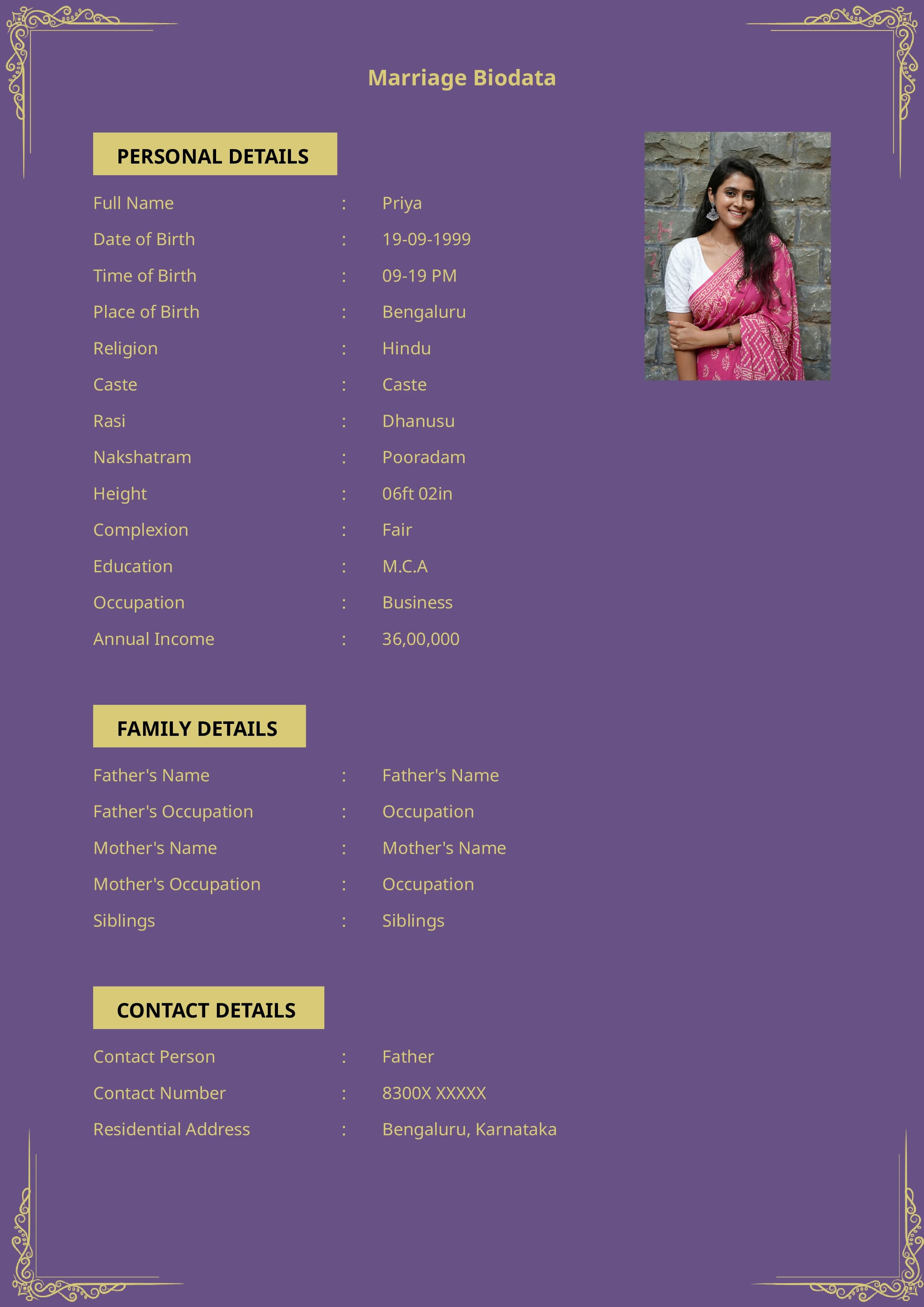
Ultimate Platinum
Frequently Asked Questions
What makes a Muslim marriage biodata different?
A Muslim marriage biodata typically includes specific sections such as Sect (Sunni/Shia), Maslak, religious practices (prayers, fasting), and family background tailored to community expectations.
How can I download a sample Muslim biodata in PDF?
You can use our marriagebiodatapdf.in to input your details and generate a high-quality PDF specifically tailored with Muslim biodata sections instantly.